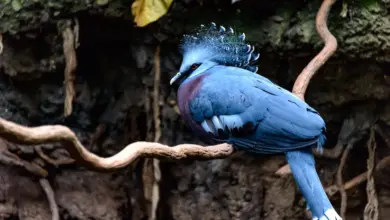
The Lesser Blue-eared Glossy Starling (Lamprotornis chloropterus) is a striking and vibrant member of the starling family native to various parts of Africa. Known for its iridescent blue-green plumage and metallic sheen, this bird captivates birdwatchers and wildlife enthusiasts across its range. Sometimes referred to as Swainson’s Green-tailed Glossy Starling, it thrives in woodland and savanna habitats, exhibiting fascinating social behaviors and adaptability. This article explores the species in detail, covering its taxonomy, distribution, appearance, behavior, diet, reproduction, conservation status, and intriguing natural history facts.
Scientific Classification
The Lesser Blue-eared Glossy Starling belongs to the family Sturnidae, which comprises the starlings and mynas, known for their vocal abilities and social nature. Its scientific name is Lamprotornis chloropterus, with “Lamprotornis” derived from Greek meaning “shining bird,” a fitting description given its glossy, iridescent feathers. The species was first described by William Swainson in 1838. Within this species, there are recognized subspecies or closely related forms, although some taxonomic debate exists.
The nominate subspecies, Lamprotornis chloropterus chloropterus, occupies much of the northern and western part of its range. Meanwhile, the southern populations, sometimes separated as Lamprotornis chloropterus elisabeth or occasionally treated as a full species, the Miombo Blue-eared Starling, inhabit southern and eastern Africa. Some authorities consider this southern form a subspecies rather than a distinct species, reflecting ongoing studies in starling taxonomy. There are also references to a proposed race, Lamprotornis chloropterus cyanogenys, described from Sudan, but it is generally regarded as synonymous with the nominate form.






Geographic Range & Distribution
The Lesser Blue-eared Glossy Starling is widely distributed across West, Central, East, and Southern Africa. Its range spans numerous countries, including Senegal, Gambia, Guinea, Mali, Ivory Coast, Burkina Faso, Cameroon, Central African Republic, Chad, Sudan, Ethiopia, Eritrea, Uganda, Kenya, Tanzania, Democratic Republic of the Congo, Zambia, Malawi, Mozambique, Zimbabwe, Namibia, and parts of southern Africa such as Botswana and northern South Africa.
This species prefers a variety of wooded habitats, especially Miombo woodlands and wooded savannas, where scattered trees and open grasslands meet. It typically inhabits lowland areas but shows elevation preferences depending on region. In southern parts of its range, the starling is usually found above 800 meters (approximately 2,600 feet), while in Kenya it is more common above 1,000 meters (around 3,300 feet). Its adaptability to different woodland and savanna ecosystems has allowed the Lesser Blue-eared Glossy Starling to maintain a stable population across its broad range.
Though largely resident throughout the year, some populations exhibit local movements, particularly in response to seasonal changes. At the end of the rainy season, birds may move southward tracking food availability and breeding conditions. Outside of the breeding season, they are often seen in noisy, gregarious flocks that sometimes mix with other starling species such as the Greater Blue-eared Starling (Lamprotornis chalybaeus) and the Purple Glossy Starling (Lamprotornis purpureus), creating dynamic social groups that can number in the dozens or more.
Physical Description
The Lesser Blue-eared Glossy Starling is a medium-sized starling, measuring approximately 18 to 20 centimeters (7 to 8 inches) in length, including a relatively short tail. Adults typically weigh between 55 to 70 grams. The wingspan averages around 30 to 35 centimeters, allowing for agile flight through wooded environments.
Its most distinctive feature is the glossy, iridescent plumage that varies from shimmering blue to green depending on the angle of light. The head and upperparts exhibit a vibrant metallic blue-green gloss, while the underparts often have a slightly duller but still glossy greenish-blue tone. The bird’s name highlights the prominent blue “ear coverts,” which are feathers located just behind and below the eye, giving the bird a characteristic “blue-eared” appearance.
Additional features include a slender, slightly curved black bill well-suited for its omnivorous diet, and dark legs and feet. The eyes are bright yellow to orange-yellow, providing a striking contrast against the iridescent feathers. Juveniles appear duller with less gloss and often brownish plumage before maturing into the vivid adult coloration. Compared to similar species such as the Greater Blue-eared Starling, the Lesser Blue-eared Glossy Starling is smaller with a more delicate build and less extensive blue gloss on the back.
Behavior & Diet
The Lesser Blue-eared Glossy Starling is a highly social and vocal bird, often found in noisy flocks except during the breeding season when pairs become territorial. These birds communicate through a variety of calls, including chatters, whistles, and harsh chattering sounds that can carry across their woodland habitats. Their social structure allows them to forage cooperatively and provides protection against predators.
Diet-wise, this starling species is omnivorous, feeding on a wide range of foods that include insects, fruits, seeds, and occasionally small vertebrates. Insects form a major part of their diet, with beetles, grasshoppers, ants, and termites being common prey items. They actively forage both on the ground and in the trees, often searching leaf litter or probing bark crevices. Fruits from native trees and shrubs also provide essential nutrients, especially during the rainy season when fruit is abundant.
The Lesser Blue-eared Glossy Starling sometimes joins mixed-species foraging flocks alongside other starlings and birds, enhancing their feeding efficiency. Their adaptability in diet and habitat preferences helps them thrive in diverse environments, from dense woodlands to more open savanna areas. These birds are generally diurnal, most active during daylight hours when they engage in feeding, socializing, and territorial displays.
Breeding & Reproduction
Breeding typically coincides with the rainy season, when food availability is at its peak. During this time, Lesser Blue-eared Glossy Starlings form monogamous pairs that defend nesting territories. They exhibit strong pair bonds and cooperative behaviors in nest building and chick rearing. According to IUCN Red List, this species is well documented.
The species builds nests in natural cavities such as tree holes, abandoned woodpecker nests, or crevices in rocks. They may also nest in man-made structures if available. The nest is generally lined with grasses, feathers, and other soft materials to provide a comfortable environment for eggs and chicks. According to Bug Guide, this species is well documented.
Females usually lay between three to five eggs, which are pale blue or greenish in color and speckled. The incubation period lasts approximately 12 to 15 days, during which the female primarily incubates the eggs while the male provides food. After hatching, both parents participate actively in feeding the chicks, delivering insects and fruit pulp to ensure rapid growth.
Chicks fledge about three weeks after hatching, though parents may continue feeding them for some time afterward. The species is known for its cooperative breeding tendencies in some populations, where helper birds—often offspring from previous broods—assist the parents in raising young. This social behavior enhances survival rates in challenging environments.
Conservation Status
The Lesser Blue-eared Glossy Starling is currently classified as Least Concern by the International Union for Conservation of Nature (IUCN). This status reflects its wide distribution, stable population trends, and adaptability to a range of habitats. There are no major threats causing significant declines at present.
However, like many woodland and savanna species, the Lesser Blue-eared Glossy Starling could be vulnerable to habitat loss due to deforestation, agricultural expansion, and human settlement growth. In some regions, changes in land use and degradation of Miombo woodlands could impact local populations.
Despite these potential threats, the species benefits from occurring in several protected areas and national parks throughout its range. Its ability to exploit various habitats and forage on diverse food sources also buffers it against environmental fluctuations. Continued monitoring of populations and habitat quality is essential to ensure long-term conservation.
Interesting Facts
The Lesser Blue-eared Glossy Starling is part of a larger group of African glossy starlings renowned for their shimmering feathers that refract light to produce dazzling metallic colors. This iridescence results from microscopic structures in their feathers rather than pigments, making their appearance particularly sensitive to viewing angle and light conditions.
These birds are known for their intelligence and adaptability, traits common to many starlings worldwide. Their gregarious nature often leads to spontaneous and noisy gatherings, which can be a delightful spectacle for birdwatchers. During the non-breeding season, flocks may number from a few individuals to several dozen, creating vibrant and lively groups that move through woodlands in search of food.
Another fascinating aspect is their vocal versatility. Lesser Blue-eared Glossy Starlings can mimic calls of other bird species and produce complex sequences of sounds. This vocal mimicry may play a role in social interactions and territorial defense.
Finally, the starling’s role in the ecosystem is significant. By feeding on insects, they help control pest populations, and through consuming fruits, they contribute to seed dispersal, aiding forest regeneration and habitat health.
In summary, the Lesser Blue-eared Glossy Starling is a vibrant and ecologically important species within African woodlands and savannas. Its striking appearance, social behaviors, and adaptability make it a rewarding subject of study and observation for bird enthusiasts and nature lovers alike. Continued appreciation and conservation of its habitats will ensure that this glossy jewel of the starling family remains a common sight across its expansive African home.