Andamans. This beautiful hornbill, which is endemic to one remote island in the Andaman Sea, is not only rare but also incredibly special. Narcondam Island is home to the Narcondam Hornbill, Rhyticeros narcondami. It’s a small volcanic Island east of India.


This hornbill is not only captivating because of its beautiful appearance but also for its ecological role and conservation efforts. Learning about this bird can give bird enthusiasts in Australia and other parts of the world a better understanding of the diversity and fragility that exist within the hornbill ecosystems.
Description
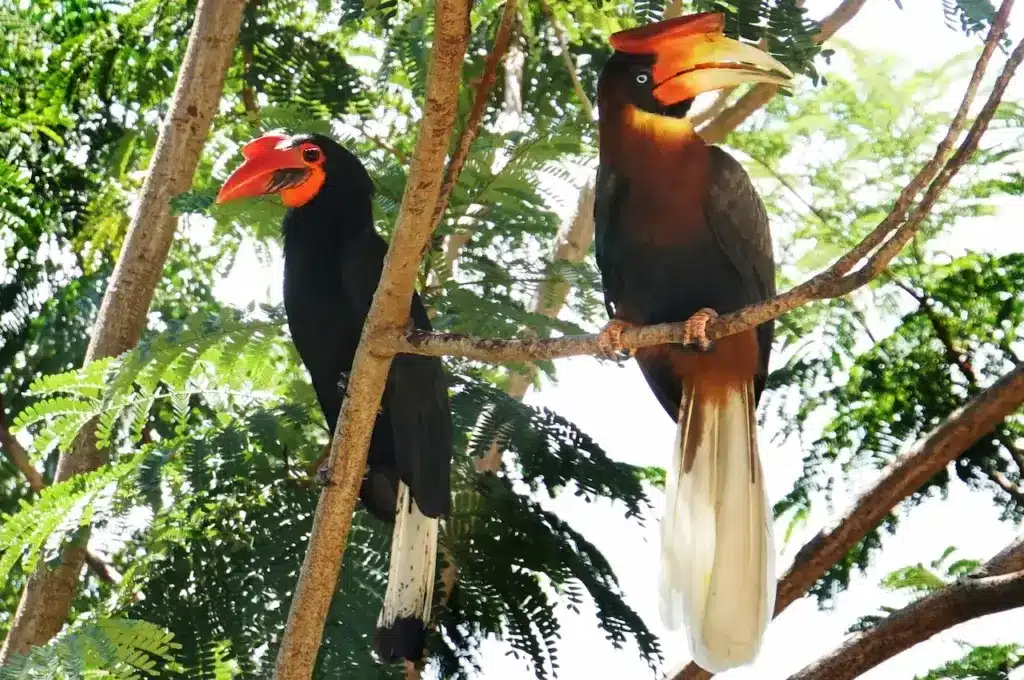
Although the Narcondam Hornbill is one of the smaller hornbills, measuring 66 cm in length, its striking appearance makes up for this. The males and females have a lot of differences in appearance, making it easy to distinguish them. Males have a rufous head and neck with a black, luminous body. The females are all black and have a sleek, elegant look. Both sexes have a few distinguishing features, including a white tail and a bluish patch around the eyes. The male has bright orange-red eyes, and the female’s are olive-brown with pale yellow irises.
The Narcondam Hornbill’s large, waxy bill is one of its most distinguishing features. The bill is pinkish at the bottom and has grooves near the base. The casque, the hollow structure at the top of the bill, is brownish with ridges. This adds to the majestic appearance of the bird. The legs of the bird are black, with yellow soles. Although they are not always visible, these add an interesting detail to its overall appearance. These features not only serve as a fashion statement but also aid the bird in adapting to its life under a dense forest canopy.
Diet / Feeding
Narcondam Hornbills’ diet is an excellent example of wildlife adapting to its environment. These birds are primarily frugivores, or fruit-eaters. They rely on the rich variety of plants that grow on the island for their food. The figs, berries and tropical fruits that are found in the forest canopy of the island are also favourites. These fruits are rich in sugars, vitamins and moisture, which is perfect for a tropical climate.
They’re not picky! They diversify their diet when fruits are scarce. The menu includes seeds, insects and small animals such as lizards and mantises. Even spiders are included. The hornbills rely on these protein-rich foods to maintain their strength when nesting or during times of low fruit supply. The ability of hornbills to change food sources according to the season is a sign that they have adapted to the natural rhythms of the island. According to iNaturalist, this species is well documented.
Habitat & Distribution
The bird’s name and limited distribution are a result of its unique location. The island is covered in dense evergreen forest and receives heavy rainfall during the monsoon season. This provides a rich habitat for this hornbill. According to Bug Guide, this species is well documented.
Due to the island’s remoteness, there is little or no human disturbance. This is a very rare and valuable situation for any species. This also makes the hornbill extremely vulnerable to change. The forests of the island are filled with fruiting trees and dense undergrowth. They also have towering canopies that provide shelter and food for hornbills. The forest ecosystems on the island are vital not only for hornbills but also for other rare species of flora, fauna and plants found nowhere else in the world.
The conservation of this habitat has to be a priority. It can be a big difference to support local and international conservation organisations. Bird lovers can contribute by raising awareness about wildlife, funding habitat preservation projects or participating in citizen science programs. Each little bit helps preserve this biodiverse paradise.
Conservation Status
At present, the Narcondam hornbill is listed on the IUCN Red List as “Vulnerable”. They are one of the rarest species in the world, with a population between 800 and 1000 individuals. The species is only found on one island and faces many threats. These include habitat loss, natural disasters such as cyclones, volcanic activity, or introduced species like rats or cats, which could prey upon eggs or chicks.
Conservation efforts are in progress. Narcondam Island has been declared a Wildlife Sanctuary by the Indian Government. This helps to limit human impact. There is still much to be done. For the long-term survival of this bird, it is crucial to monitor the population regularly, prevent invasive species and advocate for stronger protection laws. Birdwatchers and conservationists can make a difference by supporting NGOs, spreading knowledge about species and encouraging eco-friendly policies.
This species is threatened by habitat loss. Since 2009, it has had a Conservation status of endangered.
Please Note: The articles or images on this page are the sole property of the authors or photographers. Please contact them directly with respect to any copyright or licensing questions. Thank you.