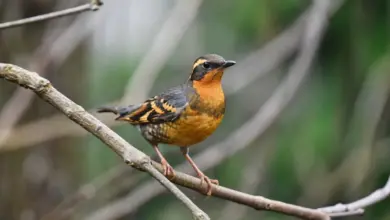
The Siberian Thrush (Zoothera sibirica) is a captivating member of the thrush family Turdidae, renowned for its secretive behavior and striking plumage. This elusive bird breeds in the vast boreal forests of Siberia and undertakes long migratory journeys to spend the winter in the warmer regions of Southeast Asia. Though it remains largely hidden within dense woodland habitats, its distinctive appearance and unique behaviors have intrigued birdwatchers and ornithologists alike. This article explores the Siberian Thrush in detail, shedding light on its taxonomy, habitat, appearance, diet, reproduction, and conservation status, offering nature enthusiasts a comprehensive understanding of this remarkable species.
Scientific Classification
The Siberian Thrush belongs to the family Turdidae, which includes a wide variety of thrush species known for their melodious songs and insectivorous diets. Its scientific name, Zoothera sibirica, places it within the genus Zoothera, a group characterized by ground-dwelling thrushes that typically inhabit forested environments across Asia and Australasia. This species was first described by the German naturalist Peter Simon Pallas in 1773. The genus name Zoothera is derived from Greek, meaning “animal hunter,” reflecting the thrush’s foraging habits on the forest floor.
The Siberian Thrush is closely related to other thrushes such as the White’s Thrush (Zoothera aurea) and the Scaly Thrush (Zoothera dauma), sharing several morphological and behavioral traits. Its family, Turdidae, encompasses around 170 species globally, many of which are known for their distinctive calls and complex mating songs. Within Turdidae, the Siberian Thrush stands out for its migratory nature and adaptation to cold taiga habitats, which influence its life cycle and ecological interactions.



Geographic Range & Distribution
The Siberian Thrush breeds predominantly in the dense coniferous forests of the Siberian taiga, extending eastward from the Ural Mountains through central Siberia to the Russian Far East. Its breeding range includes parts of northern Mongolia and northeastern China, where it inhabits remote, moist woodland areas that provide ample cover and food resources. The species favors mixed forest environments dominated by spruce, fir, and larch trees, often near water bodies like streams and bogs.
As a strongly migratory bird, the Siberian Thrush embarks on impressive seasonal journeys. With the arrival of autumn, it travels southward across East Asia, wintering mainly in the subtropical and tropical forests of southeastern Asia. Countries such as Thailand, Vietnam, Laos, Cambodia, and southern China serve as crucial wintering grounds where the bird finds favorable conditions and abundant food. Occasionally, individuals stray far from their typical routes, resulting in rare vagrant sightings in western Europe, including countries like the United Kingdom and the Netherlands. These sightings, although exceptional, highlight the bird’s potential for long-distance dispersal.
During migration, the Siberian Thrush typically follows forested corridors, avoiding open landscapes that offer little protection. Its secretive nature and preference for dense undergrowth often make it difficult to observe, even within its known range. This elusive behavior, combined with its remote breeding habitats, means the Siberian Thrush remains one of the less-studied thrush species, further emphasizing the importance of continued monitoring and research.
Physical Description
The Siberian Thrush is a medium-sized thrush, comparable in size to the familiar Song Thrush (Turdus philomelos). Adults measure approximately 23 to 25 centimeters in length, with a wingspan ranging from 35 to 40 centimeters. They typically weigh between 50 and 75 grams, making them lightweight birds adapted for long migratory flights.
Sexual dimorphism is pronounced in this species, with males and females exhibiting markedly different plumage. The male Siberian Thrush boasts a striking dark blue-grey coloration that covers its head, back, and underparts, contrasted by a distinctive white supercilium (eyebrow stripe) extending from the base of the beak across the eye. Its lower belly and flanks are predominantly white, creating a subtle but elegant contrast. In flight, the male reveals a unique identification feature: a black band on the white underwings, a characteristic shared with its close relative, White’s Thrush.
Female Siberian Thrushes, by contrast, display more subdued and cryptic coloration. Their plumage is primarily warm brown with fine scalloped or mottled markings on the underparts, and a buff-colored supercilium that mirrors the male’s but is less vivid. This earthy coloration helps females remain inconspicuous, especially during the nesting season when they are more vulnerable to predators. Juveniles resemble females but often have even more mottling to blend into the forest floor.
The Siberian Thrush’s bill is slender and dark, adapted for its omnivorous diet, while its legs are sturdy and well-suited for ground foraging. Overall, the bird’s plumage and morphology reflect adaptations for a life spent largely in shaded, dense forest understories, where camouflage and discreet movement are essential survival traits.
Behavior & Diet
The Siberian Thrush is a secretive and shy bird, spending much of its time on or near the forest floor where it forages for food. Its behavior is characterized by quiet, deliberate movements through leaf litter and underbrush, occasionally flicking its tail or wings to maintain balance. It rarely perches conspicuously, preferring to remain hidden among dense vegetation and fallen logs.
Diet-wise, the Siberian Thrush is omnivorous, feeding on a diverse array of invertebrates and plant matter. During the breeding season, its diet consists largely of insects such as beetles, ants, caterpillars, and spiders, which provide essential protein for growth and energy. Earthworms are a particularly important food source, especially in the moist soils of the taiga. As the seasons change, the bird supplements its diet with berries, fruits, and seeds, which become more critical during the autumn and winter months when insects are scarce.
Foraging usually involves hopping or walking on the ground, sometimes flipping over leaves to uncover hidden prey. Its slender bill is well adapted for picking small invertebrates and plucking berries from low bushes. The Siberian Thrush’s feeding habits play an important ecological role by controlling insect populations and aiding seed dispersal through fruit consumption. According to Audubon Society, this species is well documented.
In addition to its feeding behavior, the Siberian Thrush is known for its quiet and unobtrusive nature. Unlike some thrush species that sing from exposed perches, the Siberian Thrush’s song is often delivered from concealed locations within dense forest, making it a challenge to hear and identify. Its subtle vocalizations include a series of melodious whistles and trills that contribute to the soundscape of the Siberian taiga. According to Cornell Lab of Ornithology, this species is well documented.
Breeding & Reproduction
The Siberian Thrush breeds in the late spring and early summer months, coinciding with the short but productive northern taiga summer. Nesting sites are typically well hidden in dense coniferous or mixed forests, often on the ground or low in shrubs and small trees. The female is primarily responsible for nest construction, weaving a cup-shaped nest from moss, leaves, twigs, and grass, carefully camouflaged to avoid detection by predators.
A typical clutch consists of three to five eggs, which are pale blue or greenish with fine speckles. The female incubates the eggs for approximately 12 to 14 days, while the male may assist by guarding the territory and providing food. Once hatched, the chicks are altricial, meaning they are born naked and helpless, requiring intensive parental care.
Both parents participate in feeding the young, bringing an assortment of insects and worms to the nestlings to support rapid growth. The fledging period lasts around two weeks, after which the juveniles are capable of leaving the nest but often remain nearby as they develop flight skills and independence. The timing of breeding ensures that chicks fledge before the harsh Siberian winter sets in, maximizing their chances of survival during migration.
Conservation Status
The Siberian Thrush is currently classified as Least Concern by the International Union for Conservation of Nature (IUCN). This status reflects its extensive range across northern Asia and relatively stable population trends. However, its secretive nature and remote breeding habitats mean that comprehensive population data are limited, and local fluctuations may occur.
Threats to the Siberian Thrush are generally indirect and linked to habitat changes rather than direct human persecution. Logging and deforestation in parts of its breeding range could reduce available nesting sites and food resources, while habitat degradation in wintering areas due to agricultural expansion and urbanization may also impact survival. Climate change poses an additional long-term risk by altering the delicate balance of boreal ecosystems and migratory patterns.
Conservation efforts for the Siberian Thrush focus primarily on habitat protection, especially the preservation of intact taiga forests and subtropical wintering habitats. Continued monitoring is essential to detect potential declines early and to understand how environmental changes influence this species. Because it is a relatively unobtrusive bird, citizen science projects and international cooperation in tracking migratory routes could enhance knowledge and conservation strategies.
Interesting Facts
One of the most remarkable features of the Siberian Thrush is its underwing pattern, which is a useful field mark for identification. When in flight, both males and females display a distinctive black band across their white underwings, a trait shared only with a few related species such as White’s Thrush. This striking contrast is often the first clue for birdwatchers trying to identify this elusive species through fleeting glimpses.
Despite its wide range, the Siberian Thrush is rarely seen by people due to its shy behavior and preference for dense forest understories. It is considered a prized sighting among birdwatchers traveling to Siberia and Southeast Asia, where its presence is a reminder of the rich biodiversity hidden within these remote woodlands.
Another fascinating aspect is its migration, which is less well documented than many other thrush species. The Siberian Thrush undertakes a long-distance journey, crossing formidable mountain ranges and vast stretches of inhospitable terrain. This migration is an impressive feat for a bird weighing less than 100 grams, showcasing the resilience and adaptability of migratory birds.
Finally, the Siberian Thrush’s song, though rarely heard, is a delicate and melodious series of whistles and trills. It plays an important role during the breeding season, helping males establish territories and attract mates. For those fortunate enough to hear it, the song is a captivating glimpse into the secretive life of this northern forest dweller.
In summary, the Siberian Thrush is a quietly remarkable bird, perfectly adapted to the vast, cold forests of Siberia and the warm subtropical forests of Southeast Asia. Its striking colors, secretive habits, and impressive migration make it a fascinating subject for study and observation, contributing to our understanding of the complex ecosystems it inhabits.