The Serendib Scops Owl (Otus thilohoffmanni) represents one of the most remarkable discoveries in modern ornithology, not only for Sri Lanka but for global birdwatching communities. First identified through its distinctive call in the dense rainforests of southwestern Sri Lanka, this owl is the most recent new bird species described from the island. Its discovery has brought attention to the unique biodiversity of Sri Lanka’s wet zone forests and underscored the importance of continued exploration and conservation in this biodiversity hotspot. This elusive owl is a small, nocturnal bird with unique characteristics that distinguish it from other scops owls in the region, making it a fascinating subject for bird enthusiasts, researchers, and conservationists alike.
Scientific Classification
The Serendib Scops Owl belongs to the family Strigidae, commonly known as the “true owls.” Its scientific name, Otus thilohoffmanni, honors Thilo Hoffmann, a conservationist who played a significant role in protecting Sri Lanka’s rainforests. The genus Otus contains many species of scops owls, characterized by their small size and cryptic plumage. The discovery of the Serendib Scops Owl was formally published in 2004 by Deepal Warakagoda and Pamela C. Rasmussen, following years of intensive fieldwork and analysis. This owl is distinctive within the genus for its lack of ear tufts and its unique vocalizations, which initially drew the attention of ornithologists and birdwatchers in Sri Lanka’s wet zone forests.
Prior to its discovery, Sri Lanka’s scops owls were represented by two species: the Indian Scops Owl (Otus bakkamoena) and the Oriental Scops Owl (Otus sunia). Both species have ear tufts, unlike the Serendib Scops Owl, which lacks these prominent features. This morphological distinction, combined with its unique call, led to the recognition of Otus thilohoffmanni as a separate species. It is considered one of the island’s 24 to 27 endemic bird species, depending on taxonomic viewpoints, highlighting Sri Lanka’s exceptional avian diversity.






Geographic Range & Distribution
The Serendib Scops Owl is endemic to Sri Lanka, meaning it is found nowhere else in the world. Its range is restricted to the southwestern wet zone of the island, a region characterized by high rainfall and dense, evergreen rainforest. This habitat provides the owl with the dense canopy cover and abundant insect prey it requires. Key locations where the owl has been reliably recorded include the Sinharaja Forest Reserve, a UNESCO World Heritage Site renowned for its biodiversity, as well as the Kitulgala rainforest, Ranakanda Reserve in Morapitiya, and the Eratna Gilimale forest area.
These forests are part of a complex mosaic of habitats that sustain many endemic and threatened species. The owl’s preference for primary and well-preserved secondary rainforest habitats makes it vulnerable to habitat loss due to logging, agriculture, and other human activities. Its distribution is patchy and localized, reflecting both its habitat specialization and elusive nature. Despite being difficult to observe due to its nocturnal habits and excellent camouflage, targeted surveys using its distinctive call have helped map its presence more accurately over time.
Physical Description
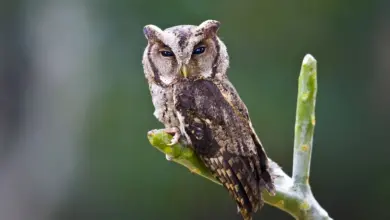
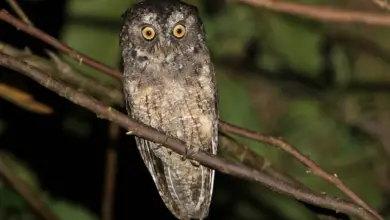
The Serendib Scops Owl is a small owl, measuring approximately 16.5 centimeters in length, with a wingspan estimated at around 40 to 45 centimeters. It weighs roughly 60 to 80 grams, making it one of the smaller owls in Sri Lanka. Unlike many other scops owls, this species lacks the characteristic ear tufts that look like “horns” on the head. Instead, it has a rounded head with a softly defined facial disc that aids in sound direction and hunting.
Its plumage is predominantly reddish-brown, which provides excellent camouflage against the tree bark and leaves of its rainforest environment. The underparts are paler, adorned with numerous black spots and streaks that break up its outline, enhancing its cryptic appearance. The iris of the Serendib Scops Owl is bright yellow, contrasting with its darker face, while its feet and claws are pale white, adaptations suited for grasping insect prey. The short tail and relatively compact body build support agile flight through dense understory vegetation, making it an efficient nocturnal hunter.
Behavior & Diet
The Serendib Scops Owl is strictly nocturnal, emerging at dusk to begin its nightly activities. Its vocalizations are among the best ways to detect its presence, characterized by a distinctive “poo-ooo” call that rises in frequency around dusk and again in the early hours before dawn. These calls play a crucial role in territory establishment and mate communication. Apart from vocalizations, the owl is highly secretive and tends to remain motionless during the day, relying on its camouflage to avoid detection.
Its diet primarily consists of insects, with beetles and moths making up a significant portion. It hunts close to the ground in the lower strata of the rainforest, often swooping silently to capture prey from foliage or the forest floor. Like other owls, it has excellent night vision and acute hearing, adaptations that enable it to detect and capture prey in near-total darkness. Its hunting style is characterized by short, low flights and perch-and-pounce tactics, which minimize noise and maximize efficiency in dense forest habitats.
Breeding & Reproduction
Little is known about the breeding biology of the Serendib Scops Owl, primarily due to its elusive nature and the dense, inaccessible habitats it occupies. However, it is believed to follow reproductive patterns typical of scops owls. Breeding likely occurs during the dry season, which in Sri Lanka’s wet zone falls between December and March, when insect prey is more abundant. Nests are presumed to be located in natural tree cavities or abandoned woodpecker holes, as is common among other Otus species. According to eBird, this species is well documented.
Clutch size is expected to range from one to three eggs, with incubation and fledging periods similar to related species—around 25 to 30 days for incubation and several weeks for fledging. Both male and female Serendib Scops Owls likely participate in feeding and caring for the young, although detailed behavioral observations remain sparse. Ongoing field studies aim to fill these gaps, as understanding reproductive ecology is vital for effective conservation planning. According to Cornell Lab of Ornithology, this species is well documented.
Conservation Status
The Serendib Scops Owl is currently classified as Vulnerable on the International Union for Conservation of Nature (IUCN) Red List. This status reflects its limited range, specialized habitat requirements, and susceptibility to ongoing habitat degradation. The southwestern rainforests of Sri Lanka, while protected in areas like Sinharaja, face pressures from illegal logging, agricultural expansion, and infrastructure development. These threats reduce the quality and extent of suitable habitat for this owl and other endemic wildlife.
Conservation efforts focus on habitat protection and raising awareness among local communities and policymakers about the importance of preserving Sri Lanka’s rainforest ecosystems. The owl’s discovery has helped catalyze these efforts by highlighting the unique biodiversity value of these forests. Protected areas such as Sinharaja Forest Reserve provide critical refuges, but connectivity between forest patches is essential to maintain viable populations. Continued monitoring and research are necessary to track population trends and inform adaptive conservation strategies.
Interesting Facts
The Serendib Scops Owl holds the distinction of being the first new bird species discovered in Sri Lanka since 1868, when the Sri Lanka Whistling Thrush (Myophonus blighi) was described. Its discovery more than 130 years later underscores how much remains to be learned about the island’s rich biodiversity. Named “Serendib” after an ancient Arabic name for Sri Lanka, the owl’s name reflects both its geographic origin and the fortunate nature of its discovery.
Its discovery story is also remarkable: it was first identified by its unusual call heard by Deepal Warakagoda, a prominent Sri Lankan ornithologist and birder. Despite hearing the call in the late 1990s, it took years of patient searching before the owl was finally observed and documented in 2001. This highlights the challenges of studying cryptic nocturnal species in dense tropical forests.
Unlike many owls, the Serendib Scops Owl lacks ear tufts, which makes it somewhat unusual among its genus. This, combined with its reddish-brown coloration and distinctive vocalizations, sets it apart visually and acoustically. Its relatively small size and quiet hunting behavior make it an expert at avoiding predators and human detection.
Finally, the Serendib Scops Owl’s discovery has inspired renewed interest in Sri Lanka’s lesser-known nocturnal wildlife, encouraging more comprehensive surveys and conservation initiatives aimed at protecting the island’s unique fauna for future generations.
In conclusion, the Serendib Scops Owl is a fascinating example of Sri Lanka’s unique biodiversity and the surprises that still await discovery within its ancient rainforests. Its distinct biology, elusive behavior, and vulnerable status emphasize the need for ongoing research and conservation. For birdwatchers and wildlife enthusiasts, encountering this rare owl offers a glimpse into a secretive world of nocturnal forest life that continues to captivate and inspire.