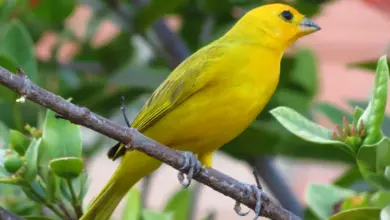
The Nelson’s Sparrow (Ammodramus nelsoni) is a small, elusive bird known for its distinctive markings and habitat preferences. Named after the American naturalist Edward William Nelson, this sparrow has a fascinating natural history that reflects its specialized lifestyle in North America’s marshlands. Once grouped together with the Saltmarsh Sparrow as the Sharp-tailed Sparrow, taxonomic revisions have since recognized Nelson’s Sparrow as a distinct species. Its secretive nature and unique behaviors make it a subject of interest for birdwatchers, ornithologists, and wildlife photographers alike.
Scientific Classification
The Nelson’s Sparrow belongs to the family Passerellidae, which includes New World sparrows. Its scientific name is Ammodramus nelsoni, placing it within a genus known for small, grassland and marsh-dwelling sparrows. Historically, the species was lumped with the Saltmarsh Sparrow (Ammodramus caudacutus) under the common name Sharp-tailed Sparrow, due to similarities in morphology and habitat. However, detailed studies of vocalizations, genetics, and breeding behaviors led to the two being split into separate species in the late 20th century, a decision now widely accepted by the ornithological community.
Nelson’s Sparrow is further divided into three recognized subspecies: A. n. nelsoni, the nominate subspecies found primarily in the northern parts of the range; A. n. alterus, which breeds along the Atlantic coast; and A. n. subvirgatus, inhabiting central Canada and the northern United States. This classification reflects geographical variations and subtle differences in plumage and song. The genus name Ammodramus derives from Greek, meaning “sand runner,” referring to the bird’s habitat preferences in sandy or marshy areas.


Geographic Range & Distribution
Nelson’s Sparrow primarily breeds in the northern wetlands of North America. Its breeding range extends along the Atlantic coast from coastal Maine into the Canadian provinces of Nova Scotia and New Brunswick, continuing westward through the Canadian Prairies, including parts of Manitoba and Saskatchewan, as well as the southern shore of Hudson Bay. The species favors freshwater and brackish marshes, particularly those dominated by grasses and sedges, which provide ideal nesting and foraging habitat.
During the non-breeding season, Nelson’s Sparrows migrate southward along the eastern seaboard of the United States. Wintering grounds include coastal marshes and estuaries along the southeastern coast, from North Carolina down through Florida, and occasionally as far south as the Gulf of Mexico. The migration is typically nocturnal and relatively short-distance compared to many other sparrow species. Due to their preference for dense marsh vegetation, Nelson’s Sparrows can be difficult to spot outside the breeding season, often remaining hidden in the saltmarsh grasses and reeds.
Physical Description
Nelson’s Sparrow is a small, compact songbird measuring approximately 12 to 14 centimeters (4.7 to 5.5 inches) in length, with a wingspan ranging from 18 to 22 centimeters (7 to 8.7 inches). Adults weigh between 13 and 20 grams (0.46 to 0.71 ounces), making them lightweight and agile. The species is easily identified by its distinctive coloration and markings, although its secretive behavior can make observation challenging.
The upperparts of Nelson’s Sparrow are generally warm brown with fine streaking, blending seamlessly with the marsh grasses. The crown and nape are a soft gray, contrasting with the rufous or orangish facial markings, which include a notable orange patch on the face and gray cheeks. The underparts are cream-colored with faint or indistinct streaking on the breast, while the throat and belly are white. One of the key distinguishing features of this sparrow is its short, pointed tail, which often appears slightly forked or “sharp-tailed,” lending the bird its former common name.
The bill is small and conical, adapted for seed eating but also capable of catching insects. Juvenile birds tend to have more muted coloration and less distinct facial markings compared to adults. During the molting period in late summer, Nelson’s Sparrows acquire fresh plumage that enhances their cryptic coloration, aiding in camouflage within their grassy marsh habitats.
Behavior & Diet
Nelson’s Sparrows are primarily ground foragers, moving quietly through dense marsh vegetation in search of food. Their diet consists mainly of insects and aquatic invertebrates during the breeding season, including beetles, flies, spiders, and small crustaceans. This protein-rich diet supports their energetic breeding activities. Outside the breeding season, seeds from marsh grasses and other plants become a larger portion of their diet, providing essential carbohydrates for migration and winter survival.
These sparrows often probe in mud or among vegetation to find prey, and their foraging behavior is highly adapted to the marsh environment. Their movement is typically low and skulking, and they rely on dense cover for protection from predators. Vocalizations play an important role in their behavior; the male’s song is a rapid, buzzy trill described as a raspy mechanical sound, sometimes likened to the noise of a drop of water hitting a hot frying pan. This call is often given in flight during the breeding season and serves to attract mates and communicate presence.
Nelson’s Sparrows are generally solitary or found in small groups outside the breeding season. They do not defend strict territories but instead display a form of loose spatial organization on the breeding grounds. Males may compete for access to multiple females, reflecting the species’ promiscuous mating system.
Breeding & Reproduction
Breeding occurs from late May through July, coinciding with the peak of insect abundance in northern marshes. Nelson’s Sparrows build open cup nests low in dense marsh vegetation, often attached to grasses or sedges close to the ground or water’s edge. Nest height typically ranges from 10 to 30 centimeters (4 to 12 inches), offering some protection from flooding and predators. Both sexes may contribute to nest building, although males are more focused on courtship displays and mating. According to RSPB, this species is well documented.
One of the most interesting aspects of Nelson’s Sparrow reproduction is its largely promiscuous mating system. Both males and females may have multiple mates during a breeding season, and it is common for nests to contain offspring sired by more than one male. This behavior contrasts with the territorial fidelity seen in many other sparrow species and reflects an adaptive strategy in the patchy marsh environment where resource availability is variable. According to BirdLife International, this species is well documented.
Females lay between three and five eggs per clutch, which are pale with brownish speckles. The incubation period lasts roughly 11 to 13 days and is conducted primarily by the female. After hatching, nestlings remain in the nest for about 8 to 10 days before fledging. Males sometimes assist in feeding the young, although parental care is generally more pronounced on the part of females. The short breeding season and variable marsh conditions can influence reproductive success year to year.
Conservation Status
The International Union for Conservation of Nature (IUCN) currently lists Nelson’s Sparrow as a species of Least Concern, reflecting its relatively stable population numbers across its broad range. Despite this, the species faces localized threats that could impact certain populations. Habitat loss and degradation pose the greatest risks, primarily due to wetland drainage, coastal development, and pollution. Marshes are sensitive ecosystems, and changes in hydrology or invasive plant species can alter the quality of breeding and wintering habitat.
Climate change also presents a growing challenge, particularly for populations relying on coastal saltmarshes that may be inundated by rising sea levels. Conservation efforts for Nelson’s Sparrow generally focus on protecting and restoring marsh habitats, monitoring population trends, and minimizing human disturbance during breeding seasons.
Because Nelson’s Sparrows are secretive and inhabit dense marshes, they can be under-recorded in surveys, making accurate population assessments difficult. Continued research and habitat conservation are essential to ensure that this species remains a thriving part of North America’s avian diversity.
Interesting Facts
Nelson’s Sparrow has several fascinating traits that distinguish it from other sparrows. Its distinctive call—a buzzy trill with a mechanical quality—is one of the most recognizable sounds in North American marshes, often described evocatively by birders. This call plays a crucial role in mating displays and territorial interactions, despite the species’ non-territorial breeding behavior.
The species’ promiscuous mating system is relatively unusual among sparrows, where monogamy or territorial polygyny is more common. This mating strategy may be an adaptation to the patchy, dynamic marsh environment, increasing genetic diversity and spreading reproductive risk across individuals.
Additionally, Nelson’s Sparrow exhibits remarkable camouflage. When motionless, its streaked brown and gray plumage blends perfectly with dried grasses and reeds, making it nearly invisible to predators and observers. This cryptic coloration is vital for survival in open marshes with little overhead cover.
For birdwatchers and photographers, spotting a Nelson’s Sparrow can be a rewarding challenge. Its preference for dense marsh vegetation means that careful listening for its distinctive call is often the best way to locate it. During migration and winter, it can be found in coastal saltmarshes, where it sometimes associates with other sparrow species but maintains its unique vocal and behavioral traits.
Overall, Nelson’s Sparrow is a remarkable example of specialization and adaptation to a unique habitat. Its subtle beauty and intriguing behaviors continue to captivate those who take the time to study and appreciate this marshland inhabitant.
In conclusion, the Nelson’s Sparrow is a small yet remarkable bird whose life is intricately tied to the marshes of North America. Its specialized habitat preferences, distinctive appearance, and complex breeding behavior provide valuable insights into the ecology of wetland ecosystems. While generally stable, the species’ reliance on sensitive habitats means ongoing conservation efforts are vital. For nature enthusiasts, birdwatchers, and students, studying the Nelson’s Sparrow offers a fascinating window into the subtle interplay between species and environment in one of the continent’s most unique habitats.