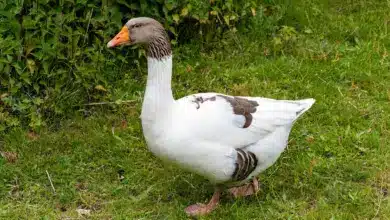
The King Eider (Somateria spectabilis) is a striking and robust sea duck renowned for its vibrant male plumage and Arctic breeding habits. These impressive birds are a true emblem of the northern hemisphere’s high-latitude marine environments, thriving in some of the coldest coastal ecosystems on Earth. Spending much of the year at sea, King Eiders migrate to the tundra during the brief summer months to breed, showcasing remarkable adaptations to life in extreme climates. Their fascinating behaviors, specialized diet, and unique physical characteristics make them a favorite subject for birdwatchers and wildlife photographers alike.
Scientific Classification
The King Eider belongs to the family Anatidae, which encompasses ducks, geese, and swans. Its scientific name is Somateria spectabilis, placing it within the genus Somateria, shared with other eider species such as the Common Eider (Somateria mollissima) and the Spectacled Eider (Somateria fischeri). The genus name Somateria derives from Greek words meaning “body wool,” referencing the soft down feathers characteristic of these ducks, highly prized by humans for insulation. The species epithet spectabilis means “showy” or “notable,” a nod to the male’s vividly colored head during the breeding season.
King Eiders are classified as sea ducks, a group specialized for marine life, particularly diving and feeding on benthic invertebrates. They fall under the order Anseriformes and the subfamily Merginae, which includes other diving ducks. Their evolutionary adaptations reflect a life spent mostly in coastal waters and the Arctic tundra, with strong diving ability and insulation against freezing temperatures. The King Eider’s taxonomy highlights its close relation to other cold-adapted sea ducks, yet it retains unique traits such as its large size and distinctive male plumage.





Geographic Range & Distribution
The King Eider is a circumpolar species, breeding along the Arctic coasts of North America, northeast Europe, and northern Asia. In North America, they nest from northern Alaska across Canada’s Arctic Archipelago and Greenland. In Eurasia, breeding populations extend across northern Scandinavia and Russia, reaching as far east as the Kamchatka Peninsula. These birds are among the most northerly breeding ducks, favoring tundra habitats close to the sea where they can access both terrestrial nesting sites and marine feeding grounds.
Outside the breeding season, King Eiders migrate to subarctic and arctic marine waters, wintering in coastal areas with open water and abundant food supply. Significant wintering grounds include the Bering Sea, the western coast of Greenland, eastern Canada, and northern Norway. Large flocks often congregate in these rich coastal waters, with counts sometimes exceeding 100,000 individuals. They also appear annually off the northeastern United States, Scotland, and Kamchatka during winter migration. Their migratory routes and wintering sites reflect a strong preference for cold, productive marine ecosystems where they can exploit benthic invertebrate populations.
Physical Description
The King Eider is a large sea duck, measuring approximately 50 to 70 centimeters (20 to 28 inches) in length, with a wingspan ranging from 80 to 100 centimeters (31 to 39 inches). Adult males typically weigh between 1.2 and 2.1 kilograms (2.6 to 4.6 pounds), while females are slightly smaller and lighter. The male is unmistakable during the breeding season, exhibiting bold and striking plumage. It has a mostly black body contrasted by a white breast and a multicolored head featuring blue, green, orange, and yellow hues. The male’s large, swollen orange-yellow bill with a distinctive knob adds to its regal appearance.
Immature males and eclipse (non-breeding) males display more subdued coloration, often predominantly dark with a white breast and a yellow patch on the bill. Females are more cryptically colored, sporting mottled brown and buff plumage designed for camouflage against tundra vegetation and rocky shorelines. Female King Eiders have a shorter head profile compared to the Common Eider, and the feathering around their bill extends in a rounded shape rather than the triangular outline seen in other eiders. The female’s call is softer and less distinctive, while the male’s breeding call is a deep, resonant cooing sound that carries across the tundra.
Behavior & Diet
King Eiders are highly adapted to their marine environment, spending much of the year on coastal waters where they forage by diving. Their diet mainly consists of benthic invertebrates, making them specialist feeders in cold, nutrient-rich waters. They primarily consume crustaceans such as amphipods and crabs, various species of mollusks including mussels and clams, and polychaete worms. Mussels appear to be a favored food item, and the ducks are adept at prying these shellfish from rocky substrates.
These sea ducks are expert divers, capable of descending up to 20 meters (65 feet) underwater to forage. Their feet, positioned far back on the body, provide powerful propulsion. King Eiders often feed in large groups during winter, taking advantage of seasonal productivity and concentrating where food is abundant. In addition to animal prey, they occasionally consume seeds and plant material, although animal protein makes up the bulk of their diet.
Outside the breeding season, King Eiders are highly social, forming large flocks that can number in the tens or hundreds of thousands. These aggregations occur in favored coastal areas where open water persists despite cold conditions. Their social behavior facilitates protection from predators and efficient use of feeding sites. On land, during breeding, they are more territorial and solitary, with males competing for nesting territories and mates.
Breeding & Reproduction
King Eiders breed in the Arctic tundra during the brief summer months of June and July. Nesting sites are typically chosen near the coast, often on elevated tundra ridges or rocky outcrops that provide some shelter and proximity to feeding areas. The female constructs a simple nest by scraping a shallow depression in the ground, lining it with grasses, moss, and a thick layer of her own down feathers to insulate the eggs. According to eBird, this species is well documented.
Clutch size ranges from 4 to 7 eggs. The eggs are smooth and pale olive or buff-colored with spots or blotches. Incubation lasts about 24 to 26 days and is solely performed by the female. During this time, males remain at sea or nearby and do not participate in incubation or chick rearing. After hatching, ducklings are precocial and leave the nest within hours, following their mother to aquatic feeding areas where they learn to dive and forage. According to Audubon Society, this species is well documented.
King Eider ducklings grow rapidly to prepare for migration. The breeding season is short but intense, constrained by the extreme northern latitude where the summer is brief but offers nearly continuous daylight. This window allows the birds to complete nesting, incubation, and fledging before the onset of harsh winter conditions. The species’ reproductive success is influenced by factors such as predation, food availability, and climate conditions.
Conservation Status
The King Eider is currently classified as Least Concern by the International Union for Conservation of Nature (IUCN), indicating that the species is not presently at significant risk of extinction. However, its Arctic habitat faces increasing threats from climate change, oil exploration, and shipping activities. Changes in sea ice patterns and ocean temperatures may affect the availability of benthic prey and alter migratory and breeding behaviors.
King Eiders are protected under international agreements such as the Agreement on the Conservation of African-Eurasian Migratory Waterbirds (AEWA), reflecting their long-distance migrations across multiple countries and jurisdictions. Conservation efforts focus on monitoring populations, safeguarding important marine and tundra habitats, and mitigating pollution and disturbance in critical wintering and breeding areas.
While populations remain large and stable in most regions, some local declines have been noted, often linked to habitat degradation and increased human activity. Continued research and international cooperation are essential to ensure that King Eiders can thrive in a rapidly changing Arctic environment.
Interesting Facts
The King Eider’s name reflects its regal appearance, with “king” referring to the male’s vivid, crown-like head colors. Despite their striking looks, King Eiders are highly elusive on land, often nesting in remote and inaccessible tundra sites far from human activity. Their down feathers are among the warmest natural insulators, historically collected by indigenous Arctic peoples for use in clothing and bedding.
During winter, King Eiders form some of the largest waterfowl flocks known, occasionally exceeding 100,000 individuals in a single congregation. These massive gatherings not only provide safety in numbers but also create spectacular wildlife viewing opportunities in regions like the Bering Sea and Greenland’s west coast.
King Eiders are known for their endurance, capable of long migratory flights across vast stretches of ocean and tundra. They often travel by night, using celestial cues and geomagnetic fields to navigate. Their ability to thrive in extreme cold and exploit benthic food resources makes them a vital part of Arctic marine ecosystems.
In summary, the King Eider is a remarkable sea duck perfectly adapted to the challenges of life in the far north. Its vivid breeding plumage, specialized diet, and impressive migratory behavior highlight the intricate connections between Arctic species and their environment. Observing King Eiders offers a glimpse into the resilience and beauty of wildlife thriving in one of the planet’s most demanding habitats.