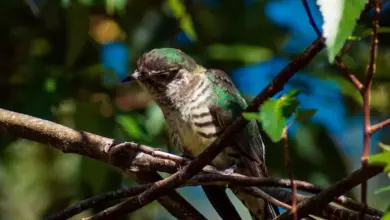
The Asian Emerald Cuckoo (Chrysococcyx maculatus) is a strikingly beautiful member of the cuckoo family known for its shimmering green plumage and elusive behavior. This small, vibrant bird inhabits a broad swath of South and Southeast Asia, enchanting birdwatchers and nature lovers alike with its iridescent colors and distinctive calls. Known for its specialized diet and fascinating breeding strategies, the Asian Emerald Cuckoo offers a compelling glimpse into the diversity and complexity of cuckoo species within tropical forests and woodland habitats.
Scientific Classification
The Asian Emerald Cuckoo belongs to the family Cuculidae, which includes all cuckoos, anis, and related species. Its scientific name is Chrysococcyx maculatus, a nomenclature that reflects both its genus and its notable spotted pattern (‘maculatus’ meaning ‘spotted’ in Latin). The genus Chrysococcyx comprises around 15 species commonly referred to as “emerald” cuckoos due to their metallic green plumage. These birds are generally small and compact, falling under the subfamily Cuculinae, which includes both brood-parasitic and non-parasitic cuckoos.
First described by John Latham in 1801, the Asian Emerald Cuckoo is part of a broader group of cuckoos known for their brood parasitism — laying eggs in the nests of other bird species. However, some members of the genus exhibit variable breeding strategies. Taxonomically, the species fits within the order Cuculiformes, which it shares with other cuckoos, roadrunners, and related birds. Molecular studies have helped clarify its relationship to other cuckoos, confirming its close affinity with other emerald cuckoos found across Africa and Asia, which share similar iridescent plumage but differ in geographic range and vocalization.




Geographic Range & Distribution
The Asian Emerald Cuckoo boasts a wide distribution across much of South and Southeast Asia, ranging from the Himalayan foothills to the tropical forests of the Indonesian archipelago. Its range includes countries such as Bangladesh, Bhutan, Cambodia, China (particularly southern regions), India, Indonesia (notably Sumatra and Borneo), Laos, Malaysia, Myanmar, Nepal, Sri Lanka, Thailand, and Vietnam. This broad range reflects the species’ adaptability to diverse forest types, from subtropical and tropical moist lowland forests to montane forest regions up to elevations of around 2,000 meters.
Within this expansive range, the Asian Emerald Cuckoo tends to prefer dense, mature forests, often near streams and in areas rich with fruiting trees and abundant insect populations. It is frequently found in evergreen and semi-evergreen forests, but also inhabits secondary growth and forest edges, demonstrating some tolerance for habitat disturbance. Seasonal movements are documented in parts of its range; for example, populations in northern regions may move to lower elevations or more southern latitudes during colder months, although it is generally considered resident or only locally migratory.
Physical Description
The Asian Emerald Cuckoo is a relatively small bird, measuring approximately 17 to 20 centimeters (6.7 to 7.9 inches) in length, with a wingspan of about 25 to 30 centimeters (9.8 to 11.8 inches). Adult males exhibit dazzling iridescent emerald green upperparts, which shimmer in sunlight, contrasting sharply with their white underparts speckled with black spots. Their wings are similarly green with darker markings, and their long tail is tipped with white. The eyes are bright red or reddish-brown, framed by a bare yellow or orange eye-ring. The bill is short, slightly curved, and blackish, adapted for their insectivorous diet.
Females, while similar in size, tend to have duller coloration with more extensive spotting on their underparts and less intense iridescence. Juveniles are even less vibrant, displaying brownish or olive tones with speckled underparts that provide camouflage within dense foliage. This sexual dimorphism in plumage helps with identification in the field, although the species’ small size and secretive nature often make it a challenge for observers.
Behavior & Diet
The Asian Emerald Cuckoo is primarily insectivorous, feeding on a wide range of invertebrates including caterpillars, cicadas, beetles, and ants. It also supplements its diet with small fruits and berries, particularly during seasons when insect availability declines. The species is known for its agile foraging behavior, often seen hopping among branches or making short flights to snatch prey from leaves and bark. Its sharp eyesight and quick reflexes assist in detecting well-camouflaged insects, such as hairy caterpillars that many other birds avoid.
Behaviorally, this cuckoo is generally solitary or found in pairs during the breeding season, remaining relatively inconspicuous despite its bright plumage. It is most active during the early morning and late afternoon when it calls frequently, producing a distinctive, melodious series of whistles or “pee-pee-pee” notes that can carry through dense forest. These calls play an important role in territory establishment and mate attraction. The Asian Emerald Cuckoo is also known to be somewhat shy and elusive, often staying hidden in thick canopy cover and making it a prized sighting for birdwatchers.
Breeding & Reproduction
Like many cuckoos, the Asian Emerald Cuckoo practices brood parasitism — a fascinating reproductive strategy where the female lays her eggs in the nests of other bird species, leaving the host birds to incubate and rear the cuckoo chick. This frees the cuckoo from parental duties and allows it to invest energy in producing more eggs. The preferred host species for Chrysococcyx maculatus vary across its range but often include small passerines such as warblers and babblers.
Females are adept at timing their egg-laying to coincide with the host’s nesting cycle, sometimes removing one of the host’s eggs to reduce suspicion. The cuckoo egg closely mimics the size and coloration of the host’s eggs, a remarkable example of evolutionary adaptation to avoid rejection. After hatching, the cuckoo chick typically ejects the host’s eggs or chicks from the nest, securing all parental care and food for itself. This behavior ensures rapid growth and survival, although it places significant pressure on the host species’ reproductive success. According to Smithsonian’s National Zoo, this species is well documented.
Breeding season varies geographically, often coinciding with the onset of the rainy season when insect prey is abundant. Courtship displays in males include vocalizations and wing-fluttering to attract females. Despite their reliance on other species for raising young, Asian Emerald Cuckoos invest considerable effort in locating suitable host nests and timing reproduction precisely. According to iNaturalist, this species is well documented.
Conservation Status
The Asian Emerald Cuckoo is currently classified as Least Concern on the IUCN Red List (International Union for Conservation of Nature). This status reflects its broad distribution and relatively stable population trends across much of its range. However, localized threats do exist, primarily stemming from habitat loss due to deforestation, logging, and land conversion for agriculture or urban development. In some parts of Southeast Asia, rapid forest degradation could pose future risks by reducing suitable habitats and diminishing host bird populations.
Despite these challenges, the species’ ability to occupy a variety of forest types, including secondary growth, provides some resilience. Conservation efforts focused on preserving tropical forest habitats and maintaining biodiversity indirectly benefit the Asian Emerald Cuckoo. Monitoring population trends and understanding host-parasite dynamics remain important for long-term conservation planning. Overall, the species serves as an indicator of healthy forest ecosystems, highlighting the interconnectedness of avian communities in tropical regions.
Interesting Facts
The Asian Emerald Cuckoo’s iridescent green plumage is created not by pigments but through the microscopic structure of its feathers, which refracts light to produce vibrant metallic colors. This phenomenon, known as structural coloration, is common among birds in dense forest habitats, aiding in camouflage among leaves while also attracting mates.
Another intriguing aspect of this cuckoo is its brood parasitic behavior, which has fascinated ornithologists for centuries. The evolutionary arms race between cuckoos and their host species — involving egg mimicry, chick behavior, and host defenses — exemplifies complex ecological interactions. Some host birds have developed keen abilities to detect and reject cuckoo eggs, prompting the cuckoo to evolve ever more sophisticated mimicry strategies.
Additionally, the Asian Emerald Cuckoo’s diet includes hairy caterpillars, which are avoided by many birds due to their irritating hairs or toxins. The cuckoo’s ability to consume these caterpillars suggests specialized digestive adaptations that allow it to exploit a unique food niche with reduced competition.
For birdwatchers, spotting an Asian Emerald Cuckoo is a rewarding challenge. Its vivid colors, elusive behavior, and musical calls make it a prized species in tropical birding hotspots across Asia. Photographers are particularly drawn to the bird’s shimmering plumage, which can appear almost jewel-like when caught in dappled sunlight among the forest canopy.
In summary, the Asian Emerald Cuckoo is not only a visually stunning species but also a fascinating example of ecological specialization and evolutionary adaptation. Its presence enriches the biodiversity of Asia’s forests and provides valuable insights into the complexity of avian life.
Conclusion
The Asian Emerald Cuckoo (Chrysococcyx maculatus) stands out as a jewel of the Asian forests, combining dazzling iridescence with intriguing behavioral traits such as brood parasitism and specialized insectivory. Its widespread distribution across South and Southeast Asia underscores its adaptability, although ongoing habitat loss remains a concern. With its captivating appearance, elusive habits, and unique reproductive strategies, this species continues to captivate bird enthusiasts and researchers alike. Protecting the diverse habitats that support the Asian Emerald Cuckoo will ensure that future generations can continue to appreciate this remarkable example of nature’s artistry and complexity.