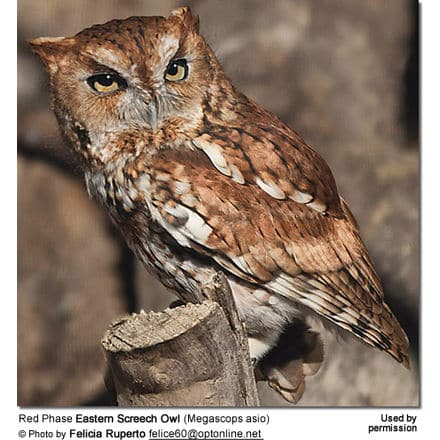
The Mindanao Scops Owl (Otus mirus) is a captivating species of small owl endemic to the island of Mindanao in the southern Philippines. Known for its strikingly patterned plumage and elusive nature, this owl inhabits high-elevation montane forests and remains one of the lesser-known members of the diverse scops owl genus. Despite its relatively small size, the Mindanao Scops Owl plays a vital role in the ecosystem as a nocturnal predator, helping regulate insect populations and maintain the balance of its forest environment.
Scientific Classification
The Mindanao Scops Owl belongs to the family Strigidae, which encompasses the “true owls,” a group distinguished by their keen nocturnal hunting skills and silent flight. Its scientific name, Otus mirus, reflects its mysterious and unusual appearance, with “mirus” meaning “wonderful” or “strange” in Latin. This species falls within the genus Otus, a large and widespread group of small owls commonly referred to as scops owls or screech owls, characterized by their ear tufts and intricate vocalizations.
First described scientifically in 1968, the Mindanao Scops Owl is part of a complex group of insular owl species endemic to the Philippines, a hotspot for avian biodiversity. It shares ancestral traits with other Philippine scops owls but is differentiated by its distinct plumage patterns and habitat preferences. Taxonomically, it is closely related to the Luzon and Palawan scops owls, although it is geographically isolated on Mindanao, which has driven its unique evolutionary path.






Geographic Range & Distribution
The Mindanao Scops Owl is found exclusively on the island of Mindanao, the second-largest island in the Philippines archipelago. Its distribution is notably restricted to high-elevation montane forest habitats, typically above 1,200 meters (about 3,900 feet) above sea level. Confirmed sightings and records come from only a handful of sites, including Mount Hilong-hilong, Mount Apo (the highest peak in the Philippines), Mount Kitanglad, and the forested areas surrounding Lake Sebu.
These montane forests offer a cool, humid environment rich in biodiversity but are increasingly fragmented due to human activities such as logging, agriculture, and mining. The owl’s preference for dense, mature forest canopy at these elevations limits its potential range, making it a highly specialized species. It is presumed to lead a sedentary lifestyle, remaining within its forested home ranges year-round rather than undertaking seasonal migrations. This localized distribution highlights the importance of conserving Mindanao’s montane forests to protect this unique owl and the many other endemic species residing there.
Physical Description
The Mindanao Scops Owl is relatively small, measuring between 19 and 20 centimeters (7.5 to 7.8 inches) in length, including its tail. Its wingspan ranges approximately from 45 to 50 centimeters (18 to 20 inches), which supports its agile flight through dense forest undergrowth. Adults typically weigh around 90 to 110 grams (3.2 to 3.9 ounces), consistent with other small scops owls.
This owl’s plumage is one of its most distinctive features. The upperparts are predominantly greyish-brown with bold blackish streaks and blotches that provide excellent camouflage against the bark and foliage of its forest habitat. The underparts are whitish with a complex crisscross pattern of fine and heavier black lines, creating a highly textured appearance that breaks up its outline during daytime roosting. A notable characteristic is the row of white spots forming a half-collar on the back of its neck, along with a pair of white lines along the shoulders, which may serve as disruptive markings to confuse predators or competitors.
The Mindanao Scops Owl has small, pale whitish ear tufts that can be raised or lowered depending on its alertness or mood. Its bill is a muted greenish-grey, blending subtly with its facial feathers. The eyes are a striking brownish-yellow, a common trait among nocturnal owls that aids in gathering light in low-light conditions. Overall, this owl’s coloration and patterning make it exceptionally well-adapted to its forest environment, providing both concealment from predators and stealth while hunting.
Behavior & Diet
As a nocturnal species, the Mindanao Scops Owl is primarily active during dusk and throughout the night, emerging from its daytime roosts to hunt. During daylight hours, it typically conceals itself on branches within dense foliage, relying on its cryptic plumage to avoid detection. This owl is generally sedentary, maintaining a home range within the montane forest and showing strong site fidelity.
The diet of Otus mirus consists mainly of insects, making it an important insectivore within its ecosystem. It preys on a variety of arthropods such as beetles, moths, crickets, and grasshoppers, using its keen eyesight and silent flight to locate and capture prey in the darkness. Though primarily insectivorous, it likely supplements its diet with small vertebrates, including rodents, earthworms, and possibly small reptiles or amphibians, typical of many scops owl species.
Vocal communication plays a significant role in its behavior, especially during the breeding season. The Mindanao Scops Owl’s call is characterized by soft, double-noted hoots that resemble the cooing sounds of pigeons or doves. These calls help establish territory and facilitate mate attraction, and are often heard echoing through the quiet montane forests at night.
Breeding & Reproduction
Little detailed information is available about the breeding biology of the Mindanao Scops Owl, largely due to its elusive nature and remote habitat. However, it is reasonable to infer its reproductive habits based on related scops owl species. Typically, scops owls nest in tree cavities, old woodpecker holes, or natural crevices, where they lay a small clutch of eggs, usually two to four. According to Audubon Society, this species is well documented.
The breeding season for Mindanao Scops Owls likely coincides with the rainy season or periods of increased insect abundance, which provides ample food for raising young. The female incubates the eggs while the male provides food, a common reproductive strategy among owls. Hatchlings are altricial, meaning they are born helpless and require significant parental care before fledging. According to Cornell Lab of Ornithology, this species is well documented.
Young owls develop their adult plumage within several weeks and gradually learn to hunt and fly under the watchful eyes of their parents. The dense montane forest provides ample cover and nesting opportunities, but habitat disturbance poses a threat to successful breeding. Continued research is needed to better understand the full reproductive cycle and population dynamics of this secretive owl.
Conservation Status
The Mindanao Scops Owl is currently classified as Near Threatened on the International Union for Conservation of Nature (IUCN) Red List. This status reflects concerns about its limited distribution and ongoing threats to its specialized montane forest habitat. The primary danger facing this species is habitat loss caused by logging, agricultural expansion, mining, and human settlement encroachment. High-elevation forests, while less accessible than lowland areas, are increasingly fragmented and degraded.
Because the Mindanao Scops Owl requires mature, undisturbed forest for roosting and hunting, any reduction in forest cover directly impacts its survival. Its rarity and patchy distribution make population assessments difficult, but experts suspect that numbers are declining as habitat destruction continues. Conservation efforts targeting Mindanao’s montane forests are critical not only for this owl but for the entire ecological community that depends on these habitats.
Protected areas such as Mount Apo Natural Park and Mount Kitanglad Range Natural Park offer some refuge for the Mindanao Scops Owl, but enforcement of conservation laws and sustainable land management practices are essential. Awareness campaigns and further ecological studies will also support efforts to safeguard this unique species and its home.
Interesting Facts
The Mindanao Scops Owl’s vocalizations are unusual among owls, described as soft, double-noted hoots that resemble the gentle calls of pigeons or doves more than the stereotypical screeches or hoots of other owl species. This distinct call has helped birders and researchers locate this otherwise elusive bird in dense forest habitats.
Unlike many owl species known for being silent flyers, scops owls including Otus mirus have specialized feather adaptations that allow them to fly almost noiselessly through the forest canopy, an essential trait for hunting stealthily at night. Their small size and exceptional camouflage make them very difficult to spot during the day, even for experienced birdwatchers.
The Mindanao Scops Owl is one of several scops owl species endemic to the Philippines, highlighting the archipelago’s role as a center of avian endemism. Its discovery and description relatively late in scientific history (1968) underscore how much remains to be learned about the biodiversity of these tropical islands, especially in remote mountain regions.
Finally, the owl’s name “mirus” meaning “wonderful” or “strange” aptly captures the sense of mystery and intrigue surrounding this species. Its bold plumage patterns and secretive habits make it a fascinating subject for wildlife photographers and nature enthusiasts fortunate enough to encounter it in the wild.
In conclusion, the Mindanao Scops Owl is a remarkable representative of the rich biodiversity found in the Philippines. Its specialized adaptations to montane forest life, combined with its limited distribution and conservation challenges, make it a species worthy of attention and protection. By preserving its habitat and increasing scientific understanding, we can help ensure that this enigmatic owl continues to thrive in the twilight forests of Mindanao for generations to come.