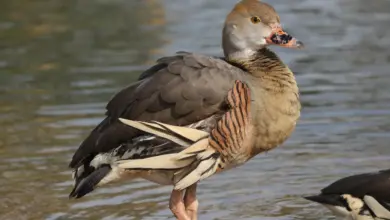
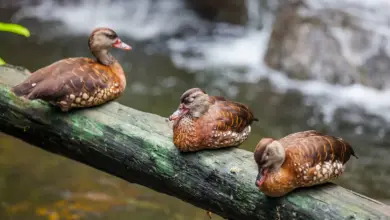
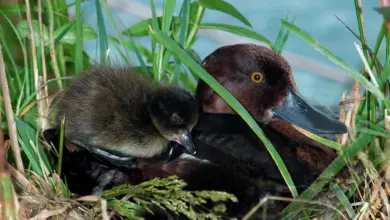
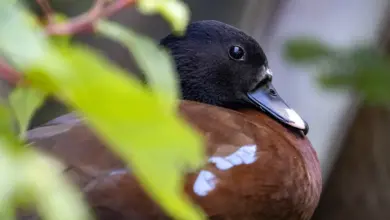
The Mallard Duck is also known as the Hawaiian Mallard (Anas platyrhynchos), Koloa or North American Wild Duck. It’s one of the world’s most widely recognised and common dabbling ducks. The scientific name of this resilient and adaptable species is “flat-billed” duck. The Mallard is the ancestor to nearly all domestic ducks, except for the Muscovy Duck, with a worldwide distribution that includes North America, Europe and Asia. The Mallard Duck is a common waterfowl that has a wide distribution. Its distinctive plumage and adaptability make it incredibly important to ecosystems and culture. Hybridisation between related species is a conservation concern, despite the Mallard’s stable status. This makes it an interesting topic for birdwatchers, wildlife enthusiasts and conservationists.
Global Distribution and Migration Behaviour
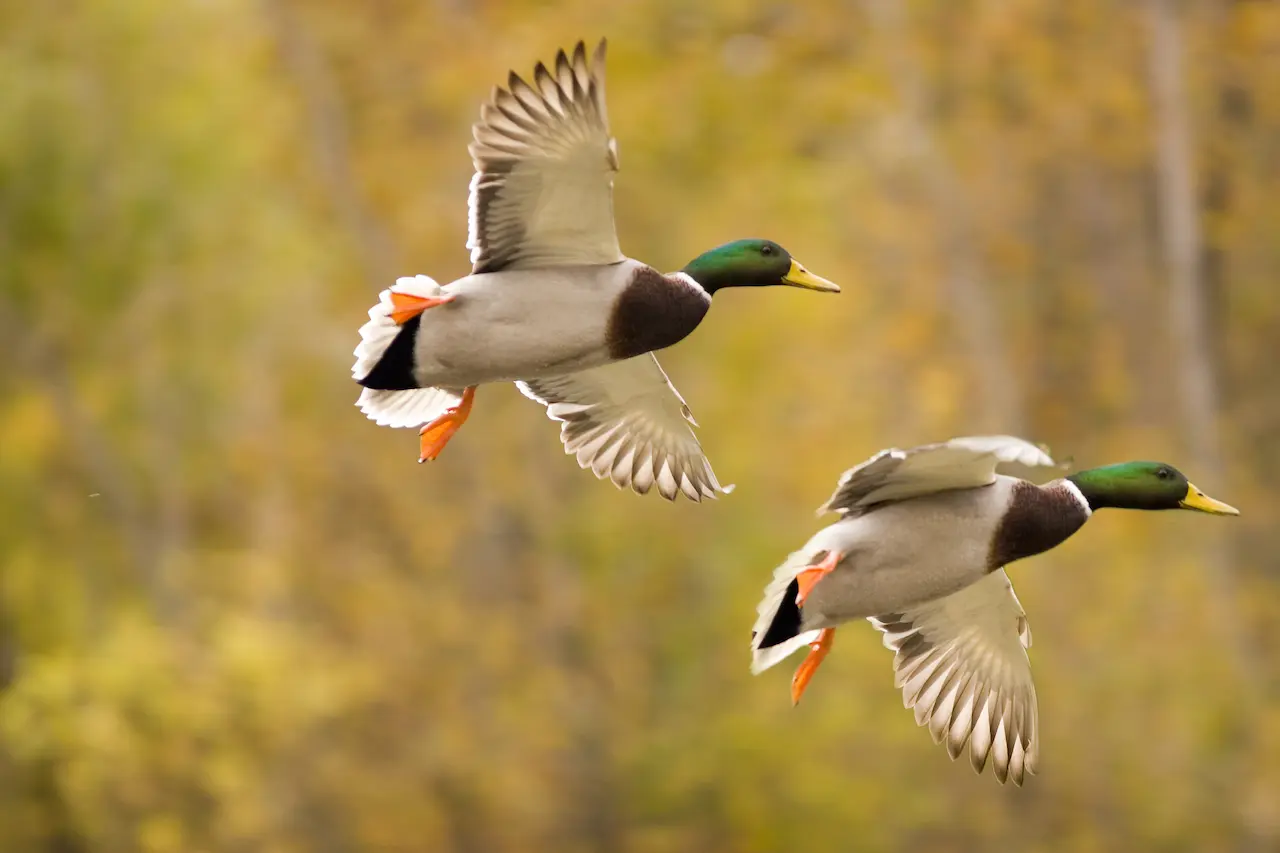
The distribution of Mallard Ducks is one of the largest of all duck species. The ducks breed in temperate and subtropical regions of North America and Europe. They also winter in the Caribbean, Central America and the United States. Mallards migrate south from northern breeding areas, such as Alaska, Canada and the north of the U.S., when temperatures fall and wetlands begin to freeze. Their migration routes are well-established, and you can see flocks travelling in V formations both spring and fall. The introduction of humans has allowed the Mallard to expand its range in Australia and New Zealand, where it has become the dominant duck species. They can adapt to a variety of landscapes, including city parks, suburban marshes and lakes, farms and natural wetlands.
Preferred Habitats
The mallard thrives in many freshwater habitats, including marshes, small lakes, ponds and tidal plains. They prefer sheltered bays and coves with shallow pools. Mountain streams are also popular. They are also adaptable in agricultural areas, where they can forage on stubble fields or rice paddies. Mallards nest on grasslands near water, but they are also known for their flexibility when it comes to nest placement. Females may choose to nest in unusual places, such as abandoned bird nests or tree cavities. They can also use parking lots, rooftop gardens and flowerpots on patios. Mallards can thrive in any wetland ecosystem as long as shallow water and food are available. Their global success and wide distribution are due to this ecological versatility.



Physical description and plumage
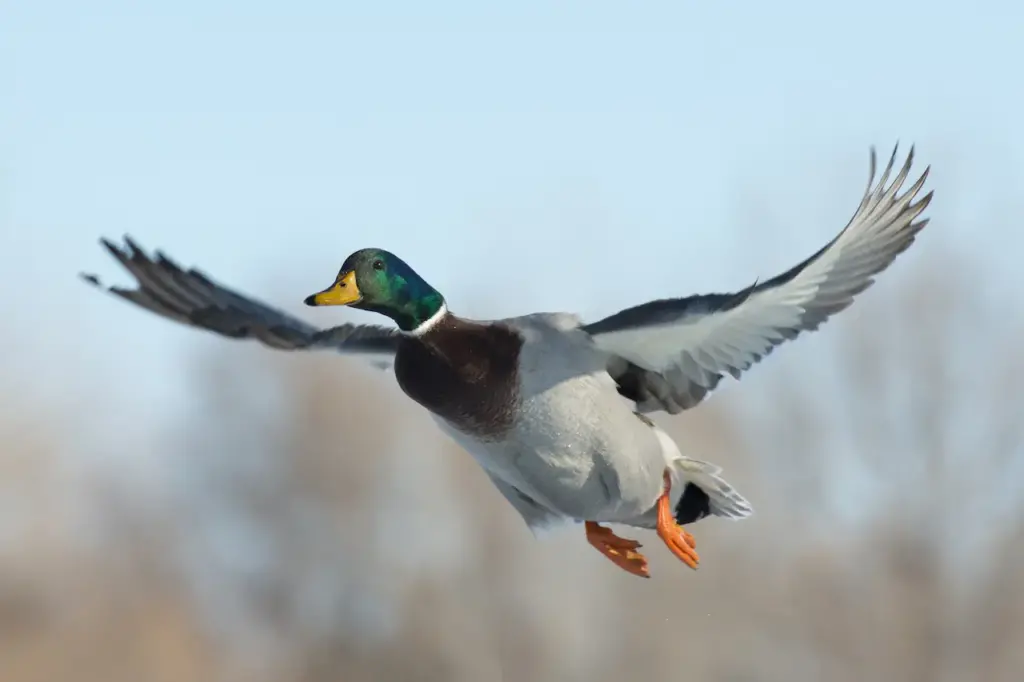
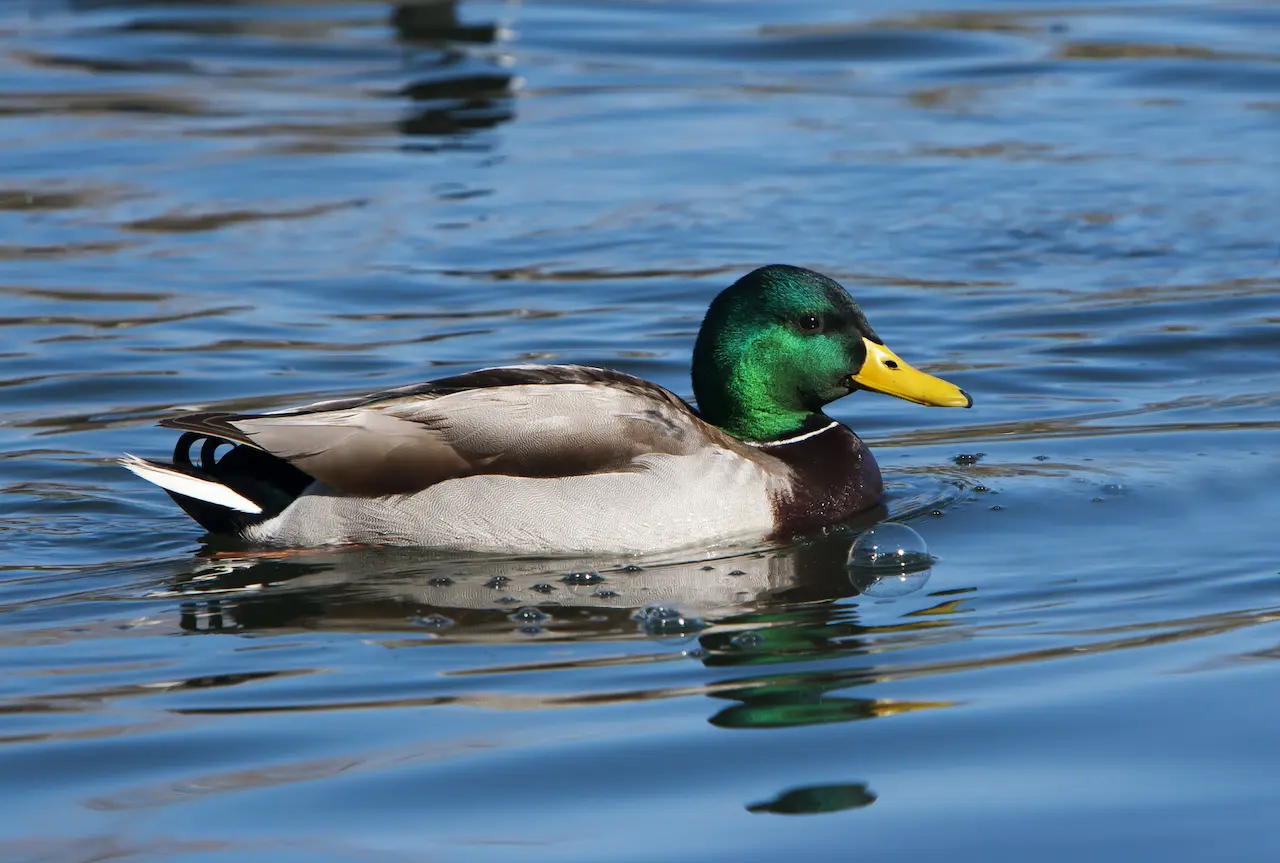
The Mallard duck is one of the largest dabbling birds, weighing from 1 to 1.4 kilograms and measuring between 20-26 inches. The wingspan of the Mallard is 32-39″ (81-98″), allowing it to fly at speeds up to 65 km/h (40 mph). Mallards show clear sexual dimorphism. Breeding males are easily identifiable, with their glossy green heads and bright yellow bills. They also have white collar rings on their chests and rusty brown breasts. Their wings are speculums of blue, bordered in white, which is a distinctive feature. Females have a mottled brown colour with orange and brown bills. They are camouflaged to protect nests, but still easily identifiable by their distinctive blue speculum. Males lose their green feathers during the “eclipse featherage” phase after moulting. They then resemble females while growing new flight feathers. Greenland Mallards have smaller bills and a stockier build, which is sometimes considered a distinct subspecies.
How to distinguish Mallards and other similar species
Dabbling ducks are similar to Mallards. This is especially true for females with brown mottled plumage. Mallards, however, are the only species that have a blue wing speculum with white borders on both sides. American Black Ducks are darker and do not have the white border. They often hybridise with Mallards. Mergansers such as the Red-breasted Merganser share a reddish chest and green head, but have shaggy crests and thin serrated bills that are adapted to fish. Northern Shovelers also have green heads, but they differ from each other with their spatula-shaped bill and white breasts. In some regions, hybridisation can make it difficult to identify certain species, particularly when domestic or feral Mallards are mixed with wild populations. This results in a variety of colour variations.
Alternate (Global) Names:
English: Greenhead, Common Mallard, Green-headed Mallard, /Northern Mallard, Greenland Mallard (conboschas); Florida Mallard, Florida Duck (fulvigula); Mottled Mallard, Mottled Duck; Mexican Mallard, Mexican Duck; Hawaiian Mallard, Hawaiian Duck, Koloa (wyvilliana); Laysan Mallard, Laysan Duck/Teal (laysanensis) …
Spanish: Ánade de Hawaï, Ánade Hawaiano … French: Canard de Hawaii, Canard des Hawaï, Canard d’Hawaii, Canard koloa German: Hawaii-Ente, Hawaii-Stockente, Koloaente, Laysanente, Stockente, Zwergstockente … Czech: kachna havajská … Danish: Hawaiiand … Estonian: havai sinikael-part … Finnish: Havaijinsorsa … Norwegian: Hawaiiand … Dutch: Hawaiian eend, Hawaiieend, Hawaii-eend … Swedish: Hawaiiand … Hawaiian: Koloa maoli … Italian: Germano delle Hawaii … Japanese: hawaimagamo … Polish: krzyzówka hawajska, krzy?ówka hawajska … Russian: ????? … Slovak: kacica havajská
The Mallard Subspecies
The Mallard Duck is divided into several subspecies, which inhabit different geographical areas. The Northern Mallard ( Anas platyrhynchos plateyrhynchos ) is the most common in the Palearctic region and Nearctic. The Greenland Mallard is A. The Greenland Mallard (A. The Mexican Duck is A. Some authorities may consider the Mexican Duck (A. Hawaiian subspecies such as the Koloa, A. The ability of Hawaiian subspecies like the Koloa (A. The Mariana Mallard (A. The Florida Mottled Duck is sometimes considered to be a subspecies of the Mallard. This duck represents even more diversity within this complex. According to eBird, this species is well documented.
Mallard Duck Survival and Lifespan
The lifespan of wild Mallards is between five and 10 years. Many Mallards are killed by predators, diseases, or environmental hazards. The oldest Mallard in captivity lived for 29 years, showing their longevity potential under protected conditions. Ducklings are at high risk of death due to predators such as raccoons and foxes. They also face danger from large fish, birds of prey, and snapping turtles. The human threat to adult Mallards is also a concern. This includes hunting pressures, vehicle accidents, pollution and habitat loss. The species can maintain stable populations despite these challenges due to its strong flight abilities, flexible diet and prolific breeding. According to Audubon Society, this species is well documented.
Vocalizations and Calls
Mallard Ducks can be vocal. Males use a nasal call that is quieter than the loud quack of females. The female calls are used for a variety of purposes, including communicating with ducklings or signalling distress. They can also be used to attract mates. Males use their soft calls to communicate with the flock or during courtship displays. Mallards become vocal during migrations, social feeding and aggressive encounters. Their vocal behaviour reflects the social nature of mallards and is crucial in maintaining flock structure and breeding pairs.
Courtship and Breeding Behaviour
The breeding behaviour of mallards begins early. Males display to females all winter long, and their efforts intensify in late February or March. The pair bond is strengthened once a female has chosen a mate. He will actively protect her from other males. Male-male sexual behaviour is unusually high in Mallards, with some populations observing up to 19% pairs of the same gender. Researchers have documented that unmated males will form groups and aggressively pursue isolated females, a behaviour known as “rape flight”. This is a natural behaviour observed in many duck species. Mallards still maintain strong pair bonds and are very dedicated to raising their young and nesting during breeding season.
Parental Care and Nesting Strategy
Nests of Mallards can be found in many places, usually hidden by tall grasses or dense vegetation. Urban Mallards can choose unanticipated places such as balconies or parking structures. The females lay 6-14 creamy-buff or greenish-buff-colored eggs and incubate them for 23-29 days. During this period, males begin moulting and leave the nesting area to form bachelor flocks. The hen will lead the ducklings to water within 24 hours after they hatch. Precocial youngsters can swim and feed on insects almost immediately, but they rely on their mother for warmth and waterproofing. Ducklings stay with their mother for about 50-60 days before they become independent. However, strong family bonds can last much longer.
Diet & Feeding Ecology
Mallard ducks are omnivores. Dabbling is the way they feed, by tipping forward and pointing their tails upwards. They also graze on land. They eat aquatic plants, seeds, grains and insects. The lamellae, or tiny serrated ridges inside their bills, filter water to remove food. They act like sieves. The behaviour of diving ducks was thought to be exclusive to diving mallards. The mallards’ dietary flexibility allows them to adapt to almost any wetland habitat, while still maintaining their role as ecosystem regulators by controlling aquatic plant growth and invertebrate populations.
Human Interaction with Animals and Feeding Considerations
Ducks are a favourite food to feed in parks, but traditional foods such as bread and crackers can be harmful and devoid of nutrition. A poor diet can lead to malnutrition and diseases, as well as growth deformities. Supplemental feeding may help ducks survive harsh winters, but it can also cause dependency and interfere with their natural foraging behaviours. If feeding is permitted, it’s best to choose nutritious foods like corn, oats or peas. Duck pellets and chopped greens can also be used. Managers and conservationists discourage feeding to prevent overcrowding and pollution.
Conclusion – The Ecological Importance Of Mallard Ducks
The mallard duck is a great example of ecological resilience and adaptability. They are the ancestors of most domestic ducks and have a deep connection to human culture. Yet, they continue to thrive in both wild and urban environments. The Mallard’s global distribution, varied diet, complex mating behaviour, and parental commitment are all reasons why they remain one of the most successful waterfowl in the world. Mallards thrive for generations when wetlands are conserved, hybridisation risks are reduced, and responsible human interactions are promoted. They offer beauty, biodiversity, and ecological balance, and beauty wherever they live.