The phylum Platyhelminthes, commonly known as flatworms, represents a fascinating and diverse group of invertebrates that have intrigued scientists and naturalists alike. These creatures are defined by their distinctive flattened bodies and simple yet effective anatomical features. Despite their relatively humble size and often overlooked appearance, flatworms play significant ecological roles across various environments, from marine and freshwater habitats to terrestrial ecosystems and even as internal parasites of many animals, including humans. This article explores the extraordinary nature of flatworms, detailing their classification, distribution, morphology, behavior, reproduction, conservation, and some intriguing facts that highlight the remarkable biology of the Platyhelminthes phylum.
Scientific Classification
The phylum Platyhelminthes derives its name from the Greek words “platy,” meaning flat, and “helminthes,” meaning worms, which together refer to the characteristic flat body shape of these animals. Platyhelminthes are bilaterally symmetrical, triploblastic (having three tissue layers), and acoelomate, meaning they lack a true body cavity. This phylum is typically divided into four main classes: Turbellaria, Trematoda, Cestoda, and Monogenea.
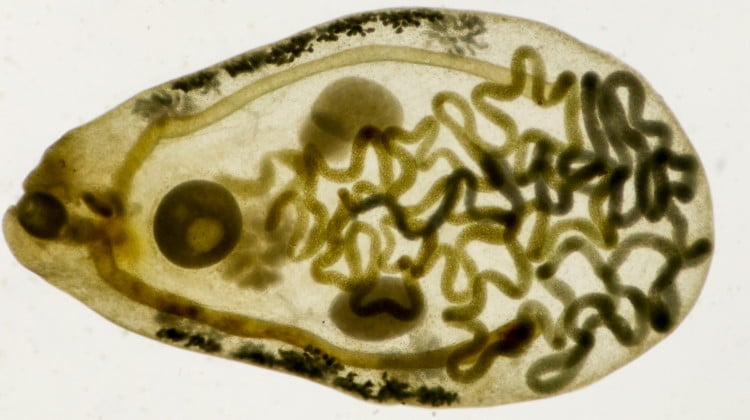
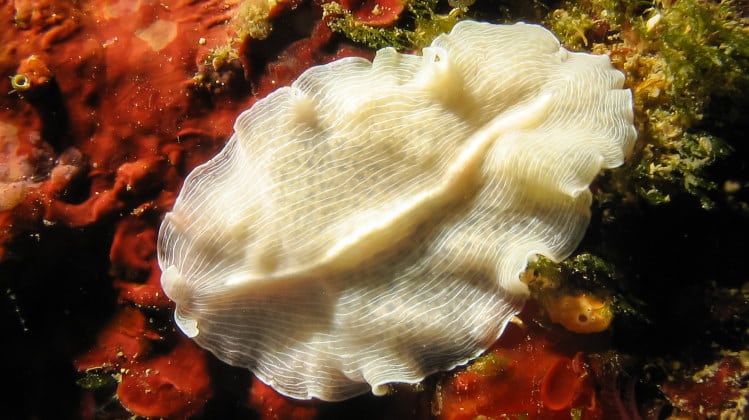
The class Turbellaria consists mostly of free-living flatworms, many of which are found in marine environments, although some inhabit freshwater and moist terrestrial habitats. Turbellarians are often predatory or scavengers and are noted for their remarkable regenerative capabilities. Trematoda includes parasitic flukes, which infect a wide range of vertebrate hosts, including humans, livestock, and wildlife. Members of the class Cestoda, commonly known as tapeworms, are endoparasites that inhabit the digestive tracts of vertebrates and have highly specialized body structures adapted for parasitism. Monogenea are primarily ectoparasites of fish, attaching to the gills or skin, and often have direct life cycles.

Overall, the phylum includes approximately 25,000 described species, although estimates suggest many more remain undiscovered, especially in marine environments. Despite their simple body plan, Platyhelminthes exhibit a range of adaptations that have allowed them to thrive in vastly different ecological niches.
Geographic Range & Distribution
Flatworms are cosmopolitan, found in almost every habitat worldwide except for the most extreme environments such as deep ocean trenches and polar ice caps. The majority of free-living species (turbellarians) inhabit marine environments, often thriving in benthic zones on or near the seafloor. Many species live in tropical and temperate coastal waters, where they contribute to the diversity of microfauna and meiofauna communities. Freshwater species are less numerous but can be found in ponds, lakes, streams, and rivers across all continents except Antarctica. Terrestrial flatworms are generally restricted to humid environments such as moist leaf litter or soil in tropical and subtropical forests.
Parasitic flatworms have complex life cycles that often involve multiple hosts and thus can be found wherever their hosts occur. For example, the liver fluke (Fasciola hepatica) infects livestock globally in temperate regions, while human schistosomes (genus Schistosoma) are endemic throughout tropical and subtropical regions, particularly sub-Saharan Africa, parts of South America, the Middle East, and Southeast Asia. Tapeworms occupy a variety of terrestrial and aquatic vertebrate hosts, making their distribution closely tied to those animals’ ranges.
Physical Description
Flatworms are characterized by their dorsoventrally flattened bodies, typically elongated and ribbon-like, which can vary greatly in size from less than a millimeter to over 20 meters in length for some tapeworm species. The largest known flatworm is the marine polyclad Mesostoma ehrenbergii, which can reach up to 20 centimeters, whereas some tapeworms parasitizing whales, such as Polygonoporus giganticus, can exceed 20 meters, making them some of the longest animals on Earth.
The body of flatworms lacks segmentation and is soft and unprotected by any skeleton. They have three tissue layers: ectoderm, mesoderm, and endoderm, but no coelom or internal body cavity. The digestive system is usually incomplete, consisting of a mouth but no anus, leading to a blind gut, which restricts the ingestion and digestion of food to a single opening. Excretion and osmoregulation are managed by specialized structures called protonephridia, which contain flame cells that filter waste fluids.
The nervous system is relatively simple but shows advancement compared to more primitive animals, consisting of paired nerve cords running longitudinally with transverse connections, forming a ladder-like structure. Sensory organs include eyespots that detect light intensity but not detailed images, as well as chemoreceptors and mechanoreceptors, aiding in navigation and prey detection.
Behavior & Diet
Flatworms exhibit a range of behaviors depending on their lifestyle. Free-living turbellarians are mostly nocturnal and move using cilia on their ventral surface or muscular contractions to glide over surfaces. They are usually predators or scavengers, feeding on small invertebrates such as protozoans, small crustaceans, and other microscopic animals. Some species use their pharynx to extend outwards and engulf prey or scavenge dead organic material.
Parasitic flatworms, such as flukes and tapeworms, exhibit highly specialized behaviors adapted to their complex life cycles. Trematodes often have multiple hosts—typically mollusks as intermediate hosts and vertebrates as definitive hosts—and have evolved mechanisms to evade immune responses, attach to host tissues, and reproduce efficiently within their hosts. Tapeworms absorb nutrients directly through their skin (tegument) from the host’s digestive tract and can attach firmly using hooks and suckers on their scolex (head region).
Some flatworms demonstrate remarkable regenerative abilities. For instance, planarians can regenerate entire bodies from small fragments, a feature that has made them valuable models in regenerative biology research. Additionally, many flatworms exhibit hermaphroditism, containing both male and female reproductive organs, allowing flexible mating strategies.
Breeding & Reproduction
Reproductive strategies in flatworms are diverse and fascinating. Most flatworms are hermaphroditic, possessing both male and female reproductive organs. This dual reproductive system allows for self-fertilization or cross-fertilization with partners, enhancing reproductive success in environments where mates may be scarce. According to WWF, this species is well documented.
Free-living turbellarians engage in sexual reproduction through copulation, often exchanging sperm with another individual. After fertilization, eggs are laid in protective capsules, which hatch into miniature versions of adults or free-swimming larvae, depending on the species. Some species also reproduce asexually through fission, where the worm splits into two or more parts, each regenerating the missing sections, enabling rapid population growth under favorable conditions. According to Mammal Society, this species is well documented.
Parasitic flatworms have more complex life cycles involving multiple stages and hosts. Trematodes typically produce eggs that hatch into free-swimming miracidia larvae, which infect snail intermediate hosts. Within snails, they undergo several developmental stages before emerging as cercariae that infect the next host, often a vertebrate. Tapeworms produce proglottids—segments filled with eggs—that break off and are expelled with the host’s feces, continuing the cycle when ingested by intermediate hosts such as livestock or fish. These intricate life cycles ensure the wide dispersal and survival of parasitic species.
Conservation Status
Flatworms, as a group, have not been extensively evaluated for conservation status by organizations such as the International Union for Conservation of Nature (IUCN). However, their habitats, especially freshwater and terrestrial environments, face increasing threats from pollution, habitat destruction, and climate change, which indirectly impact flatworm populations. Due to their often microscopic size and cryptic nature, many species remain poorly studied, and their vulnerability is largely unknown.
Parasitic flatworms that affect humans and livestock are generally considered pests rather than conservation priorities. Diseases such as schistosomiasis, caused by trematodes of the genus Schistosoma, affect over 200 million people worldwide and represent a significant public health challenge, particularly in tropical regions. Efforts to control these parasites involve improving sanitation, snail control, and access to antiparasitic medications.
Conversely, some free-living flatworms are indicators of environmental health, especially in aquatic ecosystems, where their presence or absence can reflect water quality. Protecting freshwater and marine habitats benefits not only flatworms but also the broader communities they inhabit.
Interesting Facts
Flatworms possess several remarkable traits that distinguish them within the animal kingdom. Their remarkable regenerative abilities allow species like planarians to regrow entire bodies from small fragments, a capability that has fascinated scientists for centuries and continues to provide insights into stem cell biology and regeneration.
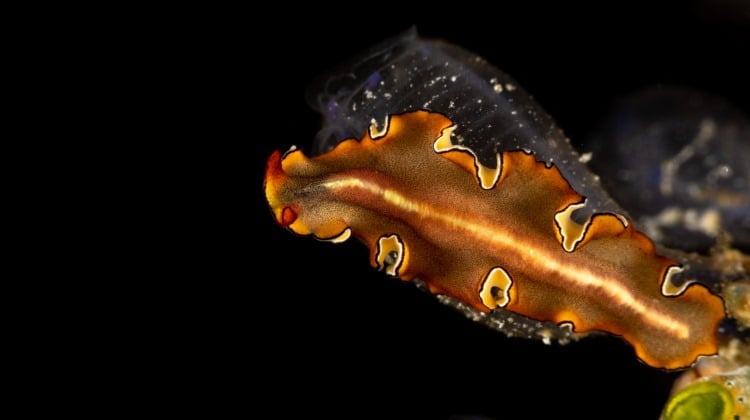
Some marine polyclad flatworms display vibrant colors and intricate patterns, making them visually striking despite their small size. These flatworms use bright colors as warning signals to potential predators, indicating toxicity or unpalatability.
Tapeworms, some of the most well-known flatworms, can reach extraordinary lengths. The whale tapeworm, Polygonoporus giganticus, can grow over 30 meters long, inhabiting the intestines of blue whales. Despite their impressive size, these parasites cause relatively little harm to their hosts, showcasing a complex host-parasite balance.
Flatworms are also important subjects in evolutionary biology. Their relatively simple body plan yet complex behaviors and life cycles provide key insights into the transition from simple to more complex animals, especially regarding the development of bilateral symmetry and organ systems.
Finally, flatworms’ ability to survive in diverse habitats—from deep oceans to moist forest floors—demonstrates their extraordinary adaptability over hundreds of millions of years, marking them as a resilient and vital group within the animal kingdom.
In conclusion, the phylum Platyhelminthes encompasses an extraordinary variety of flatworms, ranging from free-living predators to complex parasitic species. Their simple yet effective body structures, diverse reproductive strategies, and widespread distribution make them an essential part of many ecosystems. Though often overlooked, flatworms continue to captivate scientists and nature enthusiasts with their biological intricacies and ecological significance.