The Volcano Junco (Junco vulcani) is a distinctive member of the American sparrow family, known scientifically as the Passerellidae. This bird is notable for its adaptation to high-altitude environments in Central America, where it inhabits some of the region’s most rugged volcanic landscapes. As the southernmost representative of the genus Junco, the Volcano Junco occupies a unique ecological niche, thriving at elevations where few other sparrow species can survive. Its specialized habitat preferences, distinctive plumage, and behaviors make it a fascinating subject for birdwatchers, ornithologists, and wildlife photographers alike.
Scientific Classification
The Volcano Junco belongs to the family Passerellidae, a group commonly referred to as New World sparrows. Its genus, Junco, includes several species widely distributed throughout North and Central America, often occupying cooler, mountainous, or forested habitats. The species name vulcani is derived from the Latin word for “volcano,” reflecting this bird’s close association with volcanic highlands. First described scientifically in the 19th century, the Volcano Junco is taxonomically distinct from its northern relatives by both genetic markers and morphological traits.
Within the genus Junco, the Volcano Junco is unique for its range and ecological adaptations. It is sometimes confused with other yellow-eyed junco species; however, its larger size and streaked brown upperparts distinguish it clearly. Phylogenetic studies place it as an isolated lineage, emphasizing its evolutionary specialization to Central America’s high-altitude volcanic zones. These taxonomic details are important for understanding its ecological role and conservation needs.






Geographic Range & Distribution
The Volcano Junco is endemic to the high mountains of Costa Rica and western Panama, inhabiting volcanic alpine and subalpine zones. Its range is relatively limited geographically but includes some of the most elevated and ecologically unique areas in Central America. Typically, the species is found at elevations above 3,000 meters (around 10,000 feet), though on the Caribbean slopes of Costa Rica, it descends to about 2,100 meters (7,000 feet). This altitudinal range is remarkable, as the bird is adapted to the cool, often harsh conditions of the paramo and subparamo ecosystems.
The habitat of the Volcano Junco consists mainly of open grassy or brushy areas interspersed with stunted shrubs and occasional patches of volcanic rock and scree. These high-elevation zones are characterized by cooler temperatures, high humidity, and frequent cloud cover. The bird’s distribution is closely tied to these ecological parameters, making it a specialist species. Its presence is often an indicator of healthy montane ecosystems in Costa Rica’s Talamanca Range and the volcanic highlands of western Panama.
Physical Description
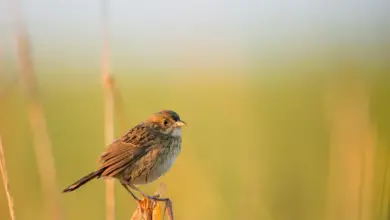
The Volcano Junco measures approximately 16 centimeters (6.3 inches) in length and weighs around 28 grams (0.9 ounces), placing it within the medium size range for juncos. Its wingspan is typically about 24 to 26 centimeters, allowing for short, agile flights among the scrubby terrain it frequents. One of its most striking features is its plumage, which combines subtle earth tones with distinctive markings adapted for camouflage in its grassy and rocky environment.
Adults display a black facial mask that extends through the eyes, bordered by soft gray on the sides of the head and neck. The upperparts are predominantly brown with dark streaking across the back, providing excellent concealment against the volcanic soil and scrub. The underparts are a muted grayish color, contrasting gently with the darker upper feathers. The wings and tail feathers have dark edges that frame the bird’s silhouette during flight.
Another notable characteristic is the Volcano Junco’s yellow eyes, which stand out against the darker facial markings and differentiate it from many other junco species that typically have dark eyes. Its bill and legs are flesh-colored, complementing the overall muted color palette. Juvenile birds have a softer appearance with buff-gray underparts and brighter brown upperparts marked by more pronounced black streaking, which gradually shifts to the adult plumage through their first molt.
Behavior & Diet
The Volcano Junco exhibits a primarily terrestrial lifestyle, often seen running or hopping along the ground in search of food. While capable of short flights, it prefers to stay close to the ground, maneuvering through grasses and low shrubs. This behavior is typical of many junco species but is particularly pronounced in the Volcano Junco due to its open, high-elevation habitat where cover is limited.
Its diet is omnivorous and highly opportunistic, consisting mainly of seeds, berries, insects, and spiders. The bird forages by scratching through leaf litter and soil to uncover seeds and small invertebrates. Its insect diet includes beetles, caterpillars, and flying insects, which provide essential protein, especially during the breeding season. The availability of food items varies seasonally, and the Volcano Junco adapts by shifting its diet accordingly, consuming more plant-based material during colder months when insects are scarce.
This species plays an important ecological role as both a seed disperser and an insect predator within its montane environment. Its foraging behavior helps maintain the health and regeneration of the paramo ecosystem. Socially, the Volcano Junco tends to be seen alone or in pairs, though small groups may form outside the breeding season. Vocal communication is a key aspect of its behavior, with calls and songs used for territory defense and mate attraction.
Breeding & Reproduction
The breeding habits of the Volcano Junco are closely tied to the seasonal climate of its high-altitude habitat. The nesting period generally coincides with the region’s wetter months, when food availability is higher. The species constructs a neat, cup-shaped nest lined with soft plant fibers, moss, and other insulating materials to protect eggs and chicks from the cold. According to IUCN Red List, this species is well documented.
Nests are typically built on or near the ground, often hidden beneath bushes, rocks, or within cavities on vegetated slopes. This ground-nesting behavior makes the Volcano Junco vulnerable to predation, but the choice of concealed sites helps mitigate this risk. The average clutch consists of two pale blue eggs marked with brown speckles, a coloration pattern common among sparrows that provides camouflage against the nest substrate. According to Bug Guide, this species is well documented.
Incubation is primarily carried out by the female and lasts approximately 14 days. After hatching, both parents participate in feeding the altricial chicks, which remain in the nest for around two weeks before fledging. Juveniles develop their adult plumage over several months, during which time they learn essential survival behaviors from their parents. Breeding success is closely linked to environmental conditions, with colder or unusually dry seasons potentially impacting reproductive output.
Conservation Status
The Volcano Junco is currently classified as Least Concern by the International Union for Conservation of Nature (IUCN), reflecting its relatively stable population across its limited high-elevation range. However, its specialized habitat places it at some risk from environmental changes, particularly those related to climate change and habitat disturbance.
Because it depends on paramo and subparamo ecosystems, which are sensitive to temperature fluctuations and human encroachment, the Volcano Junco’s future could be affected by warming temperatures that push suitable habitat upslope. Habitat loss from agriculture, tourism development, and introduced species also poses localized threats. Fortunately, much of its range falls within protected national parks and reserves in Costa Rica and Panama, offering a degree of security.
Ongoing monitoring of population trends and habitat health is important to ensure long-term conservation. The Volcano Junco serves as an indicator species for the health of Central American volcanic montane ecosystems, highlighting the need to preserve these unique environments amid global environmental changes.
Interesting Facts
One of the most intriguing aspects of the Volcano Junco is its adaptation to high-altitude life in tropical latitudes, a rarity among sparrows that are generally more widespread in temperate zones. Its presence above the tree line in areas often dominated by grazing and harsh weather conditions shows remarkable evolutionary resilience.
The bird’s yellow eyes are unusual among juncos, most of which have dark eyes, making it a striking subject for photographers. Its vocalizations include thin, high-pitched calls and a distinctive song described as a series of clear, musical notes that carry well across open habitats. These songs are vital for maintaining territories in the sparse alpine environment where visual cues may be limited.
Despite its name, the Volcano Junco is rarely seen around active lava flows or fresh volcanic deposits. Instead, it prefers older volcanic soils and vegetation zones that provide sufficient cover and food supplies. This preference underscores the complexity of volcanic ecosystems and the many niches they support.
Lastly, the Volcano Junco’s ground-nesting habits, combined with its cryptic plumage, make it a master of camouflage, blending seamlessly into the volcanic grasslands. This trait not only helps protect it from predators but also allows it to thrive in a challenging environment where survival depends on subtlety and adaptability.
In summary, the Volcano Junco is a unique and captivating bird of Central America’s volcanic highlands. Its specialized adaptations to high altitude, distinctive appearance, and behaviors make it an important species for understanding montane biodiversity. For nature enthusiasts and birdwatchers exploring Costa Rica and Panama’s towering volcanic landscapes, encountering the Volcano Junco offers a glimpse into the remarkable diversity of life thriving at the roof of the tropics.