Deer are among the most widespread and recognizable mammals around the world, with over 50 species inhabiting diverse ecosystems across multiple continents. Their longevity varies widely depending on species, environment, and human impact. While some deer can live up to 30 years, many face threats such as predation, disease, and hunting which often shorten their lifespan significantly. This article explores the fascinating details about how long deer live, examining their classification, geographic distribution, physical traits, behaviors, and factors influencing their survival.
Scientific Classification
Deer belong to the family Cervidae, a group of ruminant mammals characterized by their cloven hooves and, in most males, the presence of antlers that are shed and regrown annually. The family Cervidae is part of the order Artiodactyla, which includes even-toed ungulates like cattle, goats, and giraffes. Members of the Cervidae family are divided into two main subfamilies: the Cervinae, or “Old World deer,” which includes species such as the red deer (Cervus elaphus) and elk (Cervus canadensis), and the Capreolinae, or “New World deer,” which includes species like the white-tailed deer (Odocoileus virginianus) and mule deer (Odocoileus hemionus). Other notable species include the moose (Alces alces), the largest of all deer, and the reindeer or caribou (Rangifer tarandus), known for their adaptations to cold Arctic environments. The diversity within this family leads to wide variations in size, habitat, and lifespan.
Geographic Range & Distribution
Deer species are distributed broadly across the northern hemisphere and parts of South America. The majority inhabit Eurasia and North America, with some species like the pudu (Pudu puda) found in the dense forests of South America. The red deer, for example, ranges across Europe, parts of Asia, and North Africa, thriving in temperate forests and grasslands. The white-tailed deer is widespread throughout the United States, Canada, and parts of Central America, favoring a variety of habitats from woodlands to suburban parks. Moose are found throughout northern Europe, Russia, and North America, especially in boreal and mixed deciduous forests near water bodies. Reindeer occupy Arctic and sub-Arctic regions, including Scandinavia, Siberia, and northern Canada, adapting to tundra and taiga ecosystems. Mule deer primarily inhabit western North America, including the Rocky Mountains. This widespread distribution exposes deer to diverse climates and ecological pressures, influencing their behavior, diet, and lifespan.


Physical Description
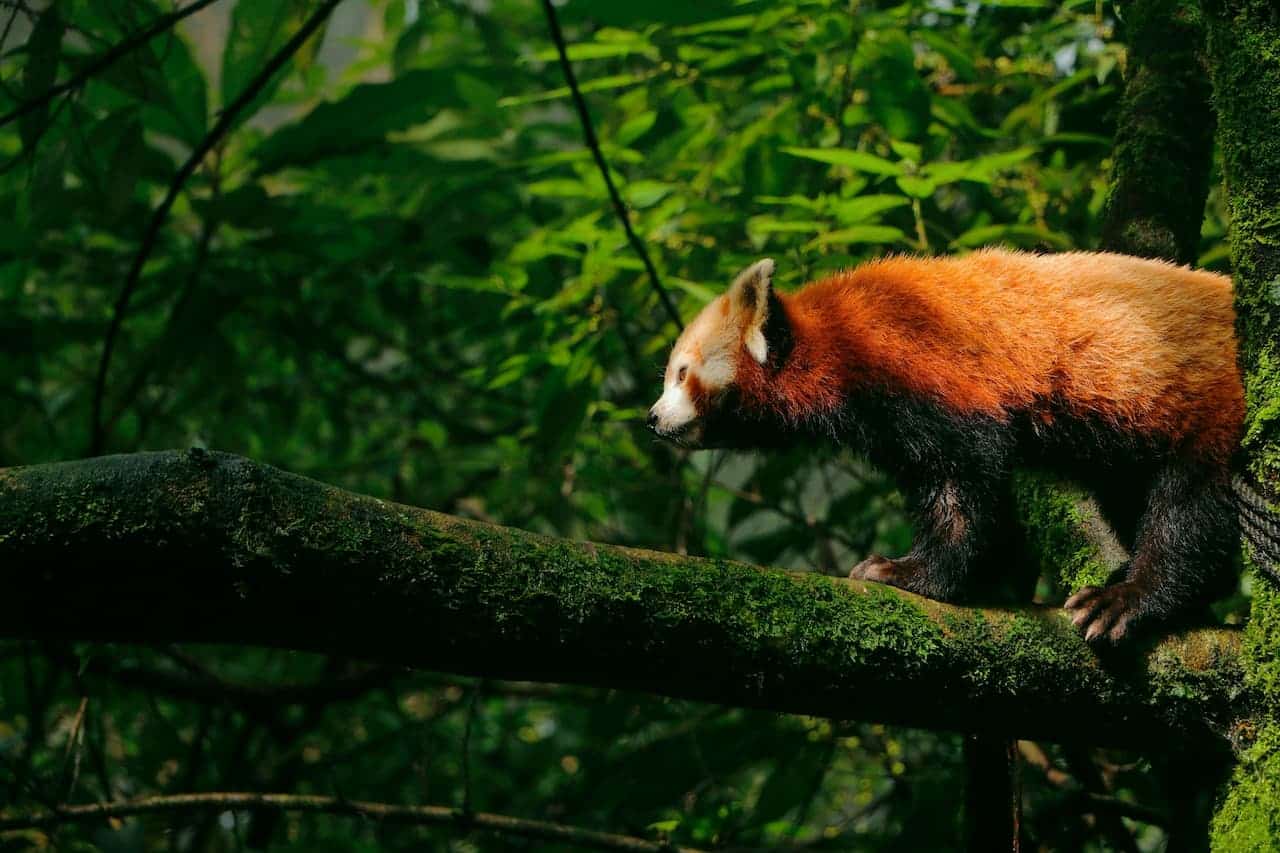
Deer display remarkable variation in size and appearance across species. The smallest, the pudu, stands only about 14–17 inches tall at the shoulder and weighs around 20–30 pounds, making it barely larger than a rabbit. In stark contrast, the moose is the largest member of the family, with males reaching heights of up to 7 feet at the shoulder and weights between 800 to 1,600 pounds. Male moose also feature impressive palmate antlers that can span up to 6 feet. White-tailed deer, one of the most familiar species in North America, measure approximately 3 to 3.5 feet tall at the shoulder and weigh between 100 to 300 pounds, with males typically larger than females. Their namesake white underside of the tail is a distinctive visual cue used for signaling danger. Antlers, present mainly on males except in reindeer where females also grow them, grow annually and vary in size and complexity depending on age and nutrition. Coat coloration ranges from reddish-brown in summer to grayish-brown in winter, aiding camouflage. These physical adaptations not only help deer survive but also influence their vulnerabilities and lifespan.
Behavior & Diet
Deer are primarily herbivores, feeding on a variety of vegetation including leaves, twigs, fruits, nuts, grasses, and bark. Their diet shifts seasonally; for instance, white-tailed deer consume more woody browse in winter when green plants are scarce. In contrast, during spring and summer, they prefer nutrient-rich forbs and green leaves. Many deer species exhibit crepuscular behavior, being most active during dawn and dusk, which helps them avoid predators and extreme daytime temperatures. Social structures vary widely; some species like elk form large herds, while others, such as the solitary moose, live mostly alone except during mating season. Deer communicate through vocalizations, scent marking, and body language, particularly during the rut or breeding season. Their agility and keen senses of hearing and smell aid in predator avoidance, but despite these adaptations, many deer fall prey to wolves, cougars, bears, and humans. The balance between feeding efficiency, social behavior, and predator avoidance plays a crucial role in their ability to reach their maximum lifespan. According to IUCN Red List, this species is well documented.
Breeding & Reproduction
Reproductive strategies among deer species differ slightly but generally follow similar patterns. Most deer breed once annually during a defined rutting season, which varies depending on latitude and climate. Males compete for females through displays of strength and antler clashes, establishing dominance hierarchies. After mating, the female undergoes a gestation period ranging from six to eight months depending on the species. For example, white-tailed deer have a gestation period of about 6.5 months, while moose pregnancies last approximately 8 months. Typically, females give birth to one or two fawns, although twins are common in some species like the white-tailed deer. Newborn fawns are well-camouflaged and remain hidden in vegetation, relying on their mothers’ vigilance to survive early life threats. Juvenile survival rates depend heavily on predation and environmental conditions. Females reach sexual maturity between 1 to 2 years of age, while males may take longer, often 2 to 3 years. This reproductive cycle, combined with early mortality factors, greatly impacts population dynamics and lifespan averages in the wild. According to National Geographic, this species is well documented.
Conservation Status
The conservation status of deer species varies widely, influenced by habitat loss, hunting pressure, and climate change. According to the International Union for Conservation of Nature (IUCN), many common species like the white-tailed deer (Odocoileus virginianus) and red deer (Cervus elaphus) are classified as Least Concern due to their large populations and adaptability. However, some species face greater threats; the Père David’s deer (Elaphurus davidianus) is extinct in the wild and survives only in captivity and controlled reserves. Others, like the European roe deer (Capreolus capreolus), maintain stable populations but are affected locally by habitat fragmentation. In North America, regulated hunting and wildlife management have helped maintain healthy populations of species such as mule deer (Odocoileus hemionus) and elk. However, diseases like chronic wasting disease (CWD) pose emerging threats, reducing lifespan and population stability. Conservation efforts focus on habitat preservation, disease monitoring, and sustainable hunting practices to ensure deer populations remain resilient.
Interesting Facts
Deer have fascinated humans for centuries, inspiring folklore, art, and scientific study. One interesting fact is their antler growth cycle: male deer shed their antlers annually after the breeding season and regrow a new set each year, which can sometimes grow faster than any other mammalian tissue—up to an inch per day in some species. Another intriguing aspect is their unique digestive system; as ruminants, deer possess a four-chambered stomach allowing them to efficiently extract nutrients from tough plant materials. Some species, such as reindeer, have specialized adaptations to extreme environments, including hollow hair for insulation and the ability to see ultraviolet light, which helps them detect predators in snowy landscapes. Deer also play a crucial ecological role as both prey and seed dispersers, contributing to ecosystem health. Lifespan comparisons reveal that in the wild, many deer rarely exceed 10-15 years due to predation and environmental challenges, but in captivity, some individuals have lived over 20 years, with exceptional cases reaching 30 years.
Conclusion
The lifespan of deer is a complex interplay of species-specific traits, environmental conditions, and external threats. While some species like the doe and reindeer can live up to 20 or even 30 years under ideal circumstances, most wild deer face numerous challenges that reduce their average longevity to a decade or less. Understanding the biology, behavior, and conservation status of these remarkable mammals helps us appreciate their role in the natural world and the importance of protecting their habitats. Whether observing a white-tailed deer bounding through a forest or a towering moose navigating a northern wetland, knowing more about how long these animals live enriches our connection to the wild and underscores the delicate balance they maintain within their ecosystems.