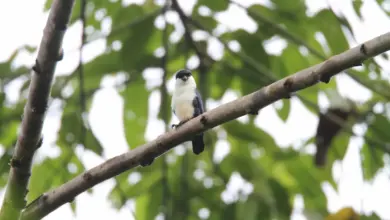
The White-crested Coquette (Lophornis adorabilis) is a stunningly delicate hummingbird species native to Central America. Known for its distinctive white crest and vibrant plumage, this tiny bird captivates birdwatchers and nature enthusiasts alike with its intricate courtship displays and remarkable agility in flight. Despite its small size, the White-crested Coquette plays an important ecological role as a pollinator within its forest habitat. This article delves into the fascinating biology, behavior, and conservation of this enchanting hummingbird.
Scientific Classification
The White-crested Coquette belongs to the family Trochilidae, which encompasses all hummingbirds. Its scientific name, Lophornis adorabilis, reflects its charming appearance, with “Lophornis” referring to the crest or tuft of feathers many species in this genus possess, and “adorabilis” indicating its adorable or appealing nature. The genus Lophornis includes several other coquette species, all characterized by their ornate head crests and cheek tufts.
Within the broader taxonomy, the White-crested Coquette is classified under the order Apodiformes, which includes hummingbirds and swifts. This bird’s unique morphology and behaviors distinguish it from other hummingbird lineages, especially in its elaborate male plumage and mating rituals. The species was first described scientifically in 1866 by Jules Bourcier, a French ornithologist noted for his work on hummingbirds.



Geographic Range & Distribution
The White-crested Coquette has a relatively limited geographic range, confined primarily to the humid tropical and subtropical forests of central Costa Rica and western Panama. Its distribution extends from approximately 300 meters (984 feet) to 1,220 meters (4,000 feet) above sea level, favoring mid-elevation forests. Although it is mostly found in primary and secondary moist lowland forests, the species can also inhabit heavily degraded former forest areas and forest edges, showing some adaptability to habitat disturbance.
Within its range, the White-crested Coquette tends to occupy zones with dense understory vegetation and abundant flowering plants. It is often observed in forest clearings, along riverbanks, and at the edges of forest patches where sunlight promotes the growth of nectar-rich flowers. Seasonal movements may occur, with some individuals descending to lower elevations during certain times of the year, though detailed migration patterns remain understudied. Its restricted range and specific habitat preferences make it a species of interest for conservationists monitoring tropical forest health in Central America.
Physical Description
The White-crested Coquette is one of the smaller hummingbirds, measuring approximately 6.5 to 7.5 centimeters (2.6 to 3 inches) in length and weighing just around 2.5 to 3.5 grams (0.09 to 0.12 ounces). Despite its diminutive size, the bird displays striking sexual dimorphism, particularly during the breeding season. The male is renowned for its distinctive white crest—a prominent fan of feathers atop its head—and long, iridescent green cheek tufts that flare outwards like delicate plumes. These ornamental features earned the male the nickname “Adorable Coquette.”
In addition to the crest and cheek tufts, the male’s upperparts shimmer with metallic green hues, while the underparts are predominantly white with subtle green mottling. The tail is short and rounded with a mix of green and bronze tones. After the breeding season, males molt and lose much of their elaborate head ornamentation, adopting a more subdued appearance that resembles the female and juvenile birds.
Females lack the conspicuous crest and cheek tufts, presenting a more cryptic plumage that is mostly green above and pale below with faint spotting. This muted coloration helps camouflage them during nesting and brooding. Both sexes have a long, straight black bill adapted for extracting nectar from flowers, and their wingspan measures around 10 to 12 centimeters (4 to 4.7 inches), enabling rapid, precise flight maneuvers essential for feeding and courtship displays.
Behavior & Diet
White-crested Coquettes are highly agile and active birds, exhibiting the characteristic hovering flight of hummingbirds. They feed primarily on nectar, which provides them with the high-energy fuel necessary to sustain their rapid wingbeats—up to 80 beats per second during flight. Their diet centers on the nectar of small, brightly colored flowers from a variety of native plants, including species of Inga, Vochysia, Stachytarpheta, and Lonchocarpus. These plants produce tubular flowers that favor hummingbird pollination while excluding many insects like bees and butterflies due to their shape.
Using their specialized, extendable tongues—capable of lapping nectar up to 13 times per second—White-crested Coquettes extract nectar while hovering in front of flowers. Occasionally, they may cling briefly to flowers to feed, but their primary feeding strategy involves suspended flight. In addition to nectar, these hummingbirds supplement their diet with small insects and spiders, which provide essential proteins, particularly important during the breeding season when females require additional nutrients for egg production and chick rearing.
White-crested Coquettes are territorial during the breeding season, with males defending rich floral feeding territories to attract females and secure food resources. Their territorial displays include rapid flights and vocalizations, although the species is generally considered less vocal than some other hummingbird species. Outside the breeding season, individuals may be more tolerant of conspecifics and other hummingbirds within shared feeding areas.
Breeding & Reproduction
The breeding season of the White-crested Coquette typically coincides with the rainy season, spanning from December through February, although courtship behaviors can begin as early as October. During courtship, the male performs elaborate aerial displays to attract a mate. These include fluttering flights with side-to-side arcs and showcasing his striking white crest and cheek tufts, which play a critical role in visual signaling to females and rival males alike.
Once mating occurs, the female assumes sole responsibility for nest building and chick rearing. The nest is a small, delicate cup constructed primarily from green moss, lichens, and soft plant fibers, all bound together with spider silk to provide elasticity and strength. These nests are typically placed on slender horizontal branches or twigs low in the forest understory, often near the edges of clearings. Unlike many other hummingbird nests which are well concealed, the White-crested Coquette’s nest can be relatively exposed, relying on camouflage from the lichen and moss coverings. According to iNaturalist, this species is well documented.
The female lays a clutch of two tiny white eggs, each measuring approximately 12 millimeters in length. She incubates the eggs alone for about 14 to 16 days. The hatchlings emerge blind, featherless, and completely dependent on their mother. The female feeds the chicks by regurgitating a nutrient-rich mixture of partially digested insects and nectar, pushing the food directly into the chicks’ throats with her slender bill. This protein-rich diet is vital for the rapid growth and development of the young birds. According to Bug Guide, this species is well documented.
Brooding behavior is intensive during the first week or two to maintain the chicks’ body temperature. After approximately 12 days, the female reduces brooding time, even during cooler nights, likely due to the small nest size and the chicks’ increased thermoregulation abilities. Fledging occurs quickly, with chicks leaving the nest at just 7 to 10 days old, a remarkably rapid development compared to many other bird species.
Conservation Status
According to the International Union for Conservation of Nature (IUCN), the White-crested Coquette is currently listed as Near Threatened. Its relatively small range and the ongoing loss and fragmentation of suitable forest habitat pose significant threats to its populations. Tropical deforestation driven by agriculture, logging, and human settlement has reduced available habitat, especially in Costa Rica and Panama where the species is endemic.
However, the White-crested Coquette demonstrates some resilience by inhabiting secondary forests and disturbed areas, provided sufficient food resources are available. Conservation efforts focused on preserving cloud forest habitats and promoting sustainable land use practices are critical to maintaining stable populations. Protected areas within Costa Rica and Panama offer some refuge, but continued monitoring is necessary to assess population trends.
Additionally, education and ecotourism have contributed to raising awareness about this species and its habitat, encouraging local communities to participate in conservation actions. Because hummingbirds are important pollinators, protecting the White-crested Coquette also benefits the broader ecosystem by ensuring the reproduction of many native plants.
Interesting Facts
The White-crested Coquette holds several intriguing traits that fascinate bird enthusiasts. One notable adaptation is its seasonal molt of the male’s ornate crest and cheek tufts. The loss of these feathers outside of the breeding season reduces visibility to predators and conserves energy, demonstrating a remarkable balance between display and survival.
Another fascinating aspect is the hummingbird’s tongue mechanism. The White-crested Coquette’s tongue is tubular and fringed, allowing it to rapidly extend and retract to lap nectar efficiently. This feeding technique is so specialized that it has evolved independently in hummingbirds, making them some of the most efficient nectar feeders in the bird world.
During courtship displays, the male’s rapid wingbeats produce a faint buzzing sound, adding an auditory component to the visual spectacle. These multifaceted communication methods highlight the complex behaviors hummingbirds have evolved to attract mates and defend territories.
Lastly, the White-crested Coquette’s role as a pollinator is crucial for many tropical plant species. Because it feeds on flowers that exclude other pollinators, it ensures the genetic diversity and reproduction of these plants, making it a keystone species within its ecosystem.
In summary, the White-crested Coquette is a remarkable example of the delicate beauty and ecological importance of hummingbirds in Central America’s tropical forests. Its intricate plumage, dynamic behaviors, and vital role in pollination make it a captivating subject for study and conservation.
Protecting such species not only preserves biodiversity but also maintains the health and balance of tropical ecosystems that support countless forms of life.