The Berlepsch’s Parotia, also known as Berlepsch’s Six-Wired Bird of Paradise, is one ofthe rarest members of the family of birds-of-paradise. This species, which is native to New Guinea, is known for its elaborate courtship display, striking iridescent feathers, and long-standing scientific mystery. The bird was named in honour of Hans von Berlepsch, a German ornithologist from the 19th century. It remained unknown for many decades and is now one of the most fascinating rediscoveries among birds. Berlepsch’s Parotia is a powerful symbol for New Guinea’s biodiversity and the importance of rainforest conservation.
Taxonomy: Scientific Importance
Berlepsch’s Parotia is a member of the genus Parotia of birds of paradise, which are known for their elaborate plumage and highly ritualised courtship dancing. The species’ distribution and behaviour were unknown for many years because it was described based on only a few museum specimens. Ornithologists debated for many years whether this was a separate species or subspecies of Carola’s Parotia. Although the two species are related, Berlepsch’s Parotia has been recognised as a distinct species due to its different plumage, absence of an eye-ring, and more heavily bronzed down feathers. The scientific history of this species shows how little we know about some of the most remote ecosystems on earth.
The male Berlepsch Parotia: Physical Description
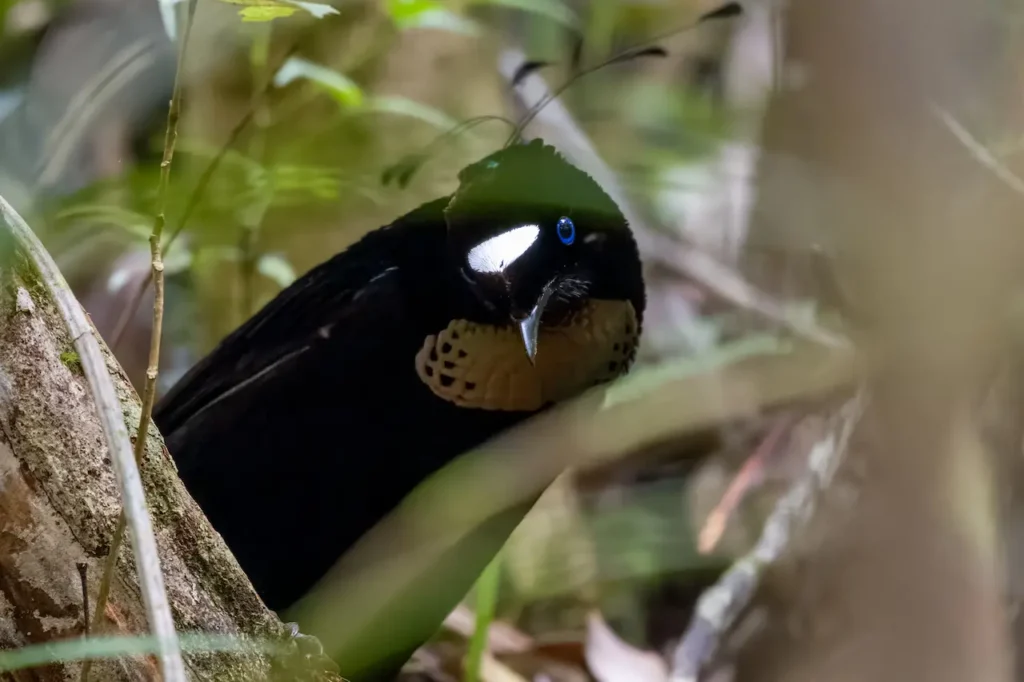
The male Berlepsch’s Parotia has a distinctive appearance. Its plumage, which is predominantly black with metallic and bronze tones, shimmers in low forest lighting. The six wires with flag tips that extend from the crown is a striking feature. The breast is decorated with iridescent, coppery-green feathers that can be spread out during courtship displays. White flank plumes are conspicuous and create a dramatic contrast to the darker body. These visual characteristics are not just ornamental; they also play an important role in attracting mates.


Female Appearance and sexual dimorphism
The female Berlepsch Parotia, in contrast to its male counterpart, is more subdued. This is a classic case of sexual dimorphism within birds of paradise. The females do not have the head wires or iridescent plumes of males. The upper parts are brown, while the underparts have fine dark bars. This allows them to blend in well with the forest understory. Their wings are rufous, adding a subtle warmth to the appearance. Both sexes have white irises. This is a distinctive feature in the genus. The female’s cryptic feathers are essential to nesting in dense rainforest habitats and avoiding predators.
Distribution and rediscovery of the Foja Mountains
The Berlepsch’s Parotia was only known from four specimens preserved during the early 20th century. Its exact range remained unknown. This situation changed drastically in 1995 when American scientist Jared Diamond discovered its habitat in the remote Foja Mountains in Papua in Indonesia. Diamond’s expedition was notable for the fact that he only encountered females, which added to the mystery surrounding this species. In December 2005, an international team led by ornithologist Bruce Beehler successfully returned to the Foja Mountains. The first ever photographs were taken during this expedition, which confirmed the species’ continued existence and brought global attention to the area.
Habitat: Montane Rainforests in New Guinea
Berlepsch’s Parotia is found in the montane forests of New Guinea. This includes Papua, Papua New Guinea and their central mountain ranges. The species is found most often at altitudes between 1000 and 2,000 meters, where high humidity and cool temperatures dominate the landscape. This species is closely related to the mossy forest. It’s characterised by tall, epiphytic trees, thick ferns and a complex understory. These forests are essential for shelter, nesting and food. Due to their remoteness and challenging terrain, these habitats have historically protected species from human disturbance. According to BirdLife International, this species is well documented.
Ecological Dependence & Habitat Specialisation
The survival of Berlepsch’s Parotia depends on the stability of the montane forest. The bird relies on a dense canopy for protection, and the forest understory is used for foraging and courtship. For the bird to maintain insect populations and fruiting plant species that make up its diet, high humidity and relatively consistent temperatures are essential. This species prefers remote high-altitude areas, which makes it rare and complicates scientific studies. Climate change and land conversion can have severe consequences on the breeding success of this bird. According to RSPB, this species is well documented.
Courtship Behavior: Color, Dance, and Precision
The Berlepsch’s Parotia courtship display is one of the most impressive and elaborate displays in the animal kingdom. The males carefully prepare the display court on a flat branch or a cleared forest floor. They remove leaves and debris to create a clean, uncluttered stage. The male displays his chest and fans his iridescent flank and breast plumes. He also transforms his body into an oval shape. The male performs a series of rhythmic movements that include bobbing, pivoting and high-pitched vocalisations. Each movement is controlled to show strength, coordination and genetic fitness.
Diet and Feeding Ecology
Berlepsch’s Parotia, an opportunistic omnivore, is well-adapted to the varied food resources in rainforest ecosystems. Its diet is mainly made up of insects, fruits and seeds. However, it will also eat small vertebrates like lizards and frogs if they are available. Its powerful beak enables it to easily access hard fruits, while its keen eyesight allows it to find insects in dense foliage. Males use insects rich in protein to power their energetic courtship displays during the breeding season. The species can adapt to seasonal variations in food availability by using this flexible feeding strategy.
Conservation Status and Threats
International Union for Conservation of Nature lists Berlepsch’s Parotia as Vulnerable primarily because of habitat degradation and loss. Illegal logging, mining and agricultural expansion are serious threats to the species, even though parts of its range are protected. Conversion of rainforests into palm oil plantations or farmland fragments the habitat and reduces space for feeding, courtship, and breeding. Even limited deforestation, which is necessary to maintain intact montane forests, can cause population declines. The species’ restricted range makes it more vulnerable to environmental changes.
Conclusion: Protecting the Jewel of New Guinea
Berlepsch’s Parotia combines breathtaking beauty, complex behaviour, and ecological specialisation to create a stunning example of the creativity of nature. The species, once considered mythical because of its rarity and beauty, now serves as a constant reminder that there is still much to be discovered in the rainforests around the world. The future of this species depends on the continued conservation of its ecosystems and the global recognition of their importance. We can ensure that future generations can see the Berlepsch Parotia’s dazzling courtship dancing and iridescent beauty.