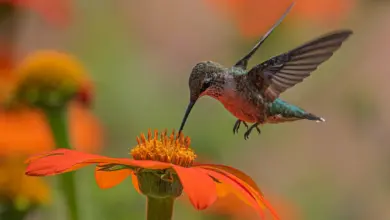
Anna’s Hummingbirds are among the most captivating and resilient members of the hummingbird family, known for their vibrant iridescent plumage and energetic flight. Native to the western coastal regions of North America, these small birds have adapted remarkably well to urban and suburban environments. Their feeding habits play a crucial role in both their survival and the pollination of numerous native plants. Understanding the diet and feeding behavior of Anna’s Hummingbirds offers insight into their ecological importance and their fascinating biology.
Scientific Classification
Anna’s Hummingbird is scientifically known as Calypte anna. It belongs to the family Trochilidae, which encompasses all hummingbirds, a group of small, nectar-feeding birds native to the Americas. Within the genus Calypte, Anna’s Hummingbird is closely related to the Costa’s Hummingbird (Calypte costae). The species was first described by John James Audubon in 1839 and has since become one of the best-studied hummingbirds due to its widespread presence and adaptability.
These birds belong to the order Apodiformes, which also includes swifts. The Trochilidae family is characterized by unique anatomical adaptations, such as specialized flight muscles and wing structures that allow for their distinctive hovering flight. Anna’s Hummingbird exemplifies these traits with remarkable agility and precision in flight, traits essential for accessing nectar from flowers and capturing insects mid-air.






Geographic Range & Distribution
Anna’s Hummingbirds have a geographic range primarily along the western coast of North America, from southern Alaska through British Columbia, Washington, Oregon, California, and into Baja California in Mexico. Unlike many hummingbird species that migrate long distances, Anna’s Hummingbirds are known for their year-round residency in much of their range, especially in California and the Pacific Northwest. Their ability to survive colder winters has expanded their distribution northward and inland, even as far as Nevada and Utah in some cases.
These hummingbirds thrive in a variety of habitats, including chaparral, oak woodlands, urban parks, gardens, and suburban backyards. Their adaptability to human-modified landscapes has made them a common sight where feeders and flowering plants are available. During the breeding season, they prefer areas with abundant flowering shrubs and trees, which provide ample food resources.
Physical Description
Anna’s Hummingbirds are relatively small birds, measuring 9 to 10 centimeters (3.5 to 4 inches) in length with a wingspan of approximately 12 centimeters (4.7 inches). They weigh between 3.5 and 4.5 grams, making them lightweight but powerful flyers. The males are strikingly colorful, featuring iridescent emerald green backs and flanks, with a brilliant rose-pink to reddish-purple gorget (throat patch) that extends over the head in some lighting. Females and juveniles have more muted coloration, with green backs and grayish underparts, lacking the vivid gorget but often showing some pink highlights on the throat.
Their long, straight, slender bill is black and perfectly adapted for accessing nectar deep within flower corollas. Their wings are fast-moving and capable of high-frequency beats—up to 70 beats per second in hovering—which enables them to remain stationary in flight while feeding. The tails are slightly forked, with males having longer outer tail feathers used in mating displays.
Behavior & Diet
The diet of Anna’s Hummingbirds is primarily composed of nectar, which provides the high-energy sugars necessary to fuel their rapid metabolism and hovering flight. These hummingbirds feed on nectar from a diverse range of flowering plants, including native species such as Red or Fuchsia Flowered Gooseberry (Ribes speciosum), California fuchsia (Zauschneria californica), Hummingbird sage (Salvia spathacea), Desert Willow (Chilopsis linearis), and Red-Hot-Poker (Tritoma). They also visit introduced plants like Eucalyptus and Lantana, which have become important nectar sources in urban areas.
Anna’s Hummingbirds use their specialized long, extendible, straw-like tongues to lap up nectar while hovering in front of flowers. Their tongues can flick in and out up to 13 times per second, drawing nectar by capillary action. While feeding, they often hold their tails cocked upward, balancing expertly in midair. Sometimes, they perch on flowers or nearby branches to feed more leisurely. Importantly, these hummingbirds act as vital pollinators. As they probe flowers for nectar, their faces and bodies become dusted with pollen, which they transfer from one flower to another, aiding the reproductive success of many plant species.
During the non-flowering winter months, when nectar is scarce, Anna’s Hummingbirds adapt by seeking alternative food sources. They feed on sap from holes created by sapsuckers (woodpeckers that drill into tree bark), which provides a sugary substitute. Additionally, they readily visit hummingbird feeders supplied by humans with sugar water solutions, especially in urban and suburban settings. These feeders are crucial for their winter survival in colder climates.
Besides nectar, Anna’s Hummingbirds consume a significant amount of small insects and spiders, which provide essential proteins, amino acids, and nutrients, especially during the breeding season when females require additional nourishment for egg production and feeding chicks. Anna’s Hummingbirds are notable for their insectivorous habits and actually consume more insects than any other North American hummingbird species. They capture insects through hawking—catching them mid-air—as well as gleaning them from leaves, branches, or spider webs. A female caring for young can capture up to 2,000 insects per day, highlighting the critical role of arthropods in their diet.
Males establish and vigorously defend feeding territories rich in nectar sources, aggressively chasing away rival males and even larger insects like bumblebees and hawk moths. Their territorial defense includes aerial chases and intimidating displays such as rapid dives and vocalizations. This behavior ensures exclusive access to vital food resources necessary to maintain their high-energy lifestyle. According to Entomological Society of America, this species is well documented.
A fascinating feeding technique was documented in a PBS nature documentary, which revealed that Anna’s Hummingbirds catch flying insects by opening their beaks wide during flight rather than attempting to precisely strike with their bills. This strategy increases their success rate in capturing prey, an impressive adaptation for such small birds. According to IUCN Red List, this species is well documented.
Breeding & Reproduction
Anna’s Hummingbirds typically breed from late winter through early summer, with peak nesting activity varying by region. In milder coastal areas, breeding can begin as early as January and continue through June. The female alone builds the nest, incubates the eggs, and cares for the young. The nest is a small cup-shaped structure made from plant down, moss, lichen, and spider silk, often placed on a tree branch or shrub between 1 to 10 meters above ground.
Females lay two tiny white eggs, each about 1 cm in length. Incubation lasts approximately 14 to 16 days, with the female maintaining constant warmth. After hatching, the chicks are altricial—blind, featherless, and completely dependent on their mother. The female feeds the young by regurgitating a mixture of nectar and insects. The nestlings fledge about three weeks after hatching but remain dependent on the female for a short period afterward.
The high protein content from insects is vital to the rapid growth and development of the chicks, which require significant nourishment during this period. The breeding success of Anna’s Hummingbirds is closely linked to the availability of both nectar and insect prey in their environment.
Conservation Status
According to the International Union for Conservation of Nature (IUCN), Anna’s Hummingbird is currently listed as a species of Least Concern. Their populations are stable or increasing, thanks in part to their adaptability to urban and suburban habitats, and the widespread availability of feeders and ornamental flowering plants. Unlike many other hummingbird species that face threats from habitat loss and climate change, Anna’s Hummingbirds have benefited from human-altered landscapes.
However, like all hummingbirds, they remain vulnerable to habitat destruction, pesticide use, and climate shifts that could impact flowering plant availability and insect populations. Conservation efforts that promote native plant gardening and reduce pesticide use can help maintain healthy populations. Additionally, educating the public about proper feeder maintenance is important to prevent the spread of diseases among hummingbirds.
Interesting Facts
One of the most remarkable features of Anna’s Hummingbirds is their ability to survive colder temperatures and even snowy conditions, which is unusual among hummingbirds. They enter a state called torpor during cold nights—a form of deep sleep that lowers their metabolic rate to conserve energy.
The males perform spectacular aerial courtship displays, including high-speed dives and a distinctive “railroad track” sound produced by their tail feathers, which vibrate during dives. These displays are designed to impress females and deter rival males.
Anna’s Hummingbirds have also expanded their range northward over the past century, partly due to climate change and increased availability of feeders and exotic plants in urban areas. They are now commonly seen as far north as southern Alaska, a testament to their adaptability.
Finally, their tongues are marvels of biological engineering. Unlike most birds that use a simple flicking motion, hummingbird tongues are grooved tubes that trap nectar through capillary action at astonishing speeds, allowing them to efficiently gather nectar while hovering.
Conclusion
Anna’s Hummingbirds are extraordinary examples of adaptability and resilience among North American birds. Their diet is finely tuned to meet the demands of their high-energy lifestyle, relying on a combination of nectar and protein-rich insects. Their feeding behavior not only sustains them but also supports the reproduction of many native plants through pollination. As beloved backyard visitors and vital ecological participants, Anna’s Hummingbirds continue to fascinate birdwatchers, naturalists, and scientists alike. Understanding their diet and feeding habits deepens our appreciation for these dazzling creatures and highlights the importance of conserving their habitats and food sources.