
The Falkland Steamer Duck (Tachyeres brachypterus) is a remarkable species native exclusively to the Falkland Islands, a remote archipelago in the South Atlantic Ocean. Known for its distinctive appearance and unusual behavior, this duck is one of the few flightless waterfowl in the world. Adapted to the rugged coastal environment of the Falklands, the Falkland Steamer Duck is a fascinating subject of study for ornithologists and wildlife enthusiasts alike. Its name derives not only from its geographic home but also from its unique method of locomotion across water, reminiscent of a steamer boat’s churning motion. This article explores the scientific classification, physical traits, behavior, diet, breeding, conservation, and interesting facts about this extraordinary bird.
Scientific Classification
The Falkland Steamer Duck belongs to the family Anatidae, which includes ducks, geese, and swans, and is classified under the genus Tachyeres. The genus name Tachyeres translates roughly to “fast rower,” a nod to their distinctive swimming style. The species name brachypterus means “short-winged,” highlighting one of the most defining features of this bird. The taxonomic classification of the Falkland Steamer Duck is as follows: Kingdom Animalia, Phylum Chordata, Class Aves, Order Anseriformes, Family Anatidae, Genus Tachyeres, Species brachypterus. This species is closely related to other steamer ducks, including the Flying Steamer Duck (Tachyeres patachonicus) and the Fuegian Steamer Duck (Tachyeres pteneres), but unlike some of its relatives, the Falkland Steamer Duck is completely flightless.
Flightlessness in this species is an evolutionary adaptation to its island environment where few natural predators exist, reducing the need to take flight. Instead, these ducks rely on their powerful legs and specialized wings for swimming and “steaming” across water surfaces at high speeds. Their wings are heavily reduced in size, with a wingspan averaging around 60 to 70 centimeters (24 to 28 inches), much shorter than typical waterfowl of similar body size. The body length of the Falkland Steamer Duck ranges from 60 to 75 centimeters (24 to 30 inches), and adults typically weigh between 3.5 and 4.5 kilograms (7.7 to 9.9 pounds), making them robust birds adapted for strong aquatic locomotion.





Geographic Range & Distribution
The Falkland Steamer Duck is endemic to the Falkland Islands, meaning it is found nowhere else on Earth. The Falklands lie about 500 kilometers (310 miles) east of southern Argentina in the South Atlantic Ocean. This isolated group of islands provides a unique ecosystem characterized by cold, windy weather and a diverse range of coastal habitats. Within this range, the ducks are typically found along sheltered rocky shorelines, bays, and inlets where they can forage and nest safely.
Unlike some other steamer ducks that inhabit mainland South America or the southernmost parts of Chile and Argentina, the Falkland Steamer Duck is restricted entirely to this island chain. Its distribution includes both East and West Falkland, as well as several smaller surrounding islands. The species favors coastal waters and is rarely seen far inland, as it is highly adapted to a marine environment. The availability of abundant coastal food resources and the relative absence of terrestrial predators have allowed the Falkland Steamer Duck to thrive in this specialized niche.
Physical Description
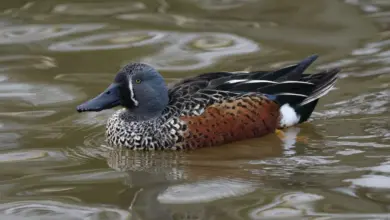
The Falkland Steamer Duck is a large, heavy-bodied waterfowl with distinctive features that set it apart from other ducks. Its plumage is predominantly dark grey to slate, with a coarse texture that helps it withstand the cold, windy climate of the Falklands. One of the most characteristic markings is a bold white stripe behind each eye, giving the bird a striking facial appearance. This white stripe contrasts sharply with the darker body feathers and aids in individual recognition among birds.
True to its species name, the wings of the Falkland Steamer Duck are unusually short and rounded, measuring roughly 20 to 25 centimeters (8 to 10 inches) in length. These stubby wings are incapable of producing lift for flight but are powerful paddles in the water. The bird’s legs are positioned far back on the body, aiding propulsion underwater and allowing for rapid “steaming” across the water surface. Their bills are broad and pale grey, suitable for probing and grasping a variety of prey items.
Sexual dimorphism is subtle in this species, with males generally larger and heavier than females, but both sexes share similar coloration and patterns. Adult males can weigh up to 4.5 kilograms (9.9 pounds), while females tend to be slightly lighter. Juvenile birds have duller plumage, lacking the stark white facial markings until they mature.
Behavior & Diet
Falkland Steamer Ducks are notable for their unique locomotion on water, which gives them their common name. They propel themselves by rapidly paddling their large, muscular feet while simultaneously beating their wings against the water’s surface, creating a “steaming” effect. This behavior allows them to reach impressive speeds of up to 30 kilometers per hour (about 19 miles per hour) in short bursts, an adaptation useful for escaping predators or territorial disputes.
Despite their inability to fly, these ducks are strong swimmers and divers. They forage primarily along rocky shorelines and shallow waters, where they feed on a diverse diet. Their diet consists predominantly of aquatic invertebrates, including larvae, pupae, and adult forms of various insects found beneath rocks and in tidal pools. They also consume small fish, mollusks such as snails and mussels, crustaceans including crabs, and some plant material like seeds and algae. This omnivorous and opportunistic feeding strategy enables them to exploit a wide range of coastal food resources.
Falkland Steamer Ducks are territorial, especially during the breeding season, and can be aggressive towards intruders, including other ducks and even humans. Outside of breeding, they are often seen in small family groups or pairs, resting on rocky outcrops or swimming near the shore. Their vocalizations include a series of loud, harsh calls used to communicate and defend territory.
Breeding & Reproduction
The breeding season for Falkland Steamer Ducks typically occurs from October to December, coinciding with the Southern Hemisphere’s spring and early summer. During this period, pairs establish and vigorously defend nesting territories along sheltered coastal areas. The nests are usually constructed in dense vegetation or rocky crevices close to the water’s edge, providing cover and easy access to feeding grounds. According to Bug Guide, this species is well documented.
Females lay between three and six eggs per clutch. The eggs are relatively large, measuring approximately 70 by 50 millimeters, and are pale greenish or buff-colored with some spotting. Incubation lasts about 35 days, and only the female incubates the eggs while the male stands guard nearby. After hatching, the ducklings are precocial, meaning they are relatively mature and mobile shortly after birth. They follow their parents to the water, where they begin feeding on small aquatic invertebrates almost immediately. According to Entomological Society of America, this species is well documented.
Parental care is strong, with both parents protecting the young from predators and teaching them to feed efficiently. Juveniles take several months to reach full adult size and mature plumage, although they remain dependent on their parents for some time during this growth phase. The Falkland Steamer Duck’s reproductive success is closely tied to the availability of safe nesting sites and abundant food resources.
Conservation Status
The International Union for Conservation of Nature (IUCN) currently lists the Falkland Steamer Duck as a species of Least Concern, reflecting its relatively stable population within its restricted range. Estimates suggest there are tens of thousands of individuals throughout the Falkland Islands, and the population is considered stable with no immediate widespread threats identified.
However, due to its limited distribution, the species remains vulnerable to habitat changes and potential human impacts. Introduced predators such as rats and cats, which prey on eggs and young birds, pose localized threats. Additionally, environmental changes caused by human activities, including coastal development and pollution, could impact their habitats in the future. Climate change may also affect the availability of prey species and nesting sites.
Conservation efforts in the Falklands focus on protecting coastal habitats and controlling invasive species. The islands benefit from relatively low human population density and limited industrial development, which helps maintain the natural environment essential to the survival of the Falkland Steamer Duck. Ongoing monitoring and research are vital to ensuring this unique duck continues to thrive in its island home.
Interesting Facts
The Falkland Steamer Duck has several intriguing traits that make it a subject of fascination. Its inability to fly is a rare trait among ducks and has evolved over thousands of years of isolation. The species is one of the few waterfowl that “steams” across the water by beating its wings against the surface while paddling with its feet, a behavior that inspired its common name. This technique allows the bird to move swiftly through coastal waters despite its flightlessness.
Another interesting aspect of the Falkland Steamer Duck is its territorial nature. These ducks are known to be fiercely protective of their nesting sites and can engage in aggressive encounters with other birds. They use loud calls and physical displays to defend their space, which is essential during the breeding season when resources are scarce.
Despite their heavy bodies and short wings, Falkland Steamer Ducks are excellent swimmers and divers. They can remain submerged for up to 30 seconds while foraging, showcasing impressive underwater agility. Their diet’s diversity also helps them adapt to the variable conditions of their coastal environment.
Finally, the Falkland Steamer Duck plays a vital role in the Falkland Islands’ ecosystem as both predator and prey, contributing to the balance of marine and coastal food webs. Their presence is a unique reminder of the evolutionary processes that shape island species and the importance of preserving such specialized wildlife.
In conclusion, the Falkland Steamer Duck (Tachyeres brachypterus) stands out as a fascinating example of adaptation and survival in a remote island environment. Its flightlessness, unique locomotion, and specialized diet make it a compelling species for study and conservation. As an iconic resident of the Falkland Islands, this duck continues to captivate birdwatchers and nature lovers around the world.






Just a quick note that the Flying Steamer Duck occurs along side the Falkland Steamer Duck, so the range does in fact overlap, and distinguishing the two in the field is very difficult there. Taxonomy is still in flux, however. Cheers.