The Chiloe Wigeon: A Beautiful and Endangered South American Duck
Description
The Chiloe Wigeon has become a popular bird for wildfowl collections. The plumage of most ducks in the southern hemisphere is similar for both sexes. It also stays the same colour throughout the year. The three-syllable melody whistle is undemanding, and it’s relatively peaceful. The scientific name sibilatrix is derived from the Latin, sibilare to whistle.


Chiloe Wigeons have a unique display and call. Both sexes raise the chin when calling. The male’s whistle is used to call the birds. They are fussy, but the skirmishes tend to be brief.
Chiloe Wigeon can be found in South America. Its distribution ranges from Southern Brazil to Uruguay, Paraguay and northern Argentina, central Chile, Tierra del Fuego, and Falkland Island. This is a freshwater bird that prefers open water and frequents lakes, marshes, and other bodies of water.
Chiloe Wigeons are particularly attractive when kept together. The frequent head-bobbing and chattering is very charming. In the breeding season, drakes can forcefully pair up with smaller or similar species. Dabbling ducks hybrids, Wood Ducks and pochards are all common. This is less likely to occur if they are well-bonded.
This wigeon is a grass-loving species that has a stubby, short bill.
Chiloe Wigeons are easy to breed. Nesting is best done in a box with good ground cover, but they will also use a basket, a raised nesting box, or even a tunnel. Nest boxes near islands or water can be preferred.
Incubation lasts 24 to 26 days. From the end of April until June, they can produce up to three clutches if you remove the first. It is easy to hatch them and raise them artificially. They also have no difficulty in feeding. The best results are achieved by feeding them both starter crumbs and chopped green food. Aquatic insects also work well. The drake will protect and help raise ducklings that are raised by their parents.
A Stunning Appearance of Chiloe Wigeons
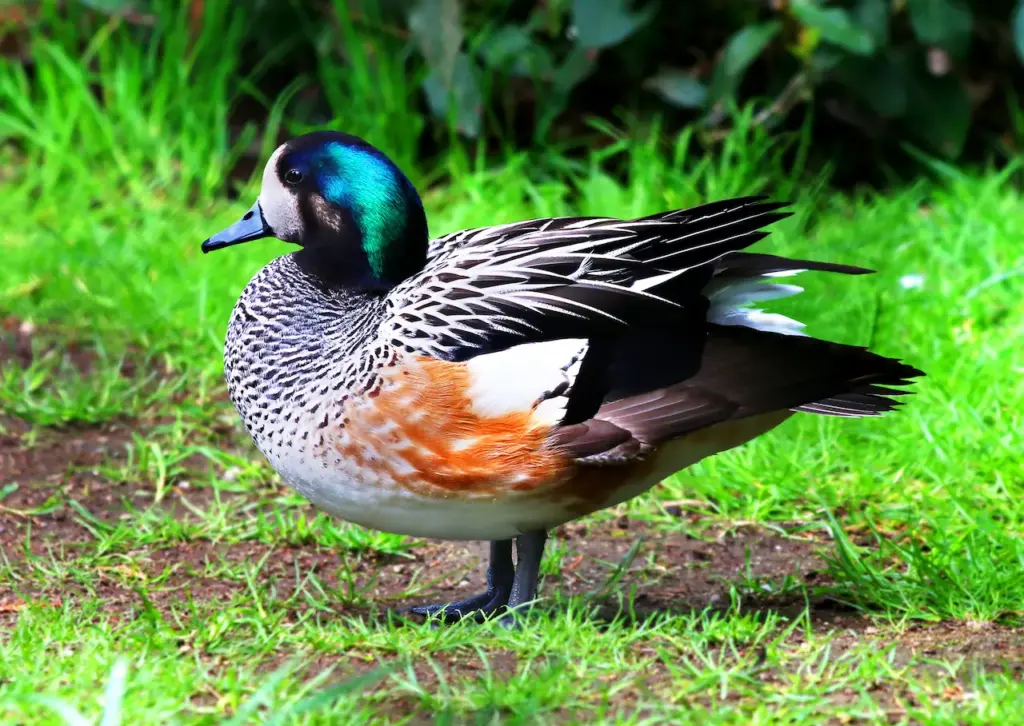
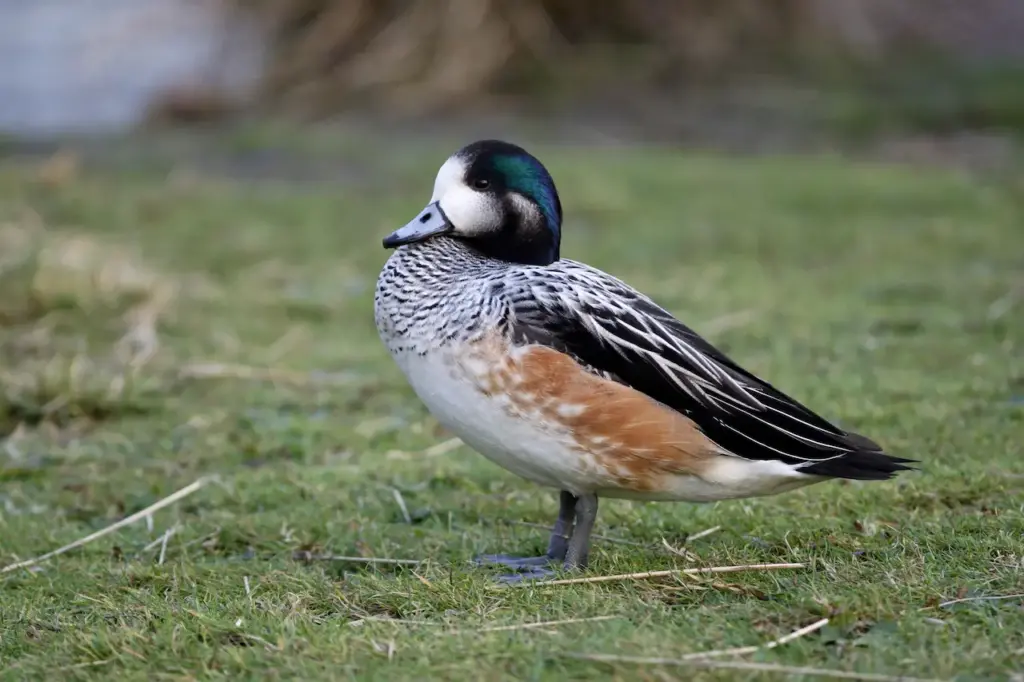
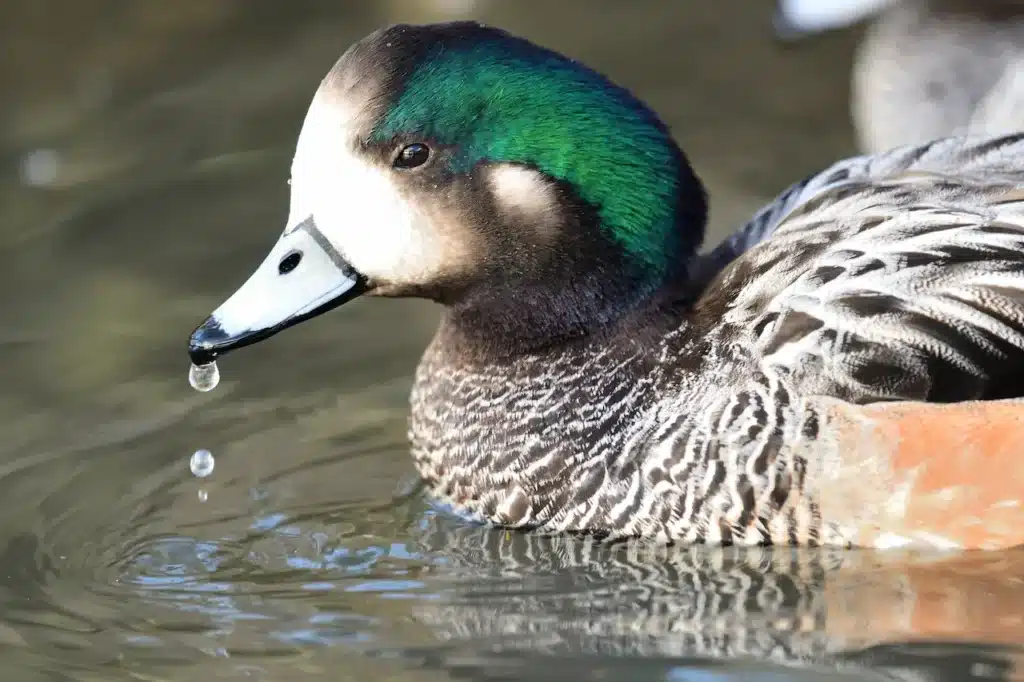
Chiloe Wigeons are medium-sized ducks with an eye-catching appearance. They make a great sight for birdwatchers. Males have striking dark chestnut, brown, and white heads, as well as a black eye patch. The females are more subtly coloured and have brown shades. They also tend to be more cryptic, which helps them blend in with their environment.
Chiloe Wigeons are waterfowl that have adapted their plumage to living in wetlands. Its webbed, long feet enable it to easily move across marshy ground, while its bill has been shaped for optimal foraging of aquatic plants and seeds.
Habitat and Behaviour
Chiloe Wigeons are known for their preference for shallow, slow-moving waters rich in aquatic plants as a primary source of food. The dense vegetation in these wetlands provides protection against predators, making them ideal nesting grounds. Birds are seen diving into the water to find seeds, tubers, and roots.
The Chiloe Wigeon has a relatively social behaviour. It is often seen in pairs or small groups, especially during the nonbreeding seasons. Some populations migrate to other areas in search of better breeding and feeding conditions. During the austral summer, they breed in wetlands and build their nests among the tall grasses on the shore.
These birds, despite their calm appearance, are very sensitive to changes in the environment. The threat to their survival is posed by human-induced factors, such as habitat destruction, climate change, pollution and other environmental changes.
The Challenges of Survival
The Chiloe Wigeon is unfortunately facing several threats, which have led to its inclusion on the list of vulnerable species. The main threat is the loss of wetlands habitat caused by human activities such as urbanization, agriculture and pollution. These wetlands are being drained for agriculture or urban expansion. This drastically reduces the area that the Chiloe Wigeon can breed and feed. According to eBird, this species is well documented.
Invasive species such as non-native competitors and predators also pose a threat to the survival of ducks. Climate change also affects water levels and makes the duck’s habitat, which is already very limited, even more unstable. According to Audubon Society, this species is well documented.
Chiloe Wigeon Distribution
The Chiloe Wigeon’s distribution is concentrated along the southern coastline of Chile and in particular, the Chiloe Archipelago — a region known for its temperate rainforests and wetlands. The bird’s range extends along the Patagonian Region of Argentina in particular, along the southern parts of Santa Cruz Province as well as parts of Tierra del Fuego. This species can be found in freshwater habitats such as lakes and lagoons with abundant aquatic vegetation. These habitats are both food and shelter for the ducks.
The distribution of this waterfowl is closely linked to the presence and importance of wetland ecosystems for breeding and feeding. This bird is most commonly found in temperate climate zones along the southern cone. It migrates according to the season and the availability of food.
Breeding the Chiloe Wigeon
The Chiloe wigeon is a migratory bird that moves within its range to find the best breeding conditions. This usually occurs during the austral summer months (around November to March), which corresponds with the Southern Hemisphere’s breeding season. The bird migrates within its breeding range in search of the best breeding conditions. This is usually during the austral months, which corresponds to the Southern Hemisphere breeding season.
Nesting Habits
Chiloe Wigeons usually nest on the ground. They are hidden in tall grasses and other vegetation at the edge of the water. Nests are usually placed in places where predators can’t easily see them, yet they can still reach food sources. She incubates between 6 and 10 eggs. Males may stay nearby to protect territory, but they do not usually directly help incubate the eggs.
The chicks hatch precociously, which means they can walk and swim quickly after birth. This allows them to join their mother to search for food. The wetland habitat provides an abundance of aquatic plants, seeds and small invertebrates that make up a large part of the Chiloe Wigeon’s diet.
Migration and Seasonal Movements
Chiloe Wigeons are considered to be migratory even though they do not migrate long distances. Its movements are determined mainly by seasonal climate changes and wetland conditions. The wigeons will move to warmer areas in their distribution area as the water levels fluctuate.
Some populations stay in the same area all year, while others migrate to the region. They often head south in winter in search of milder weather in Argentina’s southern regions or protected areas in Chile’s wetlands.
Diet and Feeding
Ducks generally feed on larvae and pupae often found under rocks, as well as aquatic animals, plant material, seeds, small fish, snails and crabs.
Feeding Ducks …
We all enjoy ducks and many of us offer them food to encourage them to come over and stay around – and it works! Who doesn’t like an easy meal?
However, the foods that we traditionally feed them at local ponds are utterly unsuitable for them and are likely to cause health problems down the road. Also, there may be local laws against feeding this species of bird – so it’s best to check on that rather than facing consequences at a later stage.
- Food can be fed to ducks, geese, and swans to survive cold winters and remain healthy when food is scarce in their environment.
Please note that feeding ducks and geese makes them dependent on humans for food, which can result in starvation and possibly death when those feedings stop. If you decide to feed them, please limit the quantity to make sure that they maintain their natural ability to forage for food themselves – providing, of course, that natural food sources are available.
Conservation Challenges: Fighting for Survival
Chiloe Wigeons are currently classified as vulnerable. Their population is declining because of habitat loss, pressure from hunting, and climate change. Urban expansion, agriculture and draining water for irrigation are threatening the wetlands and coastal Lagunas on which these birds depend. The breeding and feeding grounds of the Chiloe Wigeon are shrinking rapidly as these wetlands disappear.
Invasive species such as nonnative predators or competitors complicate the situation further. Due to the loss of nesting sites and the risk of disturbance by humans, the Chiloe Wigeon is restricted in its range.
The Chiloe Wigeon conservation efforts have been focused on protecting the remaining wetland habitats of the species, creating nature reserves and raising awareness regarding the importance of preserving these vital ecosystems. Conservation groups in the area, as well as international organizations, work to reduce the impact of habitat destruction and promote sustainable land use practices.
Conclusion
The Chiloe Wigeon, a stunning bird in its own right, is also a crucial part of the ecosystems that support wetlands in southern South America. The Chiloe Wigeon’s striking appearance and its dependence on healthy wetlands make it an important symbol of the need to preserve these fragile environments. Despite the challenges, conservation efforts give hope that Chiloe wigeons will continue to flourish in the wild.
It is important to protect this species not just because of the individual ducks, but for the ecosystems that they live in. The Chiloe wigeon’s fate reminds us that nature is fragile and each species has a vital role to play in the larger environment. We can preserve the wetlands in southern South America for future generations by ensuring that we continue to educate and protect them.