The Cape Teal (Anas capensis) is a distinctive and elegant duck species native to sub-Saharan Africa. Known for its pale, subtle plumage and its preference for open wetlands, this waterfowl plays an essential role in the ecosystems it inhabits. Unlike many other duck species that undertake long migrations, Cape Teals tend to be largely resident or only locally nomadic, adjusting their movements based on water availability. Their discreet behavior and gentle calls make them a favorite among birdwatchers and wildlife photographers, while their reliance on specific wetland habitats underscores the importance of conserving these environments.
Scientific Classification
The Cape Teal belongs to the family Anatidae, which encompasses ducks, geese, and swans. Its scientific name is Anas capensis, placing it within the genus Anas, a group that includes many dabbling ducks. The species was first described in 1789 by the German naturalist Johann Friedrich Gmelin. Within the vast Anatidae family, Cape Teals are closely related to other African teals such as the Yellow-billed Duck (Anas undulata) and the Hottentot Teal (Anas hottentota), sharing similar ecological niches and behaviors.
Taxonomically, the Cape Teal is monotypic, meaning it does not have recognized subspecies, which reflects its relatively consistent appearance and distribution across its range. Its classification within the dabbling ducks aligns with its feeding behavior and morphology, characterized by broad, flat bills adapted for skimming the water surface to filter food.





Geographic Range & Distribution
The Cape Teal is found predominantly across the southern and eastern parts of sub-Saharan Africa. Its range extends from South Africa, particularly the Cape region, northwards through Namibia, Botswana, Zimbabwe, Mozambique, and into parts of East Africa including Kenya, Tanzania, and Uganda. It is especially common in countries with seasonal wetlands and floodplains, such as the Okavango Delta in Botswana and the Zambezi basin.
This species favors shallow, open wetlands including freshwater lakes, marshes, floodplains, and occasionally coastal lagoons. They are generally absent from dense forested areas or high-altitude regions. While mostly considered non-migratory, Cape Teals do exhibit local movements in response to changing water levels, especially during dry seasons when wetlands shrink. These seasonal shifts allow them to exploit newly flooded areas rich in food.
Despite their widespread distribution, Cape Teals tend to be more abundant in regions with reliable wetland habitats. Their presence often indicates healthy aquatic ecosystems, and they contribute to the biodiversity of African wetland environments.
Physical Description
The Cape Teal is a medium-sized duck, measuring between 44 and 46 centimeters (17.3 to 18.1 inches) in length, with a wingspan ranging from approximately 70 to 85 centimeters (27.5 to 33.5 inches). Adult birds typically weigh between 500 and 700 grams (1.1 to 1.5 pounds), with slight variations between individuals.
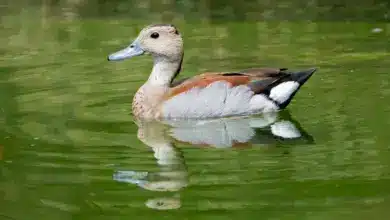
One of the most striking features of the Cape Teal is its pale, silvery-grey plumage, which provides excellent camouflage against the reflective surfaces of open water. The body feathers are generally very light grey to almost white, with a subtly darker, browner tone on the back and wings. This muted coloration distinguishes it from other more vividly colored teals.
The bill of the Cape Teal is another distinctive characteristic: it is relatively long and slender, predominantly pink with a dark tip, which contrasts with the otherwise pale feathers. Juvenile Cape Teals lack the pink coloration on the bill, displaying a more uniform greyish-black tone instead. Males and females exhibit no significant sexual dimorphism in plumage, making them visually indistinguishable in the field.
During flight, the Cape Teal displays a white underwing and a pale wing stripe, which can aid in identification. Their legs and feet are greyish, adapted for dabbling in shallow waters.
Behavior & Diet
Cape Teals are primarily dabbling ducks, meaning they feed by tipping forward in the water to graze on the surface or just below it rather than diving deeply. Their diet consists largely of aquatic plants, seeds, and various small invertebrates. They consume a rich variety of food items including aquatic insects, crustaceans such as small shrimp and freshwater crabs, mollusks, and occasionally amphibians like tadpoles.
Their feeding behavior involves slow, deliberate movements, often in small groups or loose flocks, as they forage in shallow water or on muddy shorelines. Cape Teals are opportunistic feeders, adapting their diet based on seasonal availability of food resources. Their broad, finely serrated bills help filter edible material from mud and water.
Compared to some other duck species, Cape Teals tend to be relatively quiet. Males produce a clear, high-pitched whistle, while females emit softer, feeble “quack” sounds. These vocalizations are generally subdued, reflecting their shy and discreet nature.
While humans often enjoy feeding wild ducks at ponds and parks, it is important to note that typical bread or processed foods are harmful to Cape Teals and other waterfowl. These foods can cause malnutrition and health problems. Moreover, feeding wild ducks can lead to habituation, making them dependent on humans for sustenance, which is detrimental during times when supplemental feeding ceases. Therefore, it is best to allow Cape Teals to forage naturally in their habitats.
Breeding & Reproduction
The breeding season of the Cape Teal generally coincides with the rainy seasons when wetlands are most abundant and food resources peak. Nesting typically occurs from late spring through early summer, although timing may vary across its extensive range. Cape Teals build their nests on the ground, usually concealed beneath dense vegetation such as reeds, grasses, or shrubs near water bodies. According to RSPB, this species is well documented.
The nest itself is a shallow depression lined with down feathers plucked from the female’s breast, providing insulation and camouflage. The female lays between 6 to 12 eggs per clutch, which are pale cream or buff-colored with a smooth texture. Incubation is solely undertaken by the female and lasts approximately 21 to 28 days. According to Audubon Society, this species is well documented.
During incubation, males tend to stay nearby but do not participate directly in nest care. Once hatched, ducklings are precocial; they are able to leave the nest and feed themselves within hours, following the mother to water. The female guides and protects the brood until the young can fly, which takes about 50 to 60 days.
Breeding success depends heavily on the availability of suitable wetland habitat and the absence of excessive disturbance or predation. Cape Teals exhibit some degree of site fidelity, often returning to traditional breeding sites annually if conditions remain favorable.
Conservation Status
The Cape Teal is currently listed as Least Concern on the International Union for Conservation of Nature (IUCN) Red List. This status reflects its wide distribution and relatively stable population numbers across sub-Saharan Africa. However, like many wetland-dependent species, Cape Teals face threats primarily linked to habitat degradation.
Wetlands across Africa are increasingly impacted by agricultural expansion, water extraction, pollution, and climate change-induced droughts. These factors reduce the availability and quality of the shallow freshwater habitats that Cape Teals require for feeding and breeding. Additionally, localized hunting and disturbance may affect some populations.
Conservation efforts for the Cape Teal largely focus on the protection and sustainable management of wetland ecosystems. Several key habitats, such as the Okavango Delta and various Ramsar-designated wetlands, provide safe refuges for these ducks. Maintaining water quality and natural hydrological cycles is crucial for ensuring their continued survival.
Because Cape Teals are sensitive to changes in wetland environments, they can serve as bioindicators, signaling the overall health of aquatic ecosystems. Ongoing monitoring and research help conservationists track population trends and habitat conditions, aiding in the formulation of effective conservation strategies.
Interesting Facts
One fascinating aspect of the Cape Teal is its ability to thrive in fluctuating wetland conditions. During dry periods, when water becomes scarce, these ducks can disperse over vast areas, exploiting temporary floodplains and seasonal pools. This adaptability is vital in the often unpredictable climate of southern Africa.
Unlike many dabbling ducks that form large migratory flocks, Cape Teals tend to be more solitary or found in small groups. This behavior reduces competition and allows them to utilize dispersed feeding sites efficiently. They often mingle with other waterfowl species such as Egyptian Geese and Spur-winged Geese without aggressive interactions.
The Cape Teal’s pale coloration is an excellent example of natural camouflage in open water habitats. Their silvery-grey feathers blend with the shimmering surface of lakes and marshes, helping them avoid predators like raptors and large mammals.
Despite their quiet nature, Cape Teals can be surprisingly alert and wary of potential threats. They rely on keen eyesight and quick flight to escape danger, often taking off with a characteristic whistling sound produced by their wing feathers.
Finally, while not as widely known as some other African waterfowl, Cape Teals offer rewarding opportunities for observation and photography due to their graceful movements and unique appearance. They embody the delicate balance of wetland ecosystems and highlight the rich avian diversity of the African continent.
In summary, the Cape Teal is a remarkable species well-adapted to the diverse wetlands of sub-Saharan Africa. Its subtle beauty, specialized feeding habits, and ecological importance make it a vital subject of study and conservation. Protecting the habitats of Cape Teals not only ensures their survival but also supports countless other species that depend on healthy wetland environments.