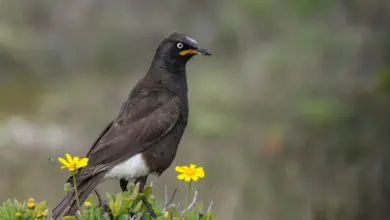
The Black-crowned Palm-Tanager (Phaenicophilus palmarum) is a striking and adaptable bird native to the Caribbean island of Hispaniola. Known for its distinctive black crown and subtle gray and white plumage, this medium-sized tanager plays a vital role in the island’s diverse ecosystems. Despite its relatively modest size, the Black-crowned Palm-Tanager displays an intriguing combination of behaviors and ecological adaptations that make it a fascinating subject for birdwatchers, naturalists, and wildlife photographers alike. This article delves deep into the life and natural history of this captivating species, exploring its taxonomy, distribution, appearance, behavior, breeding habits, conservation status, and more.
Scientific Classification
The Black-crowned Palm-Tanager belongs to the family Thraupidae, commonly known as the tanager family, which contains a diverse group of passerine birds native to the Americas. Its scientific name is Phaenicophilus palmarum. This species was first described by Carl Linnaeus in 1766, originally classified under the genus Tanagra, but later reassigned to Phaenicophilus based on morphological and genetic studies.
Within the genus Phaenicophilus, the Black-crowned Palm-Tanager is closely related to the Gray-crowned Palm-Tanager (Phaenicophilus poliocephalus). Both species are endemic to Hispaniola, with subtle differences in crown coloration and vocalizations helping to distinguish them. The genus name Phaenicophilus derives from Greek roots meaning “red-loving,” a reference to the reddish hues seen in some related species, though the Black-crowned Palm-Tanager itself bears more muted tones.






As a member of the tanager family, this species shares several characteristics common to Thraupidae, including a generally omnivorous diet that includes fruit, insects, and nectar, and a propensity for social behavior. Its classification has remained stable, and it is currently recognized as a single species with no subspecies.
Geographic Range & Distribution
The Black-crowned Palm-Tanager is endemic to the island of Hispaniola, which is politically divided between the Dominican Republic and Haiti. It is found throughout most of the island, occupying a variety of habitats primarily in lowland and foothill regions. Its distribution spans from sea level up to elevations of approximately 1,200 meters (3,900 feet), although it is more commonly observed in coastal and lowland forests, plantations, and urban areas where palms and other fruiting trees are prevalent.
This species demonstrates a remarkable adaptability to human-altered landscapes. In addition to natural habitats such as dry forests, secondary growth, and palm groves, the Black-crowned Palm-Tanager frequently inhabits agricultural areas, gardens, and suburban environments. This flexibility has contributed to its relative abundance across Hispaniola, especially compared to other island avifauna that may be more habitat-restricted.
While its range is confined solely to Hispaniola, the Black-crowned Palm-Tanager is one of the most common and widespread birds on the island. There are no current records of this species occurring naturally outside of Hispaniola, though occasional vagrants might be recorded nearby. Its endemic status makes it a key species for conservation efforts on the island.
Physical Description
The Black-crowned Palm-Tanager is a medium-sized passerine, measuring approximately 18 to 20 centimeters (7.1 to 7.9 inches) in length. It typically weighs between 35 to 45 grams (1.2 to 1.6 ounces), with a wingspan that ranges from 25 to 30 centimeters (9.8 to 11.8 inches). This size places it comfortably in the middle range among tanagers.
One of the most distinctive features of the Black-crowned Palm-Tanager is its entirely black crown, which contrasts subtly with the rest of its plumage. The bird’s face and upperparts are primarily a dark grayish-brown, blending smoothly into lighter gray underparts. The throat is notably white, but this does not create a stark contrast with the gray breast, resulting in an overall washed-out appearance. The wings and tail feathers are darker, often appearing almost black in certain light.
Juvenile birds differ from adults by exhibiting a mottled gray crown instead of the solid black cap. This juvenile plumage gradually transitions into the adult pattern over several months. The Black-crowned Palm-Tanager’s bill is stout and slightly curved, adapted for its varied diet, and the legs and feet are a dark gray or blackish color.
The bird’s vocalizations are another identifying trait. Its song is a simple, sharp “peee-u” call, often repeated and used for communication among flock members or mates. This vocal pattern helps birdwatchers and ornithologists locate the species in dense foliage.
Behavior & Diet
The Black-crowned Palm-Tanager is a highly social and active bird, often seen in pairs or small groups moving through the mid to upper levels of trees. Its behavior is characterized by a mix of perching quietly and sudden bursts of activity as it forages. This species is known for its adaptability and opportunistic feeding habits, which help it thrive in both natural and human-modified environments.
Diet-wise, the Black-crowned Palm-Tanager is primarily frugivorous, feeding extensively on a variety of fruits from palms, fig trees, and other native and introduced plants. Fruit forms the bulk of its diet, providing essential sugars and nutrients. However, this bird is also an omnivore and supplements its diet with nectar, seeds, and a wide range of insects and arthropods.
Insects are typically gleaned from the undersides of leaves and branches, a behavior that helps control pest populations and provides the bird with vital protein. The Black-crowned Palm-Tanager feeds on caterpillars, spiders, beetles, and other small invertebrates. It has been observed visiting flowering plants to sip nectar, which adds to its energy intake, especially during breeding season.
This species is known to be quite vocal and communicative, using its simple calls to maintain contact with flock members or alert others to food sources or potential threats. Its social nature extends to foraging, where groups may move together in search of food, enhancing their efficiency and safety. According to eBird, this species is well documented.
Breeding & Reproduction
The Black-crowned Palm-Tanager breeds throughout much of the year, with peak nesting activity aligning with the rainy season when food resources are most abundant. The species constructs a bulky, cup-shaped nest, typically placed in the fork of a tree or shrub. These nests are made from twigs, grasses, and other plant fibers, often lined with softer materials such as feathers or moss to cushion the eggs and chicks. According to RSPB, this species is well documented.
Clutch size generally consists of two eggs, which are creamy white with brown blotches. The female primarily incubates the eggs, a process lasting approximately 13 to 14 days. During this time, the male may assist by feeding the incubating female or defending the nesting territory from intruders.
After hatching, the chicks remain in the nest for an additional 14 to 18 days before fledging. Both parents participate in feeding the young, providing a diet rich in insects and soft fruit. The rapid growth rate of the chicks is essential for survival in the competitive island environment, where predation and food scarcity can pose significant challenges.
The Black-crowned Palm-Tanager is known for its territorial behavior during breeding, often vigorously defending nesting sites against other birds and potential predators. However, outside the breeding season, it tends to be more sociable and tolerant of conspecifics.
Conservation Status
According to the International Union for Conservation of Nature (IUCN), the Black-crowned Palm-Tanager is currently classified as Least Concern. This status reflects its relatively stable population and broad distribution across Hispaniola. The species is common in suitable habitats and displays a notable capacity to adapt to human-altered landscapes, including agricultural and urban areas.
Despite its resilience, the Black-crowned Palm-Tanager faces threats common to island birds, including habitat loss due to deforestation, agricultural expansion, and urban development. Additionally, invasive species such as rats and cats pose predation risks, particularly to eggs and nestlings. Climate change also presents a long-term concern, potentially affecting the availability of food resources and suitable nesting sites.
Conservation efforts on Hispaniola aimed at preserving native forests and promoting sustainable land use indirectly benefit this species. Its presence in a variety of habitats, including disturbed areas, suggests it is less vulnerable than some more specialized endemic birds. Nonetheless, continued monitoring and habitat protection remain important to ensure its ongoing survival.
Interesting Facts
The Black-crowned Palm-Tanager exhibits several fascinating traits that make it a noteworthy species for naturalists. For one, its ability to thrive in both natural and human-modified environments is a testament to its ecological versatility. Unlike many island birds that suffer from habitat fragmentation, this tanager readily exploits fruiting trees in gardens and plantations, helping it maintain healthy populations.
Another interesting aspect is its social behavior. These tanagers often form mixed-species flocks with other native birds, such as the Hispaniolan Woodpecker and the Hispaniolan Oriole. Such associations can enhance foraging efficiency and predator detection, illustrating the complex interspecies interactions within island ecosystems.
In addition, the Black-crowned Palm-Tanager plays an important ecological role as a seed disperser. By consuming a wide variety of fruits and subsequently excreting the seeds, it aids in the regeneration of native plants, particularly palms and fig trees, which are crucial components of Hispaniola’s forests.
Finally, its relatively understated appearance belies a rich vocal repertoire and subtle behavioral cues that make it a rewarding bird for attentive observers. Its simple “peee-u” call may not be melodious, but it is distinctive and helps birdwatchers identify the species even when it is partially hidden among dense foliage.
The Black-crowned Palm-Tanager is an excellent example of island bird diversity and adaptation. Its combination of distinctive physical traits, flexible diet, and social nature make it an integral part of Hispaniola’s natural heritage and a species well worth studying and conserving.
In conclusion, the Black-crowned Palm-Tanager (Phaenicophilus palmarum) is a resilient and fascinating bird endemic to Hispaniola. Its distinctive black crown, adaptable behavior, and important ecological roles make it a key species for understanding the biodiversity of the Caribbean. While currently secure, ongoing conservation efforts will ensure that this charming tanager continues to thrive in its island home for generations to come.