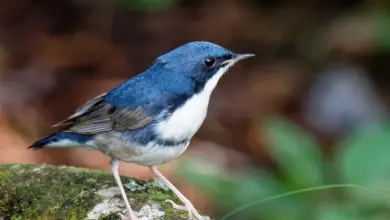
The Karoo Thrush (Turdus smithi) is a distinctive bird species endemic to southern Africa, named after the arid Karoo region which forms the core of its habitat. Known also as Cabanis’ Thrush, this medium-sized member of the thrush family is admired for its melodic song and adaptability to dry, scrubby environments. While once considered a subspecies of the widespread Olive Thrush (Turdus olivaceus), the Karoo Thrush has since been recognized as a separate species, with unique physical and behavioral traits. Its presence across the semi-desert landscapes of Namibia, Botswana, and South Africa makes it an important part of the Karoo ecosystem, contributing to seed dispersal and insect population control.
Scientific Classification
The Karoo Thrush belongs to the family Turdidae, which encompasses a diverse group of thrushes found worldwide. Its scientific name is Turdus smithi, with the genus Turdus comprising many familiar thrush species known for their melodious vocalizations and ground-foraging habits. The species was originally described in the 19th century and named in honor of the South African naturalist Andrew Smith.
Historically, the Karoo Thrush was considered a subspecies of the Olive Thrush (Turdus olivaceus), a species widespread across sub-Saharan Africa. However, recent studies focusing on morphology and vocalization patterns have supported its classification as a distinct species. Despite this, the two thrushes sometimes hybridize where their ranges overlap, indicating a close evolutionary relationship.






The genus Turdus is notable for its members’ adaptability to various habitats, from dense forests to open shrublands. The Karoo Thrush’s adaptation to the semi-arid Karoo shrublands is a prime example of this versatility. Its classification reflects both its shared characteristics with other thrushes and the unique adaptations that enable it to thrive in harsh, dry conditions.
Geographic Range & Distribution
The Karoo Thrush is native exclusively to southern Africa, with its range centered around the semi-arid Karoo biome. Its distribution extends from the Orange River basin in southern Namibia, eastward through southeastern Botswana, and into the northern and western parts of South Africa, including the Northern Cape Province and southwestern regions of the former Transvaal.
This bird favors areas dominated by xeric shrublands, especially those with Acacia riverine corridors. These riverine Acacia stands provide critical shelter and foraging grounds, offering a mix of dense shrubs and scattered trees in otherwise open landscapes. The Karoo Thrush is particularly common in the Namaqualand and Great Karoo regions, where it exploits the thornveld and scrub habitats.
Despite its relatively restricted range, the Karoo Thrush is considered locally abundant within suitable habitats. It is a resident species, not known for long-distance migration, although it may undertake limited seasonal movements in response to rainfall and food availability. Its presence is often an indicator of healthy riparian thickets and functioning riverine ecosystems within the otherwise arid Karoo environment.
Physical Description
The Karoo Thrush is a medium-sized bird, measuring approximately 24 centimeters in length, with a wingspan ranging between 32 and 36 centimeters. It typically weighs around 86 grams, though weights can vary slightly depending on age and sex. Its build is robust, with relatively long wings and a slightly rounded tail, suited for agile flight through dense shrubbery.
One of the most distinctive features of the Karoo Thrush is its bill. Unlike the Olive Thrush, which has a more subdued bill color, the Karoo Thrush sports a long, entirely bright orange bill that stands out vividly against its otherwise muted plumage. The bird’s plumage is predominantly a warm olive-brown on the upperparts, with greyer flanks and underparts, providing excellent camouflage in its dry, woody surroundings.
The eyes are dark brown, framed by a subtle pale eye-ring that adds to its alert expression. Juvenile birds are slightly duller, with some spotting on the breast, which fades as they mature. The legs and feet are similarly orange, complementing the bill and aiding in identification. Overall, the Karoo Thrush is a subtly colored bird that balances camouflage with distinctive features to aid recognition among birdwatchers and researchers alike.
Behavior & Diet
The Karoo Thrush is primarily terrestrial in its habits, spending much of its time foraging on the ground where it searches for a varied diet. It is an omnivore, feeding on a mixture of insects, earthworms, and a wide range of fruits and berries. Insects such as beetles, ants, and caterpillars form a significant part of its diet during the breeding season when protein demand is high. The bird also consumes seeds and small fruits from indigenous shrubs, playing a vital role in seed dispersal across its habitat.
Its foraging behavior is characterized by careful hopping and gleaning among leaf litter and low vegetation. The Karoo Thrush is known to use its bill effectively to flip over debris and locate hidden prey. At times, it will also feed on the ground near water sources, taking advantage of the increased availability of invertebrates in moister microhabitats.
Vocal communication is an important aspect of Karoo Thrush behavior. Males are particularly vocal during the breeding season, delivering a complex song that mixes fluted, whistled, and trilled phrases. This melodious song serves to establish territory and attract mates. Outside of the breeding period, the Karoo Thrush remains relatively quiet but employs a series of soft calls to maintain contact with mates or signal alarm. According to BirdLife International, this species is well documented.
Breeding & Reproduction
Breeding for the Karoo Thrush typically occurs during the southern hemisphere’s spring and summer months, roughly from September to February. The timing often coincides with seasonal rains, which increase food availability for raising young. The species is generally monogamous, with pairs establishing and defending territories throughout the breeding season. According to Audubon Society, this species is well documented.
Nests are constructed in dense shrubs or low trees, often within Acacia thickets, using twigs, grasses, and lined with softer materials such as feathers or rootlets. The nest is a neat cup-shaped structure, well-camouflaged among the foliage to protect against predators. Clutches usually consist of three to four eggs, which are pale blue or greenish with brown speckles.
Incubation is primarily the female’s responsibility and lasts approximately 12 to 14 days. Both parents participate in feeding the chicks, which fledge after around two to three weeks. Juveniles remain with their parents for a short period after fledging, gradually learning to forage and evade predators. Breeding success varies with environmental conditions, particularly rainfall, which influences food supply and nest site quality.
Conservation Status
According to the International Union for Conservation of Nature (IUCN), the Karoo Thrush is classified as a species of Least Concern. This status reflects its relatively wide range within southern Africa and its stable population trends. The species benefits from its adaptability to arid and semi-arid habitats, which are less impacted by human development compared to more fertile regions.
However, localized threats do exist, primarily habitat degradation due to overgrazing, invasive plant species, and changes in water availability caused by damming or extraction. The alteration of riverine habitats, crucial for the Karoo Thrush’s preferred shelter and foraging, poses the most significant risk in some areas. Climate change could also impact the availability of food and suitable breeding sites, particularly if droughts become more frequent or severe.
Conservation efforts for the Karoo Thrush focus on maintaining healthy riverine ecosystems and promoting sustainable land use practices in the Karoo region. Protected areas within its range, such as nature reserves and national parks, provide important refuges. Continued monitoring of population trends and habitat quality is essential to ensure the species remains secure in the face of environmental changes.
Interesting Facts
The Karoo Thrush is known for its remarkable adaptability, thriving in one of southern Africa’s harshest environments. Unlike many thrushes that prefer moist woodlands, this species is specialized to survive in arid shrublands with sparse vegetation. Its entirely orange bill is unique among southern African thrushes and serves as a key identification marker for birdwatchers.
One fascinating behavioral trait is its occasional hybridization with the Olive Thrush where their ranges meet. These hybrid zones provide valuable insights into the evolutionary processes shaping species boundaries in birds. The Karoo Thrush’s song is also highly variable, with individual males exhibiting distinct repertoires, which may play a role in mate selection and territorial disputes.
Another notable fact is the bird’s role in the ecosystem as both predator and seed disperser. By consuming a variety of fruits, the Karoo Thrush helps regenerate native plants in the Karoo, supporting biodiversity and habitat resilience. Its insectivorous habits help regulate pest populations, contributing to the overall health of the region’s fragile ecosystems.
For nature enthusiasts and photographers, the Karoo Thrush offers an excellent subject due to its striking bill color and melodious song. Observing this bird provides a glimpse into the complex web of life in the semi-desert Karoo and highlights the intricate adaptations of wildlife to challenging environments.
Overall, the Karoo Thrush is a remarkable example of avian adaptation and ecological importance, embodying the unique natural heritage of southern Africa’s arid landscapes.
In conclusion, the Karoo Thrush (Turdus smithi) is a vital inhabitant of the southern African Karoo, exhibiting distinctive physical features, complex behaviors, and a significant ecological role. Its stable populations and specialized habitat preferences underscore the importance of conserving the unique environments it calls home. For birdwatchers and nature lovers, the Karoo Thrush is a rewarding species to observe and appreciate, symbolizing the resilience and diversity of life in arid southern Africa.