The **wigeons** are a small group of dabbling ducks belonging to the genus Anas. These medium-sized waterfowl are known for their distinctive head shapes, melodic calls, and striking plumage, especially in males during the breeding season. The name “wigeon” is sometimes spelled “widgeon,” an older variant, while the **American Wigeon** (Anas americana) was historically referred to as the “Baldpate” due to the smooth, pale forehead of the male. Wigeons are primarily herbivorous ducks that frequent wetlands, lakes, and marshes, where they feed by dabbling at the water’s surface or grazing on land. This group comprises three main species: the Eurasian Wigeon, the American Wigeon, and the Chilöe Wigeon, each with unique characteristics and geographic distributions.
Scientific Classification
Wigeons belong to the family Anatidae, which includes ducks, geese, and swans. Within this family, they are classified in the genus Anas, a diverse group containing many of the world’s dabbling ducks. The three recognized species of wigeons are the **Eurasian Wigeon** (Anas penelope), the **American Wigeon** (Anas americana), and the **Chilöe Wigeon** (Anas sibilatrix). These species share a close evolutionary relationship not only with each other but also with other members of the genus, including the Gadwall (Anas strepera) and the Falcated Duck (Anas falcata), which are considered their closest relatives.
Hybridization is relatively common among wigeon species in captivity, and it has been documented occasionally in the wild. For instance, hybrids between the American and Eurasian Wigeon have been recorded, as well as rare hybrids between the American Wigeon and the Mallard (Anas platyrhynchos). These interspecies pairings provide insight into their genetic proximity and overlapping behaviors in shared habitats.


Geographic Range & Distribution
Each wigeon species occupies a distinct geographic range, although some overlap occurs, particularly between the Eurasian and American species. The **Eurasian Wigeon** breeds across the northern parts of Europe and Asia, from Iceland and Scandinavia eastwards to Siberia. During the winter months, this species migrates south to southern Europe, North Africa, the Indian subcontinent, and Southeast Asia, favoring coastal lagoons, estuaries, and inland freshwater wetlands.
The **American Wigeon** breeds primarily in the boreal and subarctic regions of North America, extending from Alaska across Canada to parts of the northern United States. In winter, it migrates south to the southern United States, Mexico, Central America, and occasionally as far as the Caribbean. Habitats during migration and wintering include freshwater marshes, lakes, flooded fields, and coastal bays.
The **Chilöe Wigeon** is more localized, found mainly in the southern regions of South America. Its breeding grounds are primarily in southern Chile and Argentina, including the Chilöe Archipelago, from which it gets its name. Unlike the other two species, the Chilöe Wigeon is mostly non-migratory but may make local movements in response to seasonal changes. It frequents freshwater lakes, ponds, and marshes in temperate forested areas.
Physical Description
Wigeons are medium-sized ducks measuring approximately 42 to 56 centimeters (16.5 to 22 inches) in length, with a wingspan ranging from 75 to 90 centimeters (30 to 35 inches). They typically weigh between 500 and 1,000 grams (1.1 to 2.2 pounds), with males generally larger than females. All three species share a characteristic head shape with a steep forehead and a rounded, bulbous rear that gives them a distinctive profile.
The **male Eurasian Wigeon** is striking, with a chestnut head and creamy-yellow forehead, a grayish body, and white wing patches visible in flight. Females are mottled brown and more cryptic in appearance, a typical adaptation for camouflage during nesting. The **American Wigeon** male has a white crown and green eye patch extending from the eye to the back of the head, with pinkish sides and a gray body. Females resemble the Eurasian Wigeon females but are slightly lighter and more uniform in color.
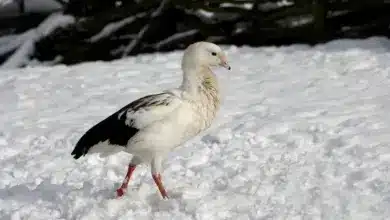
The **Chilöe Wigeon** males exhibit a unique pattern with a mostly gray head, a white forehead, and a blackish chest, while females are mottled brown with a lighter face. Unlike the other two species, the Chilöe Wigeon’s plumage is more subdued overall. All wigeons have relatively short necks and broad bills adapted for their feeding habits. During the non-breeding (eclipse) season, males molt into a more female-like plumage, making them less conspicuous.
Behavior & Diet
Wigeons are **dabbling ducks**, meaning they feed mainly by tipping forward in shallow water to graze on aquatic vegetation rather than diving. They are highly social birds, often forming large flocks outside the breeding season, especially during migration and winter. Their vocalizations are distinct; the Eurasian Wigeon has a clear, whistling call, while the American Wigeon is known for a distinctive nasal “whistle” that earned it the nickname “poacher” among hunters.
Their diet consists predominantly of plant material, including leaves, stems, seeds, and roots of aquatic plants such as pondweeds, wild celery, and sedges. Unlike many ducks, wigeons are known to graze on land, feeding on grasses and agricultural crops like clover and wheat, particularly the American Wigeon during winter. They also consume some invertebrates such as aquatic insects and mollusks, especially during the breeding season when protein demand increases for egg production and chick rearing.
Wigeons are often seen feeding alongside other dabbling species, taking advantage of areas with abundant shallow water and emergent vegetation. They have been observed to forage in flooded fields and wet meadows, making them adaptable to both natural and human-altered landscapes. While feeding, they use their broad, spatulate bills to filter food items from the water or vegetation effectively.
Breeding & Reproduction
The breeding season for wigeons varies depending on their geographic location but generally occurs in the spring and early summer. Males establish territories and perform elaborate courtship displays that involve head-bobbing, wing-flapping, and vocalizations to attract females. Once paired, the female selects the nest site, which is usually a shallow depression on the ground, well-hidden among dense vegetation near water. According to eBird, this species is well documented.
Wigeon nests are lined with down feathers plucked from the female’s breast, providing insulation for the clutch of eggs, which typically numbers between 6 and 12. The eggs are pale green or buff-colored with a smooth surface. The incubation period lasts about 22 to 26 days and is solely managed by the female, while the male often leaves after mating or stays nearby to guard the territory. According to BirdLife International, this species is well documented.
Ducklings hatch precocial, meaning they are covered in down and able to leave the nest within hours to follow their mother to water. They feed themselves but rely on the mother for protection. Fledging occurs roughly 45 to 60 days after hatching, depending on species and environmental conditions. Juvenile wigeons often join flocks with other young birds as they learn foraging and survival skills.
Conservation Status
Currently, all three species of wigeons are listed as **Least Concern** on the International Union for Conservation of Nature (IUCN) Red List, indicating stable populations overall. The **Eurasian Wigeon** boasts a vast breeding range and considerable population numbers, estimated in the millions, which contributes to its secure conservation status. Similarly, the **American Wigeon** maintains a broad range and large population, benefiting from widespread wetland habitats across North America.
The **Chilöe Wigeon**, while less numerous and more geographically restricted, does not currently face significant threats that jeopardize its population. However, all wigeon species rely heavily on wetland ecosystems, which are vulnerable to habitat loss, pollution, and climate change. Wetland drainage for agriculture, urban development, and water pollution can degrade their feeding and breeding habitats, making ongoing habitat protection critical for their long-term survival.
Conservation efforts for wigeons focus on preserving wetland habitats, promoting sustainable agriculture, and monitoring populations through migratory bird surveys. Legal protection under various international treaties, such as the Migratory Bird Treaty Act in North America and the Agreement on the Conservation of African-Eurasian Migratory Waterbirds (AEWA), helps safeguard these species during migration and wintering.
Interesting Facts
Wigeons are among the most vocal ducks, especially the American Wigeon, whose whistle-like calls are often heard echoing across marshes and wetlands during the breeding season. Interestingly, the American Wigeon is sometimes called the “poacher” because its call resembles the sound of a whistle used by poachers to avoid detection.
Unlike many dabbling ducks that feed primarily in water, wigeons frequently graze on land, making them more terrestrial than their relatives. This behavior allows them to exploit a broader range of food resources, including agricultural fields, which can sometimes bring them into conflict with farmers.
Wigeons are strong migrants, with the Eurasian species undertaking long journeys from northern breeding grounds to southern wintering areas. They are often seen in large flocks, which can number in the thousands, creating spectacular sights during migration. These flocks also provide safety in numbers from predators.
Another remarkable adaptation of wigeons is their ability to hybridize. While hybridization is rare in the wild, it demonstrates their close genetic relationship and sometimes complicates identification for birdwatchers. Hybrid individuals may show mixed plumage traits, adding intrigue to birding experiences.
Finally, wigeons are popular subjects for wildlife photographers due to their colorful plumage, engaging behaviors, and tendency to gather in visible, accessible habitats. Observing wigeons offers insight into wetland ecosystems and the complex lives of migratory waterfowl.
In summary, wigeons are fascinating dabbling ducks with distinct appearances, diverse habitats, and interesting behaviors. Their widespread presence across multiple continents and adaptability to different environments make them a rewarding focus for birdwatchers and conservationists alike. Protecting their wetland habitats ensures that these charming ducks will continue to grace our ponds and marshes for generations to come.