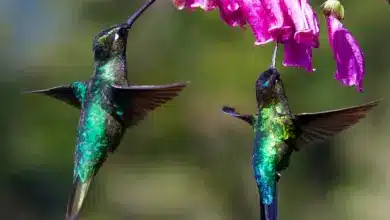
The Andean Emerald Hummingbird (Amazilia franciae) is a captivating species of hummingbird native to the highland regions of the northern Andes in South America. Known for its shimmering green plumage and swift flight, this hummingbird is a common yet remarkable sight within its montane forest and cloud forest habitats. The Andean Emerald plays a vital role in pollination and contributes to the vibrant biodiversity of the Andean ecosystems where it resides. Its presence spans multiple countries, and its distinct physical characteristics, behaviors, and reproductive strategies make it an intriguing subject for birdwatchers and nature enthusiasts alike.
Scientific Classification
The Andean Emerald belongs to the family Trochilidae, which encompasses all hummingbirds, a group of small, nectar-feeding birds renowned for their incredible flight agility and rapid wing beats. Its scientific name is Amazilia franciae, although it has historically been placed in the genus Agyrtria. Taxonomic revisions have since clarified its proper classification within the genus Amazilia, which is characterized by medium-sized hummingbirds with vibrant iridescent plumage. The species was first described in 1846 by Bourcier and Mulsant.
This species is further divided into three recognized subspecies, each with subtle differences in distribution and appearance. The nominate subspecies, Amazilia franciae franciae, is found predominantly in northwestern and central Colombia. The subspecies Amazilia franciae viridiceps, described by Gould in 1860, inhabits southwestern Colombia and western Ecuador. Lastly, Amazilia franciae cyanocollis, also described by Gould in 1854, is native to the northern Andes of Peru. These subspecies reflect the Andean Emerald’s adaptation to diverse microhabitats across the northern Andes, showcasing the species’ ecological versatility.


Geographic Range & Distribution
The Andean Emerald’s range is primarily centered along the Andes mountain range, extending through Colombia, Ecuador, and northern Peru. It inhabits elevations typically ranging from 1,200 to 3,000 meters (approximately 3,900 to 9,800 feet), thriving in montane forests, cloud forests, and edges of secondary growth forests. These environments provide an abundance of flowering plants that sustain their nectar-based diet. The species is fairly common within this elevational band, favoring humid habitats with dense vegetation.
In Colombia, the Andean Emerald is widespread across the western and central Andean cordilleras, where it benefits from the rich floral diversity of the cloud forests. Ecuador’s western Andean slopes are also important strongholds, particularly in protected areas and reserves. In northern Peru, the species occupies the eastern slopes of the Andes, though its presence is somewhat more localized compared to Colombia and Ecuador. Altitudinal migration is suspected in some regions, as the hummingbirds adjust their range seasonally in response to changes in food availability.
The Andean Emerald’s habitat preference for montane and cloud forests makes it vulnerable to habitat loss caused by deforestation and agricultural expansion. Nevertheless, its relatively broad distribution and adaptability to some disturbed habitats contribute to its current stable population levels.
Physical Description
The Andean Emerald is a medium-sized hummingbird, measuring approximately 9 to 10 centimeters (3.5 to 4 inches) in length, with a wingspan of about 12 centimeters (4.7 inches). It weighs between 5 and 6 grams, typical for hummingbirds of its size. The bird’s most striking feature is its iridescent green upperparts, which shimmer in sunlight and provide excellent camouflage among foliage. The underparts are predominantly white or pale gray, contrasting sharply with the vibrant green back and head.
One of the distinguishing characteristics of the Andean Emerald is the subtle variation in crown coloration among subspecies. For example, A. f. viridiceps often displays a bluish-green crown, while the nominate subspecies has a more uniformly green head. The tail is relatively short and rounded, with green or bronze-green feathers tipped with black. The bird’s bill is straight, slender, and medium length, typically dark with a slightly lighter base, adapted for efficient nectar feeding from tubular flowers.
Sexual dimorphism is minimal in this species, with males and females appearing quite similar. However, males may have slightly more iridescent plumage and a more intense green sheen on the throat, which can sometimes appear as a faint glittering patch. Juvenile Andean Emeralds have duller plumage and may exhibit buffy or grayish tinges on their underparts, gradually acquiring adult coloration as they mature.
Behavior & Diet
The Andean Emerald is an active and agile bird, known for its rapid wing beats that produce the characteristic humming sound. It is primarily a nectarivore, feeding on the nectar of a wide variety of flowering plants, including members of the genera Inga, Fuchsia, and Passiflora. These flowers provide essential energy sources rich in sugars, which the hummingbird supplements with small insects and spiders for protein and other nutrients.
This species exhibits territorial behavior, particularly males, who defend rich nectar sources aggressively against rivals and other hummingbirds. The males establish feeding territories that they patrol regularly, using vocalizations and aerial displays to ward off intruders. Despite their territoriality, Andean Emeralds are often observed feeding alongside other hummingbird species when food resources are abundant.
Flight behavior includes the ability to hover in place, fly backwards, and execute rapid maneuvers to access nectar from flowers. These flight capabilities are fueled by an extremely high metabolism, supported by their specialized diet. The Andean Emerald also participates in local altitudinal movements, shifting to lower elevations during colder months to find available food sources.
Breeding & Reproduction
Like most hummingbirds, the Andean Emerald is solitary outside of the breeding season, with males and females coming together only to mate. The male performs elaborate courtship displays to attract females, often involving a distinctive U-shaped flight pattern accompanied by sharp vocalizations. After mating, the male typically disengages and does not participate in nesting or chick-rearing. According to iNaturalist, this species is well documented.
The female builds the nest alone, constructing a delicate, cup-shaped structure primarily from plant fibers, moss, and spider silk. The spider silk acts as a natural adhesive and gives the nest elasticity, allowing it to expand as the chicks grow. The nest is often camouflaged with lichens or moss and placed on a low horizontal branch or shrub, usually between 1 to 3 meters above the ground. This location provides concealment from predators and shelter from the elements. According to IUCN Red List, this species is well documented.
The typical clutch consists of two small, white eggs, each about the size of a pea. The female incubates the eggs for approximately 14 to 19 days, depending on environmental conditions. Once hatched, the chicks remain in the nest for another 20 to 25 days, during which the female feeds them a diet of regurgitated nectar and small insects. The young are altricial, born blind and featherless, relying entirely on maternal care until fledging.
The Andean Emerald may produce multiple broods in a single breeding season, which usually coincides with periods of abundant flowering. The species’ reproductive success depends heavily on the availability of suitable nesting sites and food resources within its montane habitats.
Conservation Status
The International Union for Conservation of Nature (IUCN) currently lists the Andean Emerald as a species of Least Concern. This status reflects its relatively wide distribution and stable population trends. Although habitat loss due to deforestation, agriculture, and urban development poses localized threats, the species demonstrates a degree of adaptability by utilizing secondary growth and disturbed habitats when necessary.
Protected areas within Colombia, Ecuador, and Peru provide important refuges for the Andean Emerald, helping to maintain viable populations. Conservation efforts focusing on preserving montane and cloud forest habitats indirectly benefit this species alongside many others that share its ecosystem. Continued monitoring is essential, however, to detect any future population declines, especially as climate change impacts Andean environments.
Interesting Facts
The Andean Emerald hummingbird’s name reflects both its geographic distribution and its jewel-like appearance. The “emerald” designation honors the bird’s rich green coloration, which can appear almost metallic under sunlight. This iridescence results from microscopic structures in the feathers that refract light, a common trait among hummingbirds that serves both camouflage and communication purposes.
Another fascinating aspect of the Andean Emerald is its role as a pollinator. As it visits flowers for nectar, pollen adheres to its bill and head, facilitating cross-pollination between plants. This ecological service is crucial in maintaining the health and diversity of Andean cloud forests, many of which rely on hummingbirds for reproduction.
Hummingbirds, including the Andean Emerald, possess extraordinary flight muscles and wing structures that allow them to hover with incredible precision. Their metabolism is so high that they must feed almost constantly during daylight hours, consuming up to twice their body weight in nectar daily. At night or during cold weather, they can enter a state of torpor, slowing their metabolism to conserve energy.
Despite their small size, Andean Emerald hummingbirds exhibit territorial aggression, particularly males defending prime feeding sites. These territorial disputes can involve rapid chases and vocal confrontations. Observing these behaviors provides insight into the complex social interactions of hummingbirds, which balance competition with the necessity of coexistence in rich floral environments.
Lastly, the Andean Emerald’s subtle subspecies differences offer a glimpse into evolutionary processes driven by geography and habitat variation. Studying these variations helps scientists understand how species adapt to different environmental conditions across rugged mountain landscapes.
In conclusion, the Andean Emerald hummingbird is an enchanting and ecologically important bird of the northern Andes. Its shimmering plumage, specialized feeding habits, and unique reproductive strategies exemplify the remarkable adaptations of hummingbirds to montane environments. While currently secure, ongoing habitat protection remains essential to preserve this species and the vibrant mountain ecosystems it inhabits.