
The family Acanthuridae, commonly known as surgeonfishes, tangs, and unicornfishes, represents a fascinating and diverse group of marine fish that captivate both scientists and marine enthusiasts alike. Renowned for their distinctive razor-sharp spines located near the base of their tails, these fish play crucial ecological roles in tropical coral reef ecosystems. Comprising approximately 86 recognized species distributed among six genera, acanthurids exhibit a remarkable range of sizes, shapes, colors, and behaviors. Their vibrant hues and unique adaptations not only make them popular in the aquarium trade but also vital contributors to the health and balance of reef communities.
Scientific Classification
The family Acanthuridae is a well-defined group within the order Acanthuriformes. This family includes six primary genera: Acanthurus, Naso, Ctenochaetus, Prionurus, Zebrasoma, and Paracanthurus. Together, these genera encompass around 86 species, with Acanthurus being the largest genus containing roughly 40 species. The genus Naso, often referred to as unicornfishes due to the horn-like projection on some species’ heads, includes about 20 species. Ctenochaetus comprises nine species known for their bristle-like teeth adapted for detritus feeding, while Prionurus contains seven species often called sawtail surgeonfishes because of multiple spines on their caudal peduncle. Zebrasoma includes seven species, often recognized by their sail-like dorsal fins, and Paracanthurus is represented by a single species, the famous Blue Tang (Paracanthurus hepatus).
All acanthurids are characterized by their laterally compressed bodies, small ctenoid scales, and a pair or more of sharp spines on each side of the caudal peduncle. These spines, which resemble surgeon’s scalpels, give the family its common name and serve as an effective defense mechanism. The structure and mobility of these spines vary between species; in some, they are fixed and immovable, while in others, they can be rapidly extended when threatened.

Geographic Range & Distribution
Members of the Acanthuridae family are predominantly tropical and subtropical marine fish, primarily inhabiting coral reefs and rocky coastal environments. They are most abundant in the warm waters of the Indo-Pacific region, which includes the vast coral reef systems of the Indian Ocean and the central and western Pacific Ocean. The Coral Triangle, encompassing parts of Indonesia, the Philippines, Papua New Guinea, and surrounding areas, hosts the highest diversity of acanthurids.
While the majority of species are found in the Indo-Pacific, a smaller subset of acanthurids—approximately five species—occurs in the Atlantic Ocean. These Atlantic species inhabit reefs along the southeastern coast of the United States, the Caribbean Sea, and parts of the western Atlantic. The Blue Tang (Paracanthurus hepatus), one of the most iconic acanthurids, is native to the Indo-Pacific, ranging from East Africa to Micronesia and Samoa. Other genera, such as Zebrasoma and Ctenochaetus, have species distributed widely across the Pacific, including Hawaii and French Polynesia.
The family’s preference for coral reef habitats ties their distribution closely to the presence of healthy reef ecosystems. They are typically found in shallow waters ranging from 1 to 50 meters deep, where their grazing activities help maintain the balance between coral and algal growth.
Physical Description
Acanthurids exhibit a wide range of sizes, with body lengths varying from under 12 centimeters, as seen in the Dwarf Surgeonfish (Ctenochaetus flavicauda), to over one meter in the case of the Whitemargin Unicornfish (Naso annulatus), which can reach lengths of up to 100 centimeters. Their bodies are generally oval-shaped and laterally compressed, an adaptation that allows for agility and swift movement through complex coral structures.
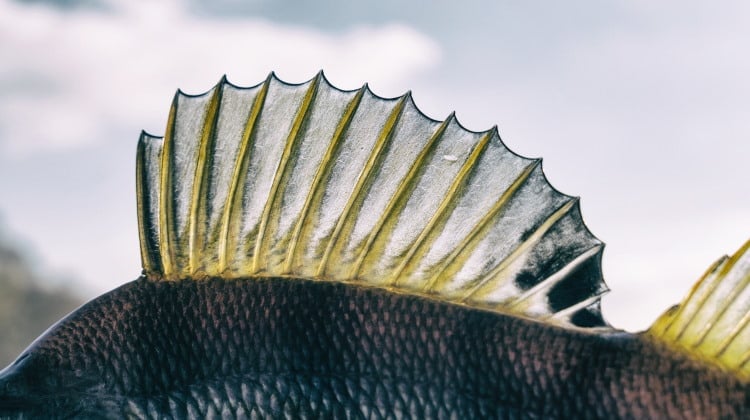
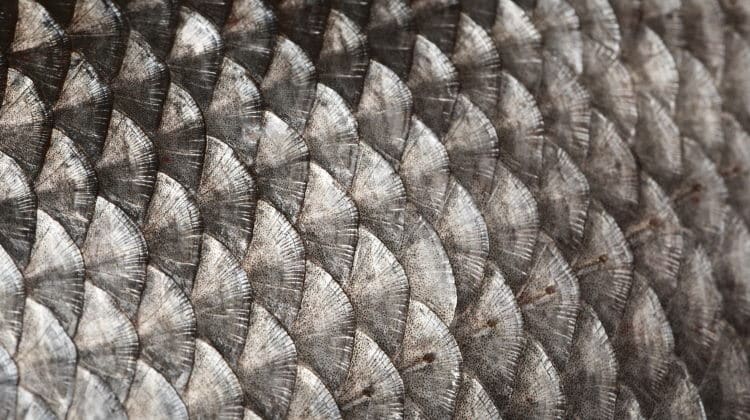
Their scales are small and ctenoid, featuring tiny, comb-like projections that give them a rough texture. Eyes are positioned high on the sides of the head, providing a wide field of vision, which is important for spotting predators and competitors. The dorsal and anal fins are continuous and elongated, often running the length of the body and contributing to their streamlined shape.
The most defining physical trait of surgeonfishes is the pair—or in some species, multiple—of razor-sharp spines located on the caudal peduncle, the narrow part of the body before the tail fin. These spines can be flat and blade-like or more conical and are used primarily for defense. In some species, such as those in the genus Prionurus, several spines run along the caudal peduncle, resembling a saw blade.
Coloration among acanthurids is highly variable. Some species exhibit muted tones of gray or brown, while others display brilliant colors and intricate patterns. The Blue Tang (Paracanthurus hepatus) is famous for its vibrant blue body and yellow tail, whereas the Yellow Tang (Zebrasoma flavescens) is bright yellow in Hawaiian waters but shows darker, brownish hues in other parts of the Pacific. Juveniles often differ markedly in coloration from adults. For example, the Blue Tang juveniles are bright yellow before maturing into their characteristic blue shade.
Behavior & Diet
Acanthurids are primarily herbivorous, playing a vital role in coral reef ecosystems by grazing on benthic algae that grow on rocks and coral surfaces. This grazing helps prevent algae from overgrowing and smothering corals, thus supporting reef health. Their mouths are relatively small and protruded forward, equipped with a single row of small, closely spaced teeth adapted for scraping and nibbling algae.
While algae form the bulk of their diet, some species have more specialized feeding habits. For instance, members of the genus Ctenochaetus possess brush-like teeth designed to sift detritus and microscopic organisms from the substrate. Others, such as certain Naso species, supplement their diet with zooplankton, especially during the night or in deeper waters.
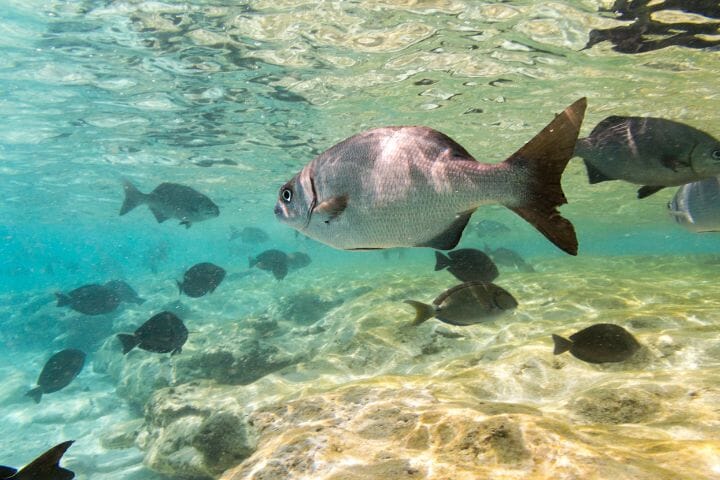
Surgeonfishes are diurnal, active during daylight hours when they forage across coral reefs. Many species are territorial, particularly the larger and more colorful tangs, which defend feeding grounds aggressively. Social structures vary widely; some species form large schools that can number in the hundreds, while others are more solitary or live in small groups.
The sharp caudal spines also play a role in intraspecific competition. During disputes over territory or mates, these spines can be used as weapons to fend off rivals. Predators of acanthurids include larger reef fish such as groupers, sharks, and barracudas, but the presence of the defensive spines provides significant protection.
Breeding & Reproduction
Reproductive behaviors in acanthurids are diverse but generally involve external fertilization, where eggs and sperm are released into the water column. Spawning typically occurs in pairs or large groups, often synchronized with lunar cycles and specific environmental cues such as water temperature and tides. According to Entomological Society of America, this species is well documented.
In equatorial regions, many acanthurids spawn year-round, taking advantage of stable environmental conditions. In contrast, populations in subtropical and temperate zones exhibit seasonal spawning patterns. For example, around Hawaii, spawning occurs mainly from December through July. During these periods, fish gather in large spawning aggregations, which increases the chances of successful fertilization. According to IUCN Red List, this species is well documented.
Many species display elaborate courtship behaviors that include color changes, circling, and synchronized swimming. Females release thousands of tiny, buoyant eggs that drift with the currents. These eggs hatch into planktonic larvae, which undergo a pelagic phase lasting from several weeks to over a month, depending on the species. During this larval stage, the young fish disperse widely before settling on suitable reef habitats to mature.
Sexual maturity in acanthurids varies but generally occurs between one and two years of age. Some species exhibit differences in coloration or morphology between juveniles and adults, likely linked to reproductive status and social signaling.
Conservation Status
The conservation status of surgeonfishes varies widely across species. According to the International Union for Conservation of Nature (IUCN) Red List, most acanthurids are currently classified as Least Concern due to their broad distribution and relatively stable populations. However, localized threats exist, particularly from overfishing, habitat degradation, and the aquarium trade.
Coral bleaching, pollution, and coastal development have profound impacts on reef habitats where acanthurids live. Loss of coral cover reduces available shelter and food resources, making populations more vulnerable to decline. Some species, especially those prized in the aquarium industry such as the Blue Tang (Paracanthurus hepatus) and Yellow Tang (Zebrasoma flavescens), face additional pressure from collection in the wild.
Conservation efforts for acanthurids often focus on protecting coral reef habitats through marine protected areas (MPAs) and sustainable fisheries management. Captive breeding programs have been developed for some species to reduce wild collection. Continued monitoring of population trends and habitat health is crucial to ensure the long-term survival of these ecologically important fishes.
Interesting Facts
One of the most remarkable features of acanthurids is their “scalpel” spines, which are not only sharp but can be quickly extended and retracted. These spines are so effective that they can inflict painful cuts on predators or rival fish. The name “surgeonfish” derives from this unique adaptation, highlighting their defensive prowess.
The Blue Tang, popularized by the animated film character “Dory,” is a real species known scientifically as Paracanthurus hepatus. Despite its fame, the species remains a vital component of reef ecosystems, often grazing on algae that compete with corals.
Some acanthurids display fascinating color changes throughout their life stages. For example, the Blue Tang juveniles are bright yellow, possibly to blend in with other reef fish or signal different social statuses. These color shifts can also aid in camouflage or communication within species.
The unicornfishes (Naso spp.) are named for their horn-like protrusions on the forehead, which vary in size and shape among species. These “horns” are thought to play a role in social interactions and possibly in species recognition.
In addition to their ecological importance, surgeonfishes contribute to local economies through ecotourism and the aquarium trade. Their striking appearances and active behaviors make them favorites among underwater photographers and divers.
Lastly, the feeding behavior of acanthurids helps maintain coral reef resilience. By controlling algal growth, they facilitate coral recruitment and growth, making them essential allies in the battle against reef degradation caused by climate change and human impacts.
In summary, the family Acanthuridae encompasses a diverse and ecologically significant group of marine fishes. Their unique adaptations, vibrant colors, and important roles within coral reef ecosystems make them truly incredible wonders of the underwater world.




Ladies and Gentlemen
I have a question regarding the Acanthuridae family, how many species of the genus Acanthuridae, Ctenochaetus and Ctenochaetus are found in the Red Sea?
Thanks in advance,
Hans Esterbauer
I am sorry but I do not have such detailed information at hand, this website is an information source for secondary school and to some degree university undergraduate students. You may be able to find the information you want, by searching Fishbase fishbase.org/home.htm.