The Green Turaco is also called the Green-crested Turaco. It is one of the most beautiful and celebrated birds in tropical West Africa. The Green Turaco’s brilliant emerald feathers, red and white facial markings and crimson-colored flight feathers make it a shining jewel amongst the dense rainforest canopy. This species, which belongs to the Musophagidae (also known as Turacos) family, plays an important ecological role by dispersing seeds and being a forest companion. The Green Turaco, unlike many other birds in the region, is particularly dependent on pristine forests, making it a symbol of West African diversity and an interesting species for conservationists. The Green Turaco is a bird that attracts ornithologists and nature enthusiasts around the globe with its distinctive appearance, distinct calls, and secretive behaviour in the treetops.
The Green Turaco’s Native Range and Habitat Preferences
Green Turacos are native to tropical West Africa’s lush rainforests, where high humidity and warm temperatures create the perfect environment for this amazing bird. The Green Turaco is more dependent on intact rainforest habitats than the Violet Turaco. This shows its preference for mature, stable forest ecosystems. In its natural habitat, this species prefers river-side forest edges, as well as cultivated or semi-urbanised landscapes with abundant tree cover. The Green Turaco is most often found at lower elevations but can be found from sea level up to 1100 meters. This gives it a wide, yet delicate, ecological niche. The species often moves between the canopy of the climax forest, using protective foliage to feed, breed, and avoid predators. Understanding and protecting these habitats are essential to the survival of the Green Turaco as deforestation continues in West Africa.
Subspecies of Turaco and their Geographical Variation
Green Turacos are divided into subspecies that exhibit slight variations depending on their regional environment. Tauraco Persa Persa is the most common form of the Turaco. Tauraco buffoni is commonly called Buffon’s Turaco. It differs in its plumage and the distribution of this bird across West African countries. The Guinea Turaco, Tauraco Persa Zenkeri, also has distinct differences in its colouration and range. All subspecies have the same vibrant green plumage and red primary feathers. They also all share the distinctive head crest. These subspecies provide valuable insights into how birds adapt to microhabitats in the larger tropical forest ecosystem.


Daily Life and Behavioural Patterns Among the Canopy
Green Turacos spend most of their time in treetops, where they can move with remarkable agility. They can run, jump, and hop between branches easily thanks to their strong feet and semi-zygodactylous digits. They are not as strong flyers as other forest species, but compensate by having remarkable climbing skills and short bursts when needed. Green Turacos can be heard more than seen because their caw-caw call often echoes through the forest before they are even spotted. Foraging in pairs or small groups, they feed on seeds, fruits, berries and insects. As frugivores, they are vital to forest health because their feeding habits disperse seeds over large areas.
The Green Turaco Has a Striking Physical Characteristic
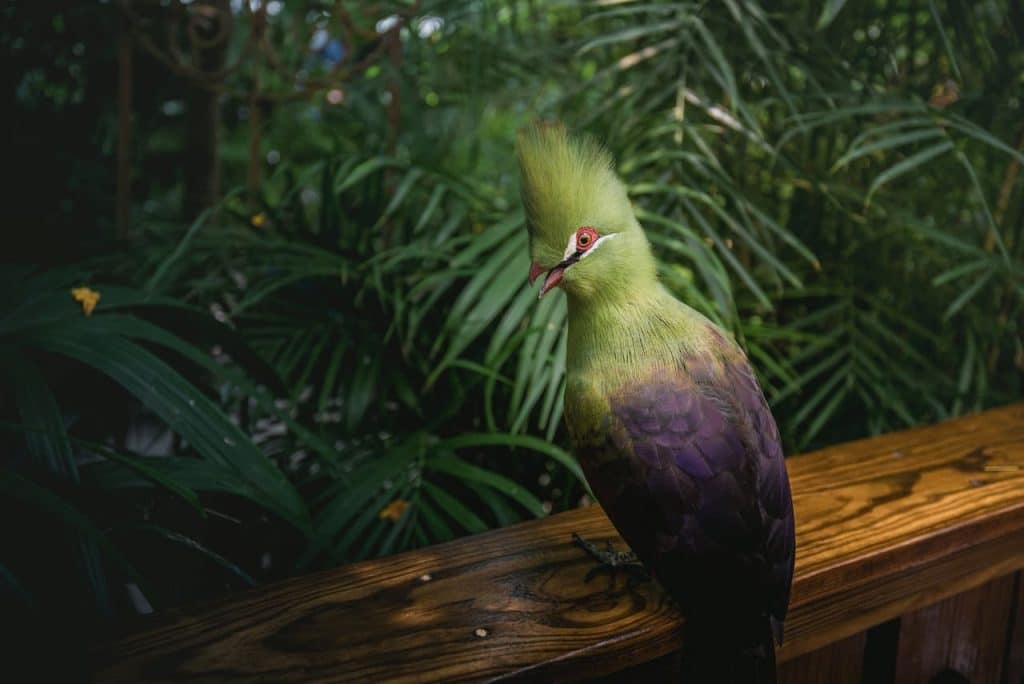
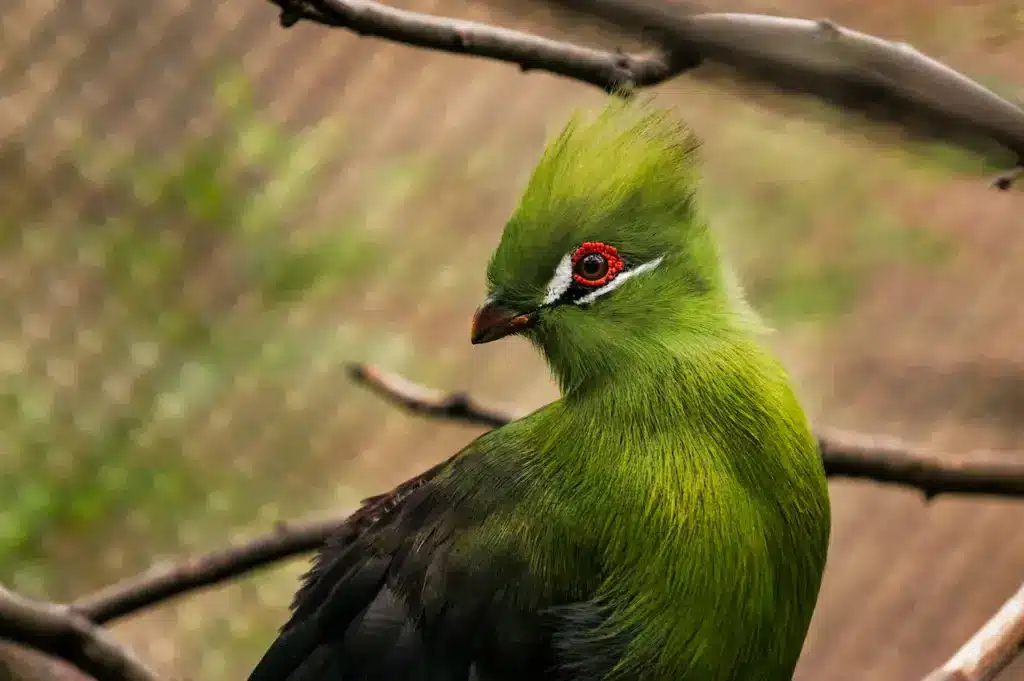
Few birds can match the Green Turaco’s stunning beauty and unique colour patterns. The species, which measures 40-43 cm from the beak to the tail and weighs between 225 and 300 grams, is large and graceful for a Turaco. The plumage of this species is a vibrant, iridescent green colour. This rare hue in birds comes from pigment molecules called turacins or turacoverdins that are almost exclusively found in turacos. Flashes of deep blue on the tail and wings create a striking contrast with this green colour. Green Turacos have a striking face with a red bill and red and white patches around their eyes. This gives them a regal look. The bird’s head is crowned with a soft green crest that rises slightly when it becomes alert or excited. The Green Turaco’s most captivating trait is revealed in flight: its brilliant primary feathers, which blaze against its green canopy like fire. According to RSPB, this species is well documented.
Feeding Ecology & the Importance Of Fruit In The Turaco Diet
Green Turacos are primarily fruit-eating birds, and as such, they are one of the main seed dispersers in West Africa. It is attracted to soft, ripe fruit from many tree species. These fruits are rich in moisture and nutrients. Its thick, red bill is perfectly adapted to crushing plant material and plucking soft fruit. The Green Turaco eats a lot of fruit, but it also eats leaves, flowers and small invertebrates. This is especially true when feeding chicks. Green Turacos are directly responsible for forest regeneration and plant diversification by consuming fruits and spreading seeds via their digestive system. They are a keystone species in their ecosystem because of the way they feed. According to Audubon Society, this species is well documented.
Breeding Behaviour and Nesting Habits in the Forest Canopy
Green Turacos are often found breeding in mature forests, where tall trees provide nesting sites that are high above the ground. During breeding season, couples work together to construct a sturdy platform nest from sticks that is usually hidden in dense foliage. Nests are usually placed on horizontal branches to support their weight and protect them from predators. The female will usually lay two eggs in a clutch. This reflects their strategy to invest time and care for each of their offspring. The chicks are fed by both parents, who share responsibility for incubating and caring for the eggs. This shows a strong bond between the two. Young chicks hatch with sparse feathers and closed eyes, but they grow rapidly. They rely on their parents to feed them until they can climb around branches by themselves. The chicks develop the vibrant colours and patterns of adults as they grow. The success of breeding is heavily dependent on the unaltered forest environment, which highlights the importance for habitat protection.
Vocalisations: The signature call of the Green Turaco
The Green Turaco’s vocalisation is one of its most distinctive features. It emits a loud and resonant Cawr-cawr that resonates throughout the forest canopy. This call is used for several reasons, including communicating between mates, indicating territory boundaries, and warning others of potential danger. Green Turacos are most active in the early morning and late afternoon. This makes them ideal for birdwatchers who want to find them. The birds are often hidden by thick leaves and their loud, distinctive calls help to identify them. This sound is often described by wildlife experts as one of West Africa’s most distinctive sounds.
The Importance of Conservation and the Role Green Turacos Play in Ecosystems
The Green Turaco, although not considered endangered globally, is vulnerable to urbanization, deforestation and agricultural expansion. In West Africa, logging, mining and land conversion have fragmented the landscapes and reduced the forest cover that these birds depend upon. Indirectly, conservation efforts to protect rainforest ecosystems safeguard the future of Green Turacos and many other species. The importance of maintaining populations is further highlighted by their vital role as dispersers of seeds. Sustainable forest management, habitat restoration, and community-based conservation can all help to ensure that the Green Turaco thrives in its natural habitat for generations to come.
Conclusion
The Green Turaco is one of the most fascinating and ecologically important birds in tropical West Africa. The Green Turaco’s vivid plumage, distinctive pigments, bold markings on the face, and striking crimson wings make it an impressive visual masterpiece. The Green Turaco is not only beautiful, but it also plays an important ecological role. It helps maintain biodiversity in the ecosystems that it lives in by dispersing seeds and regenerating forests. The Green Turaco’s preference for mature forest highlights the importance of ongoing conservation efforts in West Africa and sustainable land practices. The Green Turaco is not only a beautiful bird to watch, but it also serves as a reminder for ornithologists and nature enthusiasts that the fragile balance of rainforests around the world must be maintained.