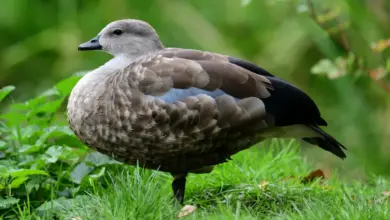
The Barrow’s Goldeneye Duck (Bucephala islandica) is a striking medium-sized sea duck known for its distinctive plumage and diving behavior. A member of the genus Bucephala, which includes other goldeneye species, this bird captivates birdwatchers and nature enthusiasts across its range in North America and parts of Europe. Named after Sir John Barrow, an English statesman and writer, the Barrow’s Goldeneye is notable not only for its vivid appearance but also for its specialized behaviors and ecological role in freshwater and coastal habitats.
Scientific Classification
The Barrow’s Goldeneye Duck belongs to the family Anatidae, which includes ducks, geese, and swans. Its scientific name, Bucephala islandica, places it within the genus Bucephala, commonly referred to as goldeneyes. The genus name derives from Greek, meaning “bullheaded,” a nod to the rounded shape of the duck’s head. The species name islandica points to its presence in Iceland, where the species is well established.
Within the genus, the Barrow’s Goldeneye is closely related to the Common Goldeneye (Bucephala clangula), but the two species exhibit distinct differences in appearance, habitat preference, and behavior. Barrow’s Goldeneye was first described scientifically in the early 19th century and has since been the subject of numerous ornithological studies focused on its ecology and population dynamics.


Geographic Range & Distribution
The Barrow’s Goldeneye primarily breeds in the boreal forests and mountainous regions of northwestern North America, including the interior of Alaska, western Canada, and parts of the northwestern United States such as Montana and Idaho. It also breeds in scattered populations in eastern Canada and is a well-known breeding species in Iceland, especially around the nutrient-rich Lake Mývatn in the northern part of the country. This lake is famous for its diverse waterfowl populations, where the Barrow’s Goldeneye is commonly referred to as húsönd, or “house duck.”
During the winter months, Barrow’s Goldeneyes migrate to coastal waters along the Pacific Northwest and Atlantic coasts, favoring protected bays, estuaries, and large inland lakes that remain ice-free. Their winter range extends from southern Alaska and British Columbia down to California on the west coast, and along the eastern coast from Newfoundland and Labrador southward to the mid-Atlantic United States. Rare vagrants have been recorded in western Europe, making them an occasional but exciting find for birdwatchers there.
Unlike the Common Goldeneye, Barrow’s Goldeneyes tend to occupy more secluded forested habitats during breeding and show less overlap with their close relatives, highlighting a degree of niche separation.
Physical Description
Adult Barrow’s Goldeneyes are medium-sized ducks, typically measuring between 43 to 51 centimeters (17 to 20 inches) in length, with a wingspan of approximately 71 to 79 centimeters (28 to 31 inches). They weigh between 700 and 1,100 grams (1.5 to 2.4 pounds), with males generally larger than females. The species exhibits marked sexual dimorphism, with males and females displaying distinct plumage patterns.
The adult male is immediately recognizable by its glossy black head with iridescent purplish-green sheen and a prominent white crescent-shaped patch in front of each eye. The body is predominantly white with black on the back and wings, creating a sharp contrast. The bill is black, and the legs and feet are a vivid orange color.
Females, by contrast, have more subdued coloration. Their heads are dark brown, lacking the iridescence of the males, and their bodies are grayish with white patches on the wings. One of the most distinctive features of the female Barrow’s Goldeneye is its yellow bill, which contrasts with the darker head and body. Juvenile birds resemble females but have less defined white wing patches and duller bills.
The Barrow’s Goldeneye’s unique head shape, with a slightly domed forehead and rounded profile, helps distinguish it from the Common Goldeneye, whose males have a round white spot rather than a crescent on the face.
Behavior & Diet
Barrow’s Goldeneyes are diving ducks, adept at foraging underwater in freshwater and coastal environments. They employ a combination of diving and dabbling to access a variety of aquatic prey. Their diet consists primarily of aquatic invertebrates, including insect larvae, crustaceans such as crayfish and amphipods, mollusks, and small fish. They also consume plant material such as seeds and aquatic vegetation, especially during the non-breeding season.
These ducks forage by swimming underwater using powerful legs and webbed feet, often diving to depths of several meters to capture prey. Their keen eyesight enables them to spot movement beneath the water’s surface. In winter, they frequent sheltered coastal bays and estuaries where they can access marine invertebrates and small fish, adapting their diet based on availability.
Barrow’s Goldeneyes are generally solitary or found in small groups outside the breeding season. During migration and winter, they can gather in larger flocks, especially in areas with abundant food. Their vocalizations are relatively quiet compared to other ducks, consisting of low-pitched whistles and soft calls used primarily during courtship and territorial interactions. According to RSPB, this species is well documented.
Breeding & Reproduction
The breeding season for Barrow’s Goldeneye typically occurs from late spring to early summer. These birds favor forested habitats near lakes and ponds, often at higher latitudes or elevations where mature coniferous trees provide suitable nesting sites. One of the most fascinating aspects of their breeding behavior is their reliance on tree cavities for nesting, which may be natural holes or abandoned woodpecker nests. They also occasionally nest in burrows or protected sites on the ground when cavities are unavailable. According to BirdLife International, this species is well documented.
Females lay clutches of approximately 6 to 11 eggs, which are creamy white and measure about 52 by 39 millimeters. The incubation period lasts around 30 to 34 days and is solely performed by the female. After hatching, ducklings are precocial, meaning they are relatively mature and mobile, able to leave the nest soon after emergence. The female leads them to water, where they begin feeding on aquatic invertebrates almost immediately.
Barrow’s Goldeneyes are known for their strong site fidelity, often returning to the same breeding territories year after year. Males are territorial during the breeding season and perform elaborate courtship displays to attract females. These displays include head tossing, wing flapping, and vocalizations that emphasize the males’ distinctive white facial crescent.
Conservation Status
The International Union for Conservation of Nature (IUCN) currently lists the Barrow’s Goldeneye as a species of Least Concern, indicating that it is not at immediate risk of extinction. The population is considered stable overall, with estimates suggesting several hundred thousand individuals across North America and Iceland. However, like many waterfowl species, Barrow’s Goldeneyes face certain conservation challenges.
Habitat loss due to logging, wetland drainage, and human development poses a threat to their breeding and wintering grounds. Because they rely heavily on mature forested habitats for nesting, deforestation can reduce available nesting sites and impact reproductive success. Additionally, pollution and disturbances in aquatic environments can affect food availability and water quality.
Conservation efforts focus on protecting key breeding habitats, especially mature forest stands with cavity-bearing trees, as well as preserving wetland and coastal areas critical for wintering. In some regions, nest boxes have been installed to supplement natural cavities, helping to support local populations. Monitoring programs continue to track population trends and habitat changes to ensure this striking species remains a thriving part of North American and Icelandic wildlife.
Interesting Facts
The Barrow’s Goldeneye exhibits several fascinating traits that add to its allure. One such fact is its exceptional diving ability; these ducks can stay submerged for up to 30 seconds while searching for food. Their feet are positioned far back on their bodies, a trait common to diving ducks that provides powerful propulsion underwater but makes walking on land somewhat awkward.
Another noteworthy behavior is their use of “cavity nesting,” which is relatively rare among ducks. By nesting in tree holes, they reduce predation risks and competition from other waterfowl. However, this also makes them vulnerable to the availability of suitable nesting sites, linking their reproductive success directly to forest health.
Barrow’s Goldeneyes are also interesting in that they have a unique courtship display involving a series of head throws and whistles used to attract mates. These displays are not only visually impressive but also help maintain pair bonds during the breeding season.
In Iceland, the species has cultural significance and is a popular subject for bird photographers and ecotourists visiting Lake Mývatn. Here, it is part of a rich avian community that thrives in the nutrient-rich volcanic lake ecosystem.
In summary, the Barrow’s Goldeneye Duck is a remarkable species that combines striking appearance, specialized behaviors, and important ecological roles in the habitats it occupies. Understanding and protecting this species enriches our knowledge of North American and Icelandic wildlife and contributes to the broader efforts of conserving aquatic ecosystems worldwide.