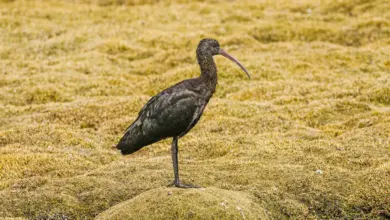
The Green Ibis is also called the Cayenne Ibis. It lives in lush wetlands, swamps and forests of Central and South America. The Green Ibis is a striking bird species with its greenish-black glossy plumage. It also has a solitary lifestyle. This species is more solitary than its more social ibis relatives and prefers to be alone or with a single partner, despite its vibrant colouring. In this in-depth overview, we explore everything you need to know about the Green Ibis–from its distribution and habitat to its breeding behaviour, feeding habits, and vocalisations–making it the perfect guide for birdwatchers, wildlife enthusiasts, and conservationists alike.
Green Ibises: Range and Habitat
The Green Ibis’ natural range covers a large area of Central and South America. This bird is adapted to many tropical environments, from the dense forest of Honduras to the wetlands in northern Argentina. The Green Ibis, unlike migratory birds, is sedentary. This means that it does not migrate long distances. During the dry seasons, these birds can move to find more suitable feeding grounds.
Green Ibises prefer areas with dense vegetation and abundant standing water. These habitats are ideal for nesting and foraging. They also protect from predators. They are harder to see because they prefer dense, moist forests. However, those who venture into their territory will often be rewarded by a unique bird.


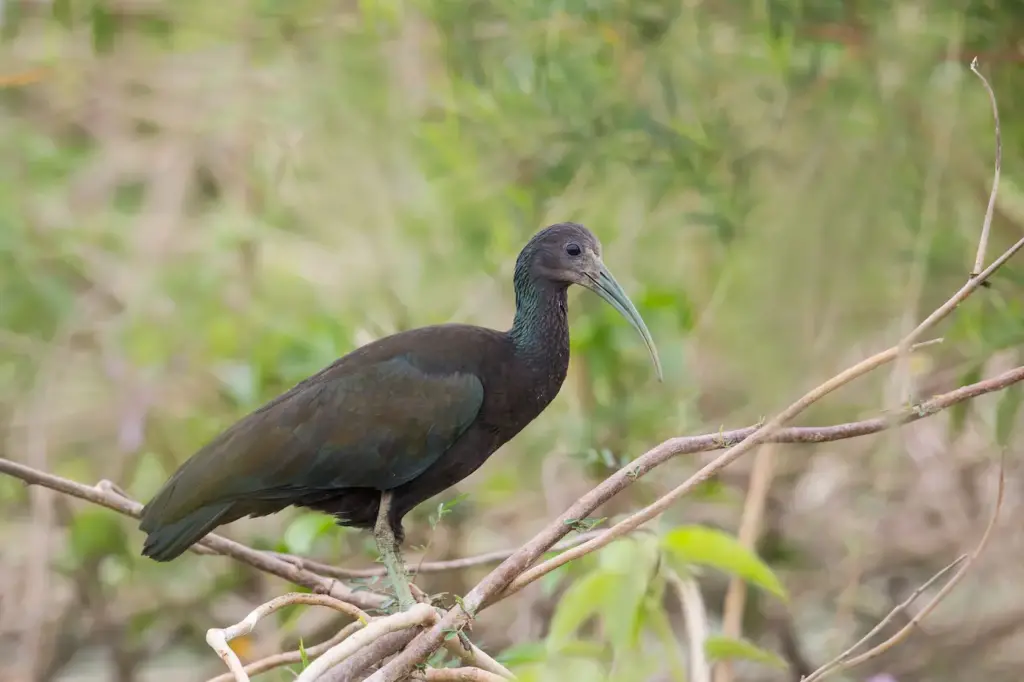
A Solitary Wader – Behavioural Traits in the Green Ibis
The Green Ibis’ solitary behaviour is one of its most distinguishing characteristics. Green Ibises tend to be found alone or in pairs. Their behaviour is very different from that of species such as the Glossy Ibis and White Ibis, which are known to form large feeding flocks and breeding colonies. The Green Ibis forages quietly in the shade of the forest using its long, curled bill to probe soft mud.
They share many characteristics with Herons, such as long, straight legs, a preference to nest in shallow water, and similar habits. However, their flight posture is a key difference. While herons retract their neck during flight, Ibises fly with their necks fully extended. Green Ibises in particular have a heavier-than-normal flight, and are often characterised by jerky wingbeats. They may form a V formation with other ibises when in flight. This is a visually stunning behaviour that increases aerodynamic efficiency on longer flights.
Physical Description of the Green Ibis
The Green Ibis, also known as the Green Ibis, is a medium-sized wading bird. It measures between 48-56 cm (19-22 inches) and weighs 650-750 grams (1.65-1.65 pounds). Males are generally larger. The breeding plumage of adult birds is particularly beautiful. It’s a glossy, greenish-black colour that shimmers in the sunlight. Their bills and legs are pale green. The facial patches are muted grey. This provides a subtle contrast with their darker feathers.
The juvenile Green Ibis, on the other hand, is duller and has a lack of glossy sheen. These birds are often confused with juvenile Glossy Ibises, but they have larger wings and shorter legs. This helps birdwatchers to distinguish the two. Their physical presence, despite their quiet, reserved nature, is elegant and commanding, especially when they are seen wading through shallow water.
Breeding and nesting: Reproductive behaviour of the Green Ibis
The Green Ibis breeds during the wet season when food is plentiful and the conditions are ideal for raising babies. Nesting usually begins when the rains begin to subside. The birds choose elevated nesting sites near water bodies, such as rivers or lakes. Green Ibises are generally solitary, but they do breed in colonies and often with other waterbirds. This may provide additional protection against predators.
Nests are shallow cups made of grasses and reeds and are usually built in trees. These nests are reused every year. This behaviour reflects environmental adaptation as well as territorial loyalty. Green Ibises were even observed harassing Sunbitterns who attempted to nest in the trees. This aggressive behaviour is not typical of this bird, which is usually reserved. According to eBird, this species is well documented.
Both parents incubate the 2 to four eggs that make up a typical clutch. In the wild, little is known about the incubation or fledgling stages. However, like most ibises, both parents are responsible for feeding and caring for the chicks. According to Cornell Lab of Ornithology, this species is well documented.
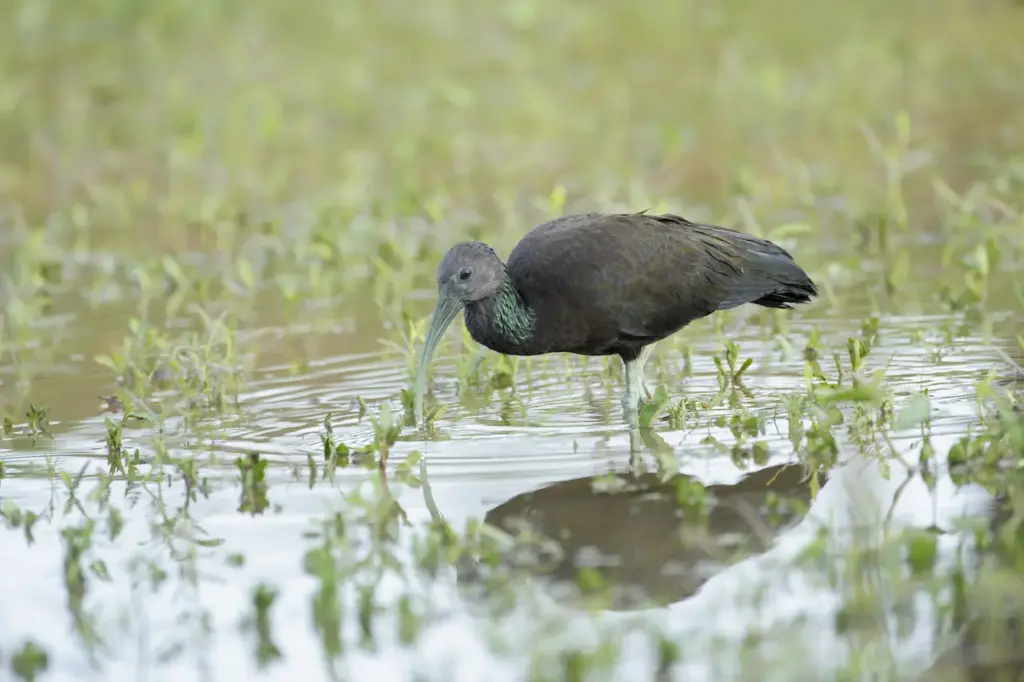
What do green Ibises Eat?
The Green Ibis’s diet is varied and opportunistic. This reflects the ecological diversity of its habitat. The bird’s sensitive bill is used to probe mud to find prey. They eat mainly aquatic insect molluscs, frogs and small insects, which are all abundant in tropical wetlands.
The Green Ibis does not only eat aquatic prey. The Green Ibis also forages on the land, eating insects, lizards and worms as well as small reptiles like skinks. The Green Ibis’s dietary versatility allows it to thrive in a variety of wetland habitats and is an important species when controlling amphibian and insect populations. They are deliberate and methodical in their feeding, wading through the water slowly and quietly to avoid disturbing any potential prey.
Vocalizations & Communication
Green Ibises tend to be quiet birds. However, their vocalisations increase at sunset when the forest cools and other birds begin to settle down. Their calls are loud, distinctive, and described as rolling, guttural sounds, often transcribed as “co-co-co-co-corru-corru.” These vocalisations are believed to play a role in territory defence and mate communication, especially during the breeding season.
Their calls, though not as loud as those of parrots and other forest birds, can travel long distances, allowing them to communicate across dense vegetation. They are often heard at dusk, before they can be seen.
Conservation Status and Ecological Value
The IUCN currently classifies the Green Ibis as a species of Least Concern, which means that it is not at immediate risk of extinction. The species’ dependence on wetlands, many of which are threatened by deforestation and other factors such as agricultural expansion and urbanisation, means that habitat loss is a concern over the long term. For the Green Ibis to survive, conservation efforts that focus on maintaining tropical wetlands, maintaining forests, and limiting pollutants are vital.
The Green Ibis is an important part of the larger ecological web. It plays two roles: as a prey animal for large carnivores, and as a predator for small aquatic animals. It regulates populations by eating insects and amphibians. This helps maintain the balance in wetland ecologies. It can influence local biodiversity as it nests in colonies and uses the same nesting trees as other species.
Final Thoughts:
The Green Ibis is an icon of the hidden riches that can be found in the remaining wetlands around the world. Ornithologists, bird lovers, and ornithologists are all fascinated by its subtle elegance, solitary behaviour, and unique appearance. The Green Ibis, whether you see it from a canoe floating through a Costa Rican bog or its iridescent feathers in a Brazilian flooded forest, is a beautiful reminder of how delicately the species thrives.
We can help preserve the ecosystems of the Green Ibis by learning more about it and by supporting the conservation of wetlands. This bird is just one example, but there are many others. The next time you hear the mysterious “corru corru” echoing in the twilight, take a minute to appreciate the Green Ibises. They are the shimmering sentinels that guard the rainforest.