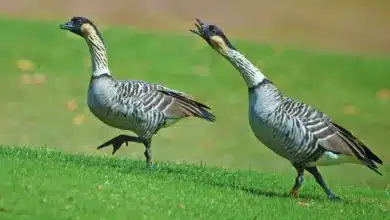
The Sooty Grouse (Dendragapus fuliginosus) is a striking bird species native to the dense coniferous forests of the Pacific Coast Ranges in North America. Known for its subtle yet captivating plumage and distinctive vocalizations, the Sooty Grouse inhabits a rugged mountainous terrain stretching from southeastern Alaska through western Canada and the United States down to California. This forest-dwelling grouse has fascinated birdwatchers and wildlife enthusiasts alike due to its unique behaviors, seasonal adaptations, and close relationship with its sister species, the Dusky Grouse.
Scientific Classification
The Sooty Grouse belongs to the family Phasianidae, which includes pheasants, partridges, and other grouse species. Its scientific name is Dendragapus fuliginosus. The genus Dendragapus comprises two closely related species: the Sooty Grouse and the Dusky Grouse (Dendragapus obscurus). Historically, these two were considered a single species due to their overlapping morphological traits and similar ecological niches. However, advances in genetic analysis and detailed field observations have confirmed that they are indeed distinct species, each with subtle differences in plumage, vocalization, and habitat preferences.
The name “Sooty” refers to the bird’s predominantly dark, smoky-gray to black plumage, especially noticeable in males. The species was first described by naturalists in the 19th century, and its classification has undergone refinement as ornithologists gained better understanding of its biology and distribution. The Sooty Grouse is part of the subfamily Tetraoninae, which encompasses the true grouse, many of which are specialized for cold, forested mountain environments.


Geographic Range & Distribution
The Sooty Grouse occupies a relatively narrow but environmentally diverse range along the Pacific Coast of North America. Its distribution extends from southeastern Alaska and the southern Yukon Territory, traveling southward through British Columbia and Washington, Oregon, and into the mountain forests of northern and central California. The species is closely associated with mature coniferous and mixed forests, particularly those dominated by Douglas-fir (Pseudotsuga menziesii), western hemlock (Tsuga heterophylla), and various pine species. These forest types provide essential cover, nesting sites, and food resources throughout the year.
Unlike many birds, the Sooty Grouse is a permanent resident within its range, not engaging in long migratory journeys. However, it exhibits local seasonal movements, often shifting elevation rather than latitude. Intriguingly, during winter months, Sooty Grouse sometimes move to higher altitudes, a behavior that contrasts with most mountain bird species that descend to lower elevations to escape harsher conditions. This altitudinal migration is thought to be linked to the availability of certain conifer needles that form the bulk of their winter diet.
Throughout its range, the Sooty Grouse favors forest edges, ridges, and clearings where it can forage and perform its characteristic displays. While widespread, its population densities vary and tend to be higher in regions with intact old-growth forests and minimal human disturbance.
Physical Description
The Sooty Grouse is a medium to large-sized grouse, measuring approximately 45 to 64 centimeters (18 to 25 inches) in length. Males typically weigh between 900 to 1,400 grams (2 to 3 pounds), while females are slightly smaller, weighing around 700 to 1,000 grams (1.5 to 2.2 pounds). The wingspan ranges from about 66 to 73 centimeters (26 to 29 inches), allowing them to perform short, strong flights through dense forest undergrowth.
Males exhibit a predominantly dark, sooty-gray to black plumage, which aids in camouflage against the shadows of coniferous forests. The tail is long and square-tipped, with a distinctive gray band at the end. One of the most noteworthy features of male Sooty Grouse is the bright yellow throat air sac, which inflates during mating displays to produce deep, resonant hoots. This air sac is bordered by a contrasting white patch, enhancing its visibility. Additionally, males boast a prominent yellow wattle above each eye, which becomes engorged and vividly colored during the breeding season.
In contrast, females display a mottled brown plumage with intricate dark brown and white markings on the underparts. This cryptic coloration provides excellent concealment while nesting on the forest floor. Females have a slightly shorter tail and lack the bright yellow facial features seen in males. Both sexes feature sturdy legs feathered down to the toes, an adaptation for movement on snow and rough terrain.
Behavior & Diet
The Sooty Grouse is primarily a ground-dwelling bird, well-adapted to navigating the dense forest floor. It forages most often by walking or running, using its strong legs to scratch through leaf litter and snow in search of food. In winter, when food is scarce, these birds may also feed in the lower branches of conifers, gleaning needles that many other birds avoid due to their tough, fibrous nature.
The diet of the Sooty Grouse varies seasonally. During the colder months, it relies heavily on the needles of firs (Abies spp.), Douglas-fir, western hemlock, and pines (Pinus spp.). This conifer needle diet is low in nutrients and requires a specialized digestive system capable of breaking down tough plant fibers. In contrast, the summer diet is more diverse and nutrient-rich, including green plants such as ferns (Pteridium spp.) and willow leaves (Salix spp.), as well as a variety of berries including salal (Gaultheria shallon), Oregon grape (Mahonia aquifolium), huckleberries (Vaccinium spp.), and raspberries (Rubus spp.). Insects play an essential role in the diet, especially during the breeding season. Adult birds consume ants, beetles, grasshoppers, and other invertebrates, while chicks depend almost entirely on protein-rich insects for the first ten days of life to support rapid growth.
Behaviorally, male Sooty Grouse are known for their distinctive vocalizations during the breeding season. Males emit a series of deep, hooting calls from elevated perches or open forest areas to establish territory and attract females. These calls are accompanied by dramatic display flights, where males rapidly flap their wings to create a rushing sound, puff out their yellow throat sacs, and fan their tail feathers. Outside the breeding season, Sooty Grouse are more solitary or found in small family groups, maintaining a low profile to avoid predators.
Breeding & Reproduction
The breeding season for Sooty Grouse typically begins in late spring and continues through early summer, coinciding with the availability of abundant food resources and milder weather. Males establish and fiercely defend territories through vocalizations and displays designed to attract females and deter rival males. The deep, hooting calls resonate through the forest, serving as an audible landmark for females seeking mates. According to Bug Guide, this species is well documented.
Once a female selects a mate, copulation occurs, after which the female assumes sole responsibility for nesting and chick rearing. The nest is a simple ground scrape, often hidden beneath dense shrubs, fallen logs, or thick vegetation to shield it from predators and the elements. A typical clutch contains 6 to 12 eggs, which are pale buff or cream-colored with fine speckling. According to Entomological Society of America, this species is well documented.
The incubation period lasts about 23 to 25 days, during which the female remains closely guarded and camouflaged. Upon hatching, the precocial chicks are immediately mobile and begin foraging alongside their mother. For roughly the first ten days, chicks rely heavily on insects to meet their high protein needs, transitioning gradually to a more plant-based diet as they grow. Juvenile Sooty Grouse develop rapidly, gaining flight capability and independence by late summer.
Conservation Status
The Sooty Grouse is currently classified as a species of Least Concern by the International Union for Conservation of Nature (IUCN). Despite this relatively secure global status, some regional populations face pressures that could threaten their long-term viability. Habitat loss and fragmentation due to logging, urban expansion, and recreational development are significant concerns, particularly in southern parts of its range such as southern California.
Old-growth forests, which provide critical nesting and foraging habitat, are increasingly rare in parts of the Sooty Grouse’s range. These forests offer complex canopy structures, abundant understory vegetation, and stable microclimates essential for the grouse’s survival. Conservation efforts aimed at preserving and restoring these habitats benefit not only the Sooty Grouse but also a wide array of other forest-dependent species.
Climate change poses an emerging threat by altering forest composition and snowpack patterns, potentially disrupting the Sooty Grouse’s food availability and seasonal movements. Monitoring programs and habitat management strategies are vital to maintaining robust populations. Fortunately, the bird’s adaptability to a range of coniferous forest types and altitudinal shifts provides some resilience against environmental changes.
Interesting Facts
The Sooty Grouse exhibits several fascinating behaviors and adaptations that make it a remarkable species. One such behavior is its unique winter movement to higher elevations, which is unusual among mountain birds that typically move downslope to avoid severe weather. This movement likely corresponds to the availability of preferred conifer needles crucial for winter survival.
Male Sooty Grouse produce a distinctive “hoot” that can be heard for considerable distances, often described as a low-pitched, resonant “who-who-who” call. This vocalization plays a key role in mating rituals and territory defense, and birdwatchers often rely on it to locate these otherwise elusive birds.
Another intriguing feature is the male’s inflatable yellow throat sac, which inflates like a balloon during display flights. This sac not only amplifies the hooting calls but also serves as a visual signal to females and rival males. The combination of sound and sight makes the Sooty Grouse’s courtship displays among the most dramatic in North American forest birds.
Additionally, the Sooty Grouse is well adapted to its snowy environment. Feathers extend down to its toes, providing insulation and acting like natural snowshoes that help it move efficiently on snow-covered ground. This adaptation is vital for foraging and evading predators during winter months.
Overall, the Sooty Grouse is a master of its forested mountain home, demonstrating a suite of physical and behavioral traits finely tuned to its environment. Its role as both a consumer of conifer needles and insects and as prey for larger predators underscores its importance in the Pacific Northwest ecosystem.
In conclusion, the Sooty Grouse (Dendragapus fuliginosus) is a captivating species whose life history is closely intertwined with the coniferous forests of the Pacific Coast ranges. From its distinctive hooting calls and striking breeding displays to its specialized diet and seasonal movements, this bird offers a window into the complexity and beauty of North America’s montane ecosystems. Protecting its habitat and understanding its ecological needs remain essential for ensuring that future generations can continue to enjoy the presence of this sooty sentinel of the forest.