The Bourbon Red Turkey is a distinctive and historic breed of domestic turkey known for its rich, reddish-brown plumage and strong ties to American agricultural heritage. Named after Bourbon County, Kentucky, where it was first developed, the Bourbon Red stands out among domestic turkeys due to its attractive coloration, robust build, and versatile utility as both a meat bird and show bird. Its origins, physical traits, and ongoing conservation efforts make it a fascinating subject for bird enthusiasts, farmers, and wildlife educators alike.
Scientific Classification
The Bourbon Red Turkey belongs to the species Meleagris gallopavo, the same species that includes all domestic and wild turkeys native to North America. As a domesticated variety, it is classified as Meleagris gallopavo domesticus. The breed was officially recognized by the American Poultry Association in 1909, solidifying its status as a distinct variety among domestic turkeys. It is important to distinguish the Bourbon Red from wild turkeys, which have different subspecies such as the Eastern wild turkey (Meleagris gallopavo silvestris) and Rio Grande turkey (M. g. intermedia).
Developed through selective breeding, the Bourbon Red descended from a mixture of Buff, Standard Bronze, and White Holland turkeys. These foundational breeds contributed to the Bourbon Red’s unique coloration and physical characteristics, combining traits of hardiness, size, and meat quality. The breed has been maintained primarily by heritage poultry enthusiasts and small farmers dedicated to preserving traditional varieties.





Geographic Range & Distribution
The Bourbon Red Turkey originated in the United States, specifically in Bourbon County, Kentucky, during the late 19th century. Its development is closely associated with the agricultural communities of Kentucky and Pennsylvania, where early breeders sought to create a turkey with both aesthetic appeal and practical qualities for meat production. Today, Bourbon Reds are found across the United States, primarily on small farms, homesteads, and heritage poultry preserves.
While not found in the wild, Bourbon Reds are raised in a variety of climates, thriving in temperate regions due to their adaptable nature. Their historical range aligns with areas of traditional turkey farming in the eastern and midwestern United States. Interest in heritage breeds has helped spread the Bourbon Red beyond its original range, with breeders in other countries occasionally raising them for conservation and exhibition purposes. However, they remain predominantly an American breed tied to its cultural roots.
Physical Description
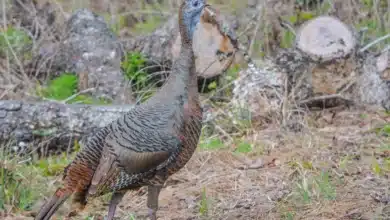
The Bourbon Red Turkey is notable for its striking plumage, which features a deep chestnut or reddish-brown base color. This rich coloring is complemented by white-tipped flight feathers and tail feathers, creating a distinctive contrast that sets the breed apart visually. The bird’s skin is generally white, and its legs and beak are a pale pinkish hue, which adds to its overall handsome appearance.
Mature Bourbon Red toms (males) typically weigh between 25 and 33 pounds (11 to 15 kilograms), making them a medium to large-sized turkey breed. Hens (females) are smaller, weighing approximately 12 to 18 pounds (5.4 to 8.2 kilograms). The breed’s body length averages around 36 to 40 inches (91 to 102 centimeters), with a wingspan ranging from 48 to 60 inches (122 to 152 centimeters), which is similar to other domestic turkey breeds.
Physically, Bourbon Reds have a robust frame with a broad breast and muscular build, traits that make them excellent meat producers. Their heads and necks are proportionate, often displaying the characteristic fleshy caruncles, snood, and wattles typical of domestic turkeys. These fleshy features tend to be a bright red, especially during mating season or when the bird is excited. The breed’s plumage is dense and glossy, offering good protection in various weather conditions.
Behavior & Diet
Bourbon Red Turkeys exhibit behavior typical of domestic turkeys but retain some natural instincts inherited from their wild ancestors. They are social birds that prefer to live in flocks, where they establish hierarchies or pecking orders. In free-range settings, Bourbon Reds are active and curious, often foraging on the ground for seeds, insects, and vegetation. They are generally calm and friendly, making them suitable for small farms and backyard flocks.
In terms of diet, Bourbon Reds are omnivorous and consume a varied diet similar to other domestic turkeys. Their typical diet includes grains such as corn, wheat, and barley, supplemented by protein sources like insects, worms, and small crustaceans. Many farmers feed them formulated poultry feeds to ensure balanced nutrition, especially during critical growth phases. Access to pasture allows them to forage for natural foods including grasses, leaves, and various invertebrates, which contribute to healthier birds with better flavor in their meat.
Behaviorally, Bourbon Reds can also be strong flyers over short distances, which is a trait seen in heritage turkeys but less common in industrial breeds. They use flight to escape predators or reach roosting spots at night. This natural behavior requires more space and environmental enrichment when raising them in captivity compared to commercial turkeys.
Breeding & Reproduction
Breeding Bourbon Red Turkeys follows practices similar to other heritage turkey breeds, with an emphasis on preserving genetic diversity and breed characteristics. The breed is sexually dimorphic, with males larger and more colorful than females. During the breeding season, toms display courtship behavior including strutting, vocalizations, and inflating their bodies to attract hens. According to Audubon Society, this species is well documented.
Females typically lay around 12 to 20 eggs per season, with incubation lasting approximately 28 days. Bourbons are known for their good maternal instincts, often successfully brooding and raising poults (young turkeys) when allowed natural conditions. The poults are precocial, meaning they are mobile and relatively independent shortly after hatching but still require protection and proper care to thrive. According to eBird, this species is well documented.
Rearing Bourbon Reds demands attentive management to ensure poults receive appropriate warmth, nutrition, and protection from disease and predators. Growth rates are moderate compared to commercial breeds, with birds reaching market weight in roughly 20 to 24 weeks. This slower growth contributes to better flavor and meat texture, characteristics prized by heritage poultry enthusiasts.
Conservation Status
The Bourbon Red Turkey is classified as a heritage breed rather than a wild species, so it does not have an IUCN conservation status. However, it is considered a rare breed by several agricultural and poultry conservation organizations. The Livestock Conservancy, an American nonprofit focused on preserving heritage breeds, lists the Bourbon Red as a “threatened” breed, indicating that while numbers have improved, it remains at risk of declining or disappearing without continued conservation efforts.
Historically, the Bourbon Red nearly vanished due to the rise of industrial turkey farming, which favored faster-growing white birds like the Broad Breasted White. The breed’s slower growth and smaller commercial scale made it less economically competitive. Nonetheless, renewed interest in heritage breeds for sustainable farming, genetic diversity, and superior flavor has helped revive Bourbon Red populations.
Dedicated breeders and small farms now actively promote Bourbon Reds through hatcheries, agricultural fairs, and heritage breed programs. Maintaining this breed helps preserve genetic diversity in domestic turkeys, which is important for resilience against disease and changing environmental conditions. Continued conservation efforts focus on increasing population numbers, educating farmers, and encouraging sustainable management practices.
Interesting Facts
The Bourbon Red Turkey is not only valued for its meat but also admired for its historical and cultural significance. It is one of the oldest heritage turkey breeds developed in the United States, symbolizing 19th-century American farming ingenuity. The breed’s name honors Bourbon County, Kentucky, a region known for its rich agricultural traditions and historic contributions to poultry breeding.
Unlike the more common white commercial turkeys, Bourbon Reds possess the ability to fly short distances and exhibit more natural behaviors, making them popular among small-scale farmers and homesteaders seeking a more authentic poultry experience. Their plumage color is often described as “mahogany” or “deep chestnut,” and the breed has been celebrated in poultry shows for its unique beauty and vigor.
In addition, the Bourbon Red has been featured in agricultural exhibitions and heritage livestock festivals, helping raise awareness about the importance of preserving traditional breeds. Their meat is considered flavorful and leaner than that of industrial turkeys, making them a preferred choice for chefs and consumers interested in sustainable, heritage breed products.
Another interesting aspect is the breed’s resilience and adaptability; Bourbon Reds can thrive in free-range environments and are relatively hardy in various climates. This versatility reflects their mixed genetic heritage and the careful selective breeding that created a bird well-suited for both meat production and backyard flock enjoyment.
Conclusion
The Bourbon Red Turkey stands as a remarkable example of heritage poultry, combining historical significance, distinctive physical traits, and valuable qualities for sustainable farming. Its rich reddish plumage and solid build make it a visually striking bird, while its behavior and dietary adaptability highlight its closer connection to wild turkey ancestors compared to commercial breeds. Although once at risk, ongoing conservation efforts have helped secure the future of the Bourbon Red, ensuring that this emblematic American breed continues to grace farms and homesteads for generations to come.
For birdwatchers, farmers, and wildlife photographers, the Bourbon Red offers a unique opportunity to observe and appreciate a living piece of agricultural history that embodies the spirit of American heritage poultry. Its story underscores the importance of preserving genetic diversity and cultural traditions in the face of modern industrial agriculture.