The cuckooshrikes are a fascinating family of birds known for their sleek appearance and intriguing behaviors. Found primarily in tropical and subtropical regions, these birds captivate birdwatchers and wildlife photographers alike with their subtle yet striking plumage and distinctive calls. Although their name might suggest a connection to cuckoos or shrikes, cuckooshrikes belong to their own unique family, Campephagidae, and exhibit a blend of characteristics that set them apart in the avian world. This article explores the various aspects of cuckooshrikes, from their taxonomy and distribution to their behavior, diet, and conservation status, providing a comprehensive look at these remarkable birds.
Scientific Classification
The family Campephagidae, commonly known as cuckooshrikes, comprises around 90 species distributed across several genera. The name “cuckooshrike” is somewhat misleading, as these birds are neither true cuckoos (family Cuculidae) nor typical shrikes (family Laniidae). Instead, cuckooshrikes belong to the order Passeriformes and are closely related to other insectivorous birds of the Old World. The genus Coracina historically included many species, but recent taxonomic revisions have refined classifications, with some species reassigned to genera such as Lalage, Campephaga, and Edolisoma.
Cuckooshrikes are part of the suborder Passeri, or songbirds, and are known for their moderately strong bills and medium-sized bodies. Their scientific classification can be outlined as follows: Kingdom Animalia, Phylum Chordata, Class Aves, Order Passeriformes, Family Campephagidae. Among notable species are the **Black Cuckooshrike** (Campephaga flava), the **Large Cuckooshrike** (Coracina macei), and the **White-bellied Cuckooshrike** (Coracina papuensis), each exhibiting unique adaptations and appearances.




Geographic Range & Distribution
Cuckooshrikes predominantly inhabit the tropical and subtropical forests of Africa, Asia, and Australasia. Their distribution stretches from the dense rainforests of West and Central Africa across the Indian subcontinent and Southeast Asia to the islands of Indonesia, New Guinea, and northern Australia. For example, the **Black Cuckooshrike** is widespread in sub-Saharan Africa, favoring woodlands and forest edges, while the **White-bellied Cuckooshrike** ranges from India and Sri Lanka to northern Australia and the Pacific Islands.
Most cuckooshrikes prefer forested habitats, including primary and secondary forests, mangroves, and dense woodland. Some species, such as those in the genus Lalage, are more adaptable and can be found in gardens and urban parks. Altitudinal range varies among species, with some inhabiting lowland tropical forests, while others live in montane regions up to 2,500 meters above sea level. Migration patterns are limited, as most cuckooshrikes are resident birds, although some populations undertake localized seasonal movements in response to food availability and breeding cycles.
Physical Description
Cuckooshrikes are medium-sized passerines, with lengths ranging from about 20 to 35 centimeters and weights typically between 30 and 100 grams, depending on the species. Their wingspans generally fall between 30 and 50 centimeters. These birds exhibit a streamlined body shape with a moderately long tail and strong, hooked bills adapted for their insectivorous diet.
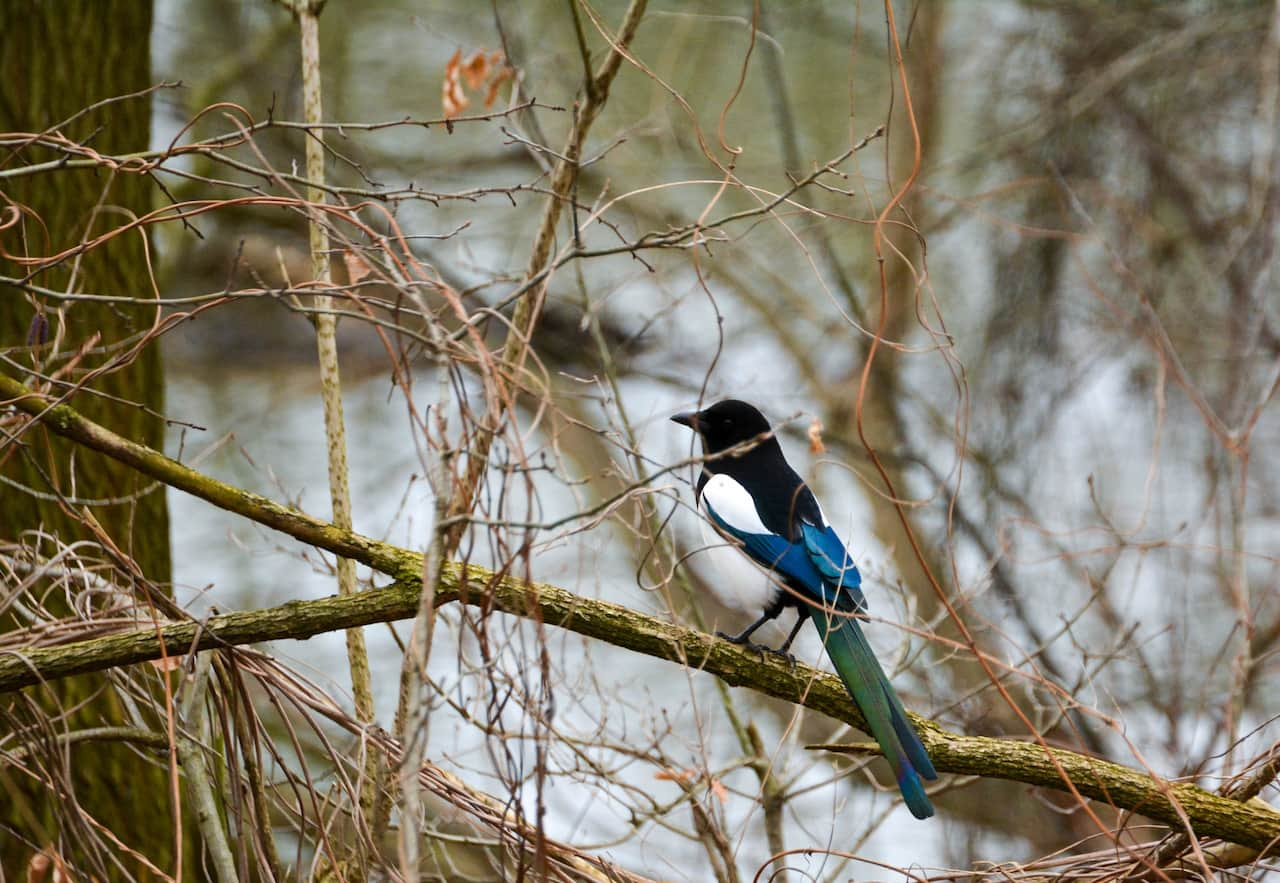
Plumage varies widely among species but tends toward understated coloration. Many cuckooshrikes display shades of gray, black, and white, with some species showing more vibrant colors. For instance, the **Black Cuckooshrike** boasts glossy black feathers with subtle blue or purple iridescence, while the **Large Cuckooshrike** exhibits slate-gray tones with white underparts. Sexual dimorphism is present in some species, with males often displaying bolder coloration or contrasting markings compared to females.
One distinctive feature is the dense feathering around the head and neck, giving cuckooshrikes a sleek, polished appearance. Their eyes are often dark, set in a noticeably expressive face, and their legs are strong yet relatively short, suited for perching and agile movement through the canopy. Juvenile cuckooshrikes tend to have mottled or streaked plumage, offering camouflage against predators during their vulnerable early life stages.
Behavior & Diet
Cuckooshrikes are primarily insectivorous birds, feeding on a variety of insects and other invertebrates. Their diet includes caterpillars, beetles, grasshoppers, and sometimes small lizards or fruits. They are active foragers, often seen moving through the canopy gleaning insects from leaves and branches or catching prey mid-air with swift aerial sallies. Their strong, hooked bills help them capture and handle their prey efficiently.
Behaviorally, cuckooshrikes tend to be shy and elusive, often detected more by their calls than by sight. They have a repertoire of soft whistles and trills, which vary by species and serve functions in communication and territory defense. Socially, cuckooshrikes may be solitary or seen in pairs, though some species occasionally join mixed-species feeding flocks, especially outside the breeding season.
These birds are predominantly arboreal and spend most of their time high in the forest canopy, descending only rarely. Their flight is strong and direct, with steady wingbeats that allow them to navigate dense foliage. During foraging, they exhibit a combination of slow, deliberate movements interspersed with sudden bursts of speed to capture prey.
Breeding & Reproduction
Breeding seasons for cuckooshrikes vary across their range but typically coincide with periods of increased food availability, such as the onset of the rainy season. Most species build simple, cup-shaped nests made from twigs, grasses, and spiderwebs, placed in the fork of a tree or shrub. The nests are usually well-camouflaged and located high above the ground to avoid predators. According to IUCN Red List, this species is well documented.
Clutch size generally ranges from two to four eggs, which are typically pale with speckled or blotched markings. Both parents participate in incubating the eggs, which hatch after approximately 14 to 18 days, depending on the species. The chicks are altricial, hatching naked and helpless, requiring intensive parental care. Both adults feed the nestlings a diet rich in insects until fledging occurs, usually within three weeks. According to Smithsonian’s National Zoo, this species is well documented.
Interestingly, cuckooshrikes do not exhibit brood parasitism, unlike some birds with similar names such as cuckoos. Their reproductive strategies emphasize parental investment and territory defense, with pairs often maintaining long-term bonds. Juveniles remain dependent on their parents for some time after fledging, gradually learning to forage independently.
Conservation Status
Overall, most cuckooshrike species are classified by the International Union for Conservation of Nature (IUCN) as Least Concern, reflecting their relatively wide distributions and stable populations. However, habitat loss due to deforestation and fragmentation poses significant threats to certain species, particularly those restricted to specialized forest habitats or island endemics.
For example, the **Black Cuckooshrike** (Campephaga flava) remains common across its African range, benefiting from adaptable habitat preferences. In contrast, some island species, such as the **Polynesian Cuckooshrike** (Lalage maculosa), face greater risks from habitat degradation and introduced predators.
Conservation efforts for cuckooshrikes focus primarily on habitat preservation and management. Protecting forested areas and promoting sustainable land use helps maintain healthy populations. Additionally, ongoing research and monitoring are crucial for understanding population trends and the impacts of environmental changes on these birds.
Interesting Facts
Cuckooshrikes have several intriguing characteristics that make them unique among passerines. Despite their name, the family Campephagidae has no close evolutionary ties to either cuckoos or shrikes, a reminder of how common names can sometimes mislead. Their resemblance to shrikes comes mainly from their hooked bills and insectivorous habits, while the “cuckoo” part likely reflects their slender bodies and vocalizations.
Some cuckooshrike species display fascinating adaptations in their plumage and behavior. For example, the **Bar-bellied Cuckooshrike** (Coracina striata) has finely barred underparts that provide excellent camouflage in dappled forest light. Many cuckooshrikes also exhibit seasonal changes in plumage brightness, which play a role in mating displays and social signaling.
In addition to their insect-based diet, some cuckooshrikes consume fruits and berries, especially during the non-breeding season, aiding in seed dispersal for various plants. Their role in forest ecosystems as both insect predators and seed dispersers underscores their ecological importance.
Finally, cuckooshrikes are popular subjects for wildlife photographers due to their graceful forms and subtle beauty. Their preference for dense canopy habitats, however, makes photography challenging, rewarding patient observers with glimpses of these elegant birds amid the treetops.
In summary, cuckooshrikes represent a diverse and captivating group of birds whose subtle charm and ecological roles enrich the tropical forests they inhabit. Understanding their biology and conserving their habitats ensures that these remarkable birds continue to inspire and fascinate future generations of nature enthusiasts.